

How to Choose Universal Multifunction Tribology Test Machine

1. Working Principle of Universal Multifunction Tribology Test Machine
The Universal Multifunction Tribology Test Machine operates based on the closed-loop measurement and control principle centered on three core tribology elements: friction pair, normal load and relative motion. Five subsystems work in coordination:
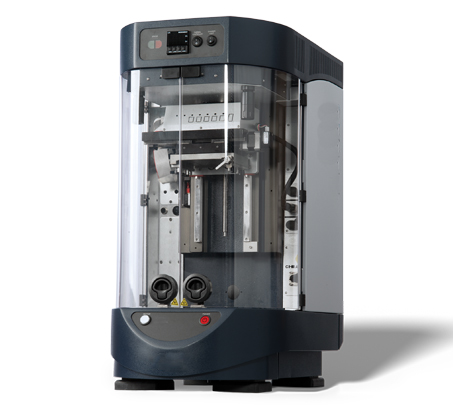
Servo Loading System: Applies constant, stepped or dynamic loads via electric or lever structures. Force sensors capture real-time normal pressure with a maximum resolution of 0.01 N and zero load drift during testing.
Motion Driving System: Servo motors deliver four motion modes (rotational ball-on-disc/pin-on-disc, high-frequency reciprocating, ring-on-block, fretting) to simulate point, line and surface contact sliding and rolling conditions.
Force Sensing System: Lateral friction sensors collect frictional resistance, and the industrial control unit calculates static and dynamic friction coefficients in real time.
Optional Environmental Control System: Equipped with high-low temperature, vacuum, oil bath and corrosive atmosphere chambers to replicate dry friction, water-lubricated, oil-lubricated and high-temperature heavy-load service conditions.
Data Acquisition & Analysis System: Synchronously records load, friction force, rotating speed, temperature and test duration, and automatically generates friction coefficient-time curves. After testing, wear rate is calculated through weighing or topography scanning of wear tracks.
Core logic: Two specimens are brought into controlled contact for relative sliding; sensors collect mechanical and thermal signals; the software converts signals into friction and wear indicators to quantitatively characterize material wear resistance and lubrication performance.
2. Compliant Test Standards
Domestic Chinese Standards
GB/T 12583: Test method for extreme pressure properties of lubricants (four-ball method)
SH/T 0189: Anti-wear performance test of lubricating oils
SH/T 0202, SH/T 0204: Extreme pressure and anti-wear tests of lubricating greases
International ASTM Standards
ASTM G99: Standard test method for friction and wear testing using pin-on-disc or ball-on-disc apparatus (widely adopted for research)
ASTM D5707: Standard test method for measuring friction and wear properties of lubricating greases using a high-frequency linear reciprocating (SRV) test machine
ASTM D4172, ASTM D2266: Four-ball anti-wear test standards for lubricants
ASTM D2714: Standard calibration specification for Falex ring-on-block friction and wear testing
By replacing corresponding friction pair modules, the instrument can fully support testing procedures specified in the above standards.
3. Functions of Universal Multifunction Tribology Test Machine
Evaluate material tribological performance: Measure friction coefficient, wear rate and service life of metals, ceramics, polymers, composite materials, hard coatings and bionic joint materials.
Screen lubricants: Grade anti-friction and anti-wear performance as well as extreme pressure bearing capacity of lubricating oils, greases and solid lubricant films.
Simulate service conditions of mechanical components: Recreate fretting and reciprocating wear of bearings, guide rails, seals and gears to predict service failure risks.
Verify surface treatment processes: Compare adhesion and wear durability of sprayed, electroplated, nitrided and DLC coatings.
Support research on tribological mechanisms: Acquire dynamic friction curves and wear track data to study adhesive, abrasive and oxidative wear mechanisms.
Conduct factory quality inspection: Perform standardized performance evaluation for lubricant and new material manufacturers and issue compliant test reports.
4. Price Range of Tribology Test Machines
Benchtop basic reciprocating wear testers (for plastic and small coated parts): RMB 3,000 – 15,000. Only reciprocating motion with maximum load ≤ 50 N, without professional friction coefficient acquisition.
Entry-level research models (ball-on-disc + pin-on-disc dual modes, standard room-temperature configuration): RMB 80,000 – 250,000. Equipped with servo loading and complete data analysis software, standard configuration for university laboratories.
Full-function industrial models (rotational + reciprocating + ring-on-block, standard oil bath heating): RMB 280,000 – 600,000. Load range 1–1000 N, fully compliant with national standards for lubricant testing.
High-end precision research equipment (with vacuum/high-low temperature chambers and in-situ topography observation): RMB 700,000 – 1,800,000. Compatible with in-situ 3D scanning, deployed in aviation and key tribology research laboratories.
Imported premium UMT series: RMB 2,000,000 – 5,000,000. Ultra-high force measurement accuracy with multi-coupled environmental modules.
Key factors affecting pricing: load range, number of motion modes, optional environmental chambers, sensor precision and original data analysis software.
5. Standard Operating Procedures for Tribology Test Machines
Specimen Pretreatment
Clean specimens with ethanol via ultrasonic cleaning for 10–15 minutes and dry at 80°C. Metallic specimens shall be stress-relieved with surface roughness Ra controlled between 0.1 μm and 1.6 μm to eliminate data interference caused by oil stains and burrs.
Startup, Preheating and Calibration
Power on and preheat for 30 minutes, then perform zero-point calibration of force sensors under no load. For long-duration tests, conduct full-range calibration with standard weights to ensure measurement error less than 0.5% FS (Full Scale).
Friction Pair Installation and Alignment
Mount upper and lower specimens according to test standards and fasten with a torque wrench. Raise the lower specimen manually to maintain a 1 mm gap between friction pairs to avoid eccentric loading and unbalanced force.
Parameter Configuration
Select test mode (ball-on-disc / reciprocating / ring-on-block) in the software, and set parameters including load, rotating speed/frequency, stroke, temperature, test duration and lubricant type.
Automatic Loading and Test Startup
Reset load and friction force to zero before automatic loading. Start the test after load stabilizes; monitor friction curves throughout the process (normal fluctuation shall not exceed 10% of the average value).
Test Termination and Unloading
The machine stops automatically upon reaching the set duration. Unload the load first, cool down to room temperature before disassembling specimens, and remove wear debris regularly during long-term testing.
Post-Test Processing and Data Export
Clean and dry specimens, then measure wear track volume via weighing or 3D scanning. Export friction curves through the software, auto-calculate wear rate and generate standardized test reports.
6. Key Selection Criteria for Tribology Test Machines
Match instrument functions with actual test conditions
Lubricant manufacturers: Prioritize models equipped with four-ball and ring-on-block modules to meet SH/T and ASTM lubricant standards.
Coating and new material R&D labs: Choose dual-mode ball-on-disc + high-frequency reciprocating machines with optional high-temperature chambers.
Plastic and small-particle wear testing: Cost-effective basic benchtop reciprocating testers suffice.
Aviation and nano-tribology research: High-end equipment with vacuum chambers and micro-load in-situ observation is mandatory.
Rigid thresholds for load and precision
For general research applications, minimum force resolution ≤ 0.01 N with total force error ≤ 0.5%. Testing heavy-duty mechanical parts requires maximum load ≥ 500 N.
Expandable modular motion components
Prioritize instruments with interchangeable modular friction pairs (balls, pins, rings, four-ball assemblies) to avoid additional equipment purchases for new test requirements in the future.
Compliant data analysis software
Built-in templates for national and ASTM standards are required, supporting export of traceable raw data to pass third-party metrology audits.
After-sales service and metrology calibration
Select manufacturers with local service outlets providing annual on-site metrology calibration. Avoid unknown OEM equipment lacking spare parts and technical support.
Cost balance
Domestic full-function models priced RMB 280,000 – 400,000 deliver optimal cost performance for enterprise quality inspection. Do not unnecessarily add high-cost options such as vacuum chambers and in-situ scanners if only basic testing is required.
Opinions
Universal multifunction tribology test machines serve as the only standardized quantitative testing platform for tribological performance. Manual abrasion testing cannot acquire quantitative data such as friction coefficient and wear rate, making this equipment irreplaceable for material and lubricant R&D and quality control.
The core selection principle is "prioritize service conditions and match precision requirements". High-priced imported equipment is not universally applicable: domestic full-function models priced RMB 200,000 – 400,000 produce test data with repeatability comparable to imported machines for routine lubricant and metal coating testing, cutting procurement costs by over 60%.
Equipment precision and stability depend on sensors and closed-loop servo systems rather than exterior dimensions. Request third-party metrology certificates during procurement and focus on verifying indicated errors of load and friction force.
Around 70% of test errors stem from specimen pretreatment, friction pair misalignment and accumulated wear debris. Standardized operation procedures exert a greater impact on data reliability than high-end hardware upgrades.
Long-term value lies in expandability. Modular machines allow later installation of high-low temperature and vacuum chambers, covering R&D and quality inspection demands for 5–10 years and lowering overall total cost of ownership.
2026-07-09 11:10
- Related News
How to Choose a Suitable Drying Rate Tester?
What Is a Fabric ICI Pilling and Snagging Box?
How to Choose an ICI Mace Snag Tester?
What a Fiber Oil Extractor Actually Does?
Snap Button Pull Tester: Garment Accessory Tensile Strength Testing Guide
Guide to Block-on-Ring Friction Wear Equipment
How to Choose Universal Multifunction Tribology Test Machine
How to Choose an Air-Cooled Xenon Lamp Aging Chamber
What Does an Ozone Aging Chamber Test? Standards and Operating Methods
Fabric Cool Feeling Tester: Working Principle, Standards and Selection Guide