

Fabric Cool Feeling Tester: Working Principle, Standards and Selection Guide

Fabric cool feeling tester (also known as textile instant contact coolness tester) is core testing equipment for summer functional textile fabrics. It accurately measures the contact coolness coefficient qmax to quantify the instant cool sensation when fabric touches human skin, widely applied in R&D and factory quality inspection of cool fibers, ice silk fabrics, cooling mats, home textiles and sportswear. Based on authoritative national and industrial standards including GB/T 35263-2017, combined with practical operation experience of CNAS third-party laboratories, this article elaborates the instrument’s working principle, applicable testing standards, standardized SOP operation procedures and core purchasing selection points, with reference to textile testing instrument brand QINSUN. All parameters, standards and operation procedures are sourced from official standard documents and original equipment manuals, serving fabric R&D engineers, laboratory inspectors and purchasing managers.
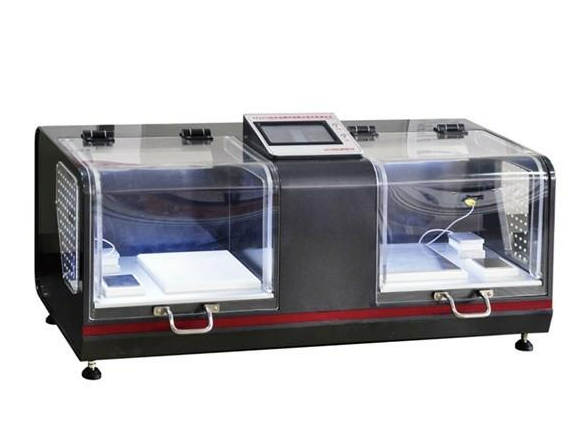
1. Definition & Application Scenarios
Fabric cool feeling tester specially simulates real heat conduction when human skin contacts fabrics. It objectively quantifies the coolness level of fabrics by collecting instantaneous maximum heat flow (qmax value), distinguishing ordinary fabrics from functional cool fabrics. It is indispensable for market access inspection of cool-feeling products, e-commerce quality control and foreign trade order verification.
Main Applicable Industries
Garment fabric manufacturers: R&D and quality control of cool ice silk T-shirts, yoga apparel, sun-protective clothing, cycling wear and underwear fabrics;
Home textile enterprises: Performance testing of cool bed sheets, pillowcases, cooling mats, seat cushions and sofa covers;
Chemical fiber filament manufacturers: Performance evaluation of cool polyester, cool polyamide and phase-change cool fibers;
Third-party textile testing laboratories and quality inspection institutes: Issuing CNAS-accredited cool feeling test reports;
University textile laboratories and auxiliary R&D enterprises: Comparative tests on the performance of cool finishing agents and functional coatings.
2. Working Principle of Fabric Cool Feeling Tester
The whole instrument adopts the temperature difference heat flow sensing method, fully complying with the testing logic specified in GB/T 35263-2017. It simulates the actual temperature difference between 35°C human skin and fabrics at room temperature of 20°C. Closed-loop automatic heat flow data collection is realized throughout the test to eliminate manual reading errors.
Simulate Temperature Difference Between Human Body and Ambient Environment
The sample carrier platform is thermostatically controlled at 20°C±0.5°C to simulate fabrics at room temperature; the thermal detection plate maintains a constant temperature of 35°C±0.5°C to simulate human skin temperature. The fixed temperature difference of 15°C reproduces the thermal environment when skin contacts cool fabrics.
Standardized Contact Pressure Application
The thermal detection plate is equipped with standard counterweights to ensure full contact between the copper plate and specimens with unified contact pressure, avoiding heat flow data deviation caused by contact gaps.
Instant Heat Flow Collection & Calculation of qmax Coolness Coefficient
The moment the high-temperature thermal detection plate contacts low-temperature fabric, heat quickly transfers to the fabric. A built-in high-precision heat flow sensor tracks real-time heat flux changes and automatically captures the peak maximum heat flow qmax, with the unit J/(cm²·s).
Coolness Judgment Criterion
A higher qmax value indicates stronger instant heat absorption and more obvious cool feeling on skin. The national standard clearly stipulates that a specimen with qmax ≥0.15 J/(cm²·s) is judged to have effective instant contact coolness.
Supplement: High-end composite models can simultaneously test fabric thermal conductivity and continuous heat dissipation performance, covering both instant coolness and long-term heat dissipation indicators.
3. Applicable Testing Standards (National & Industrial Standards)
(I) National Mandatory Testing Standards
GB/T 35263-2017 Textiles — Test and Evaluation for Contact Instant Cool Feeling Performance: Core universal national standard for domestic cool fabric testing and the fundamental standard for all cool-feeling product inspections;
GB/T 6529 Textiles — Standard Atmospheres for Conditioning and Testing: Unified pre-conditioning standard for specimens;
GB/T 8170 Rules of Rounding Off for Numerical Values & Expression and Judgement of Limiting Values: Specification for rounding qmax test results.
(II) Special Textile Industrial Standards
FZ/T 73067-2020 Cool Feeling Knitted Underwear: Special standard for finished cool underwear inspection;
FZ/T 50048-2020 Man-made Filament Yarns — Test Method for Instant Contact Cool Feeling Performance: Testing standard for cool chemical fiber raw materials;
FTTS-FA-019 Unified Specification for Cool Feeling Testing in Textile Industry.
(III) Overseas Reference Standards
Japan’s cold and warm feeling test method, South Korea’s fabric contact cold feeling test standard, applicable to inspection of cool fabric orders exported to Japan and South Korea.
4. Standardized Operation Procedures
Step 1: Specimen Pre-treatment (Mandatory Precondition, Cannot Be Skipped)
Condition specimens for more than 4 hours under the standard atmosphere specified in GB/T 6529 (temperature 21℃±2℃, relative humidity 65%±2%);
Cut 5 standard specimens of 200mm×200mm. Avoid fabric defects, wrinkles and stitching seams during sampling, and mark the skin-contact side of each fabric outward.
Step 2: Instrument Warm-up and Parameter Calibration after Power-on
Connect the 220V power supply and start the touch control system of the main unit;
Set standard parameters: carrier platform temperature 20℃, thermal detection plate temperature 35℃, single test duration 10s, 5 test cycles;
Calibrate heat flow sensors, temperature probes and counterweight pressure every month, and retain calibration records for CNAS laboratory audits.
Step 3: Flat Placement of Specimens
Lay the conditioned specimen flat on the carrier platform with the skin-contact side facing upward, without wrinkles or stretching. Close the equipment protective door to isolate airflow interference from the environment.
Step 4: Automatic Test Initiation
Tap "Start Test" on the screen. The equipment automatically completes constant temperature stabilization of the hot plate, vertical downward pressing to contact the specimen and real-time collection of heat flow curves. After each single test, the thermal detection plate automatically lifts and resets, and tests 5 groups of parallel specimens in sequence.
Step 5: Data Calculation and Report Export
The equipment automatically extracts the qmax peak value of each group, calculates the average value and standard deviation of 5 groups, and retains the results to 3 decimal places. Test reports support one-click export in PDF and Excel formats, with customizable sample numbers, batches and customer information. Test curves are stored locally permanently.
Step 6: Daily Cleaning and Maintenance of Instrument
Wipe dust and fiber debris on the thermal detection copper plate and carrier platform after testing. Cut off power and cover the instrument with a dustproof cover during long-term shutdown to prevent moisture corrosion of heat flow sensors and guarantee long-term stable testing precision.
5. Professional Selection Guide
Price alone cannot be the only factor when purchasing cool feeling testers. Comprehensive screening shall be carried out based on laboratory qualifications, testing categories and long-term operation and maintenance costs. The five key selection points are as follows:
1. Prioritize Standard Compatibility and Match Testing Categories
Domestic fabrics, home textiles and knitted underwear: Must support GB/T 35263-2017 and FZ/T 73067;
Chemical fiber filament manufacturers: Prioritize special models compatible with FZ/T 50048-2020.
2. Precision of Core Sensors
qmax heat flow resolution: 0.001 J/(cm²·s);
Temperature control accuracy: ±0.05℃ for carrier platform and thermal detection plate;
Heat flow detection error ≤2%;
Standard counterweight pressure ensures uniform contact without data fluctuation.
3. Intelligence and Data Management Capacity
Mandatory configurations: Color touch screen, multi-language switching (Chinese/English/Traditional Chinese), visual real-time heat flow curves, automatic average calculation of parallel samples, customizable report templates, WiFi wireless data transmission, compatibility with enterprise ERP paperless quality inspection systems.
4. Machine Body Material and Durability to Reduce After-sales Costs
The thermal detection copper plate and carrier platform are made of SUS304 stainless steel for oxidation resistance. The machine shell adopts hard anodized aluminum alloy, and the thermal insulation layer uses high-density thermal insulation materials. Imported components are adopted for core temperature control and heat flow sensors to reduce failure frequency.
5. Manufacturer Qualifications and After-sales Support
The manufacturer holds complete independent R&D and production qualifications for textile testing instruments, instead of OEM assembly;
Able to provide third-party metering calibration certificates;
Nationwide on-site installation and standardized SOP training for operators;
Clear whole-machine warranty period, in-stock supply of spare parts and 48-hour on-site after-sales response.
6. Manufacturer of Fabric Cool Feeling Tester
Suppliers of cool feeling testers in China fall into three categories: imported precision instrument brands, general textile instrument manufacturers and professional functional textile testing instrument manufacturers. Imported equipment delivers high precision yet comes with high prices and long after-sales cycles; traditional textile instrument factories only supply basic models with weak intelligent data modules. QINSUN focuses on R&D of testing equipment for functional fabrics with cool, quick-dry and moisture-wicking properties. Fabric cool feeling tester is its flagship product line featuring full standard coverage, balanced precision, intelligence and cost performance, making it the mainstream choice for laboratories, fabric factories and foreign trade enterprises.
(1) Full Standard Compatibility, One Machine for Domestic and Export Testing
The complete machine is originally designed synchronously in accordance with GB/T 35263-2017, FZ/T 73067, FZ/T 50048 and Japan & South Korea KES-F7 standards. Parameters can be switched without modification, fulfilling all domestic and export fabric testing demands with one single unit and eliminating repeated equipment procurement.
(2) High-precision Heat Flow Sensing System, Data Consistent with Third-party Testing Institutions
qmax resolution: 0.001 J/(cm²·s), heat flow detection error ≤2%;
Dual independent temperature control modules: carrier platform 20℃±0.05℃, thermal detection plate 35℃±0.05℃, constant temperature difference of 15℃;
Integrated standard counterweight probe delivers uniform contact pressure and high repeatability of parallel sample data;
Optional extended modules support simultaneous testing of fabric thermal conductivity and long-term heat dissipation performance.
(3) Integrated Intelligent Software Adapted to Paperless CNAS Laboratories
High-definition touch operation screen with three-language switching (Chinese/English/Traditional Chinese) and simplified operation logic;
Visual real-time dynamic heat flow curves with automatic extraction of qmax peak values to eliminate manual reading errors;
One-click export of test reports in Excel and PDF formats, customizable enterprise testing templates supporting input of sample batches and customer information;
WiFi wireless data permanent local storage, compatible with factory ERP systems to realize paperless quality inspection management.
(4) Industrial-grade Heat Insulation and Anti-corrosion Structure with Low Operation Costs
The whole machine shell is made of hard anodized aluminum alloy, and the thermal detection copper plate adopts oxidation-resistant SUS304 stainless steel. A high-density thermal insulation layer is built into the machine body to eliminate ambient temperature interference. Imported components are used for core temperature control and heat flow sensors.
(5) Two Flagship Models Cover All Application Scenarios
Standard Single-station Cool Feeling Tester (National Standard Model)
Suitable for small and medium fabric factories, R&D laboratories and home textile enterprises. Compact desktop size (1000×580×446mm), easy operation and high cost performance, fully meeting routine testing requirements specified in GB/T 35263.
Multi-functional Composite Cold & Warm Feeling Tester (For Foreign Trade & Inspection Institutes)
Supports three testing items: instant coolness, long-term heat conduction and contact warm retention. Ideal for large quality inspection institutes, chemical fiber raw material groups and fabric enterprises exporting to Japan and South Korea. It supports one-click switching between multiple standards and delivers higher efficiency for batch testing.
(6) Complete Supporting Services to Meet CNAS Laboratory Qualification Audits
Each equipment is delivered with original factory calibration report, standard matching specification and complete SOP operation manual. QINSUN provides on-site installation and commissioning, standardized training for operators and annual metering calibration guidance. All supporting documents can be directly used for CNAS laboratory qualification reviews.
Conclusion
Fabric cool feeling tester is core testing equipment for quantifying the performance of functional cool fabrics. Before purchasing, buyers shall clarify target sales markets (domestic/export), test sample types (fabrics/chemical fiber filaments/cooling mats) and CNAS laboratory qualification requirements, and prioritize professional instrument brands with full standard coverage, high-precision heat flow sensors and comprehensive nationwide after-sales service. If you need a fabric cool feeling tester compatible with both national standards and Japan & South Korea export standards and equipped with intelligent data management, QINSUN provides mature complete machine solutions and sound nationwide after-sales system, offering free customized parameter schemes, on-site sample test demonstrations and technical docking services.
2026-07-07 12:59
- Related News
How to Choose a Suitable Drying Rate Tester?
What Is a Fabric ICI Pilling and Snagging Box?
How to Choose an ICI Mace Snag Tester?
What a Fiber Oil Extractor Actually Does?
Snap Button Pull Tester: Garment Accessory Tensile Strength Testing Guide
Guide to Block-on-Ring Friction Wear Equipment
How to Choose Universal Multifunction Tribology Test Machine
How to Choose an Air-Cooled Xenon Lamp Aging Chamber
What Does an Ozone Aging Chamber Test? Standards and Operating Methods
Fabric Cool Feeling Tester: Working Principle, Standards and Selection Guide