

Dry Microbial Penetration Resistance Tester | ISO 22612 / YY/T 0506.5

The Dry Microbial Penetration Resistance Tester is designed to evaluate the resistance of materials to bacterial penetration carried by dry particles in the size range of human dandruff. It is widely used for testing medical protective equipment, including surgical gowns, drapes, and clean air suits. The instrument plays a critical role in ensuring compliance with EN 13795 and EN 14126, supporting CE marking under the European Union Medical Device Directive 93/42/EEC.
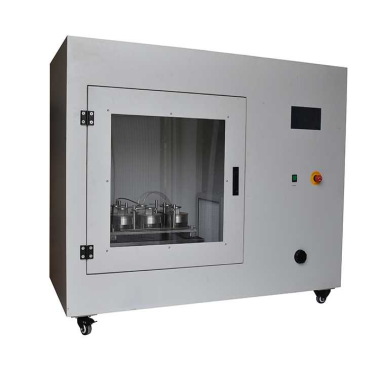
This tester provides precise, reproducible results for evaluating the protective performance of materials against microbial contamination from dry particulates.
Applications
The tester is applicable for:
Medical protective textiles including surgical gowns, drapes, and clean air suits
Material performance evaluation in medical device manufacturing
Quality control in production departments
R&D testing for new protective materials
Compliance testing for third-party laboratories and regulatory agencies
Standards Compliant
ISO 22612 — Determination of resistance of materials used in protective clothing to penetration by dry microbial particles
YY/T 0506.5-2009 — Medical protective clothing – Test method for dry microbial penetration resistanceCompliance with EN 13795 and EN 14126 ensures conformity with European medical device regulations and CE marking requirements.
Test Principle
Samples are fixed individually on stainless steel test containers. Five containers carry Bacillus subtilis, while one container with uncontaminated talc serves as a control. Petri dishes are placed beneath each container to collect any particles passing through the material.
The supporting container platform is oscillated using a gas ball type vibrator. All talcum powder passing through the sample is collected on the Petri dish, which is then cultured. The microbial penetration resistance is evaluated by counting the colonies formed.
Main Features
Pneumatic Ball Vibrator — Provides uniform oscillation of test containers
High-Frequency Vibration — 20,800 times per minute with a force of 650 N
Six Workstations — Allows simultaneous testing of multiple samples
Negative Pressure Cabinet — Adjustable from -50 Pa to -200 Pa with ≥99.99% filtration efficiency
High Data Capacity — Stores up to 100,000 test groups
Durable Construction — Stainless steel containers, marble workbench, and robust oscillation system ensure long-term reliability
Technical Parameters
| Parameter | Specification |
|---|---|
| Vibration Type | Pneumatic ball vibrator |
| Vibration Frequency | 20,800 times/min |
| Vibration Force | 650 N |
| Worktable Size | 40 cm × 40 cm × 10 mm |
| Workbench Material | Marble plate |
| Experimental Container | Stainless steel test container |
| Number of Workstations | 6 |
| Negative Pressure Range | -50 Pa to -200 Pa |
| Filter Efficiency | ≥ 99.99% |
| Cabinet Ventilation Flow | ≥ 5 m³/min |
| Data Storage Capacity | 100,000 groups |
| Power Supply | AC 220V, 50 Hz |
FAQ
1. What is a Dry Microbial Penetration Resistance Tester?
It is an instrument used to evaluate how effectively protective textiles resist bacterial penetration carried by dry particles.
2. Why is this test important?
It ensures surgical gowns, drapes, and cleanroom garments provide adequate microbial protection, helping manufacturers meet EN 13795, EN 14126, and EU CE requirements.
3. What materials can be tested?
Medical nonwovens, surgical gowns, drapes, clean air suits, and other protective textiles.
4. How does the test work?
Samples are fixed on containers carrying Bacillus subtilis in talc powder. The containers are oscillated, and particles passing through the sample are collected on Petri dishes for colony counting.
5. How many samples can be tested simultaneously?
The instrument features six workstations, allowing up to six samples to be tested at the same time.
2025-12-08 17:46
- Related News
How to Choose a Suitable Drying Rate Tester?
What Is a Fabric ICI Pilling and Snagging Box?
How to Choose an ICI Mace Snag Tester?
What a Fiber Oil Extractor Actually Does?
Snap Button Pull Tester: Garment Accessory Tensile Strength Testing Guide
Guide to Block-on-Ring Friction Wear Equipment
How to Choose Universal Multifunction Tribology Test Machine
How to Choose an Air-Cooled Xenon Lamp Aging Chamber
What Does an Ozone Aging Chamber Test? Standards and Operating Methods
Fabric Cool Feeling Tester: Working Principle, Standards and Selection Guide