Thermal Conductivity Tester (Heat Flow Method)
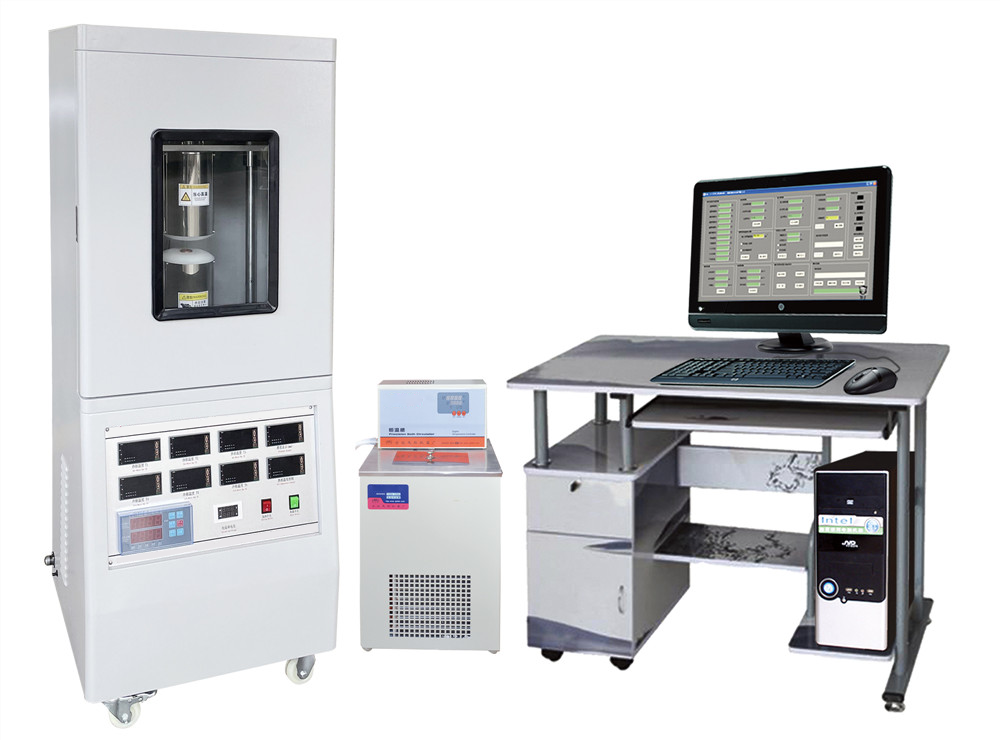


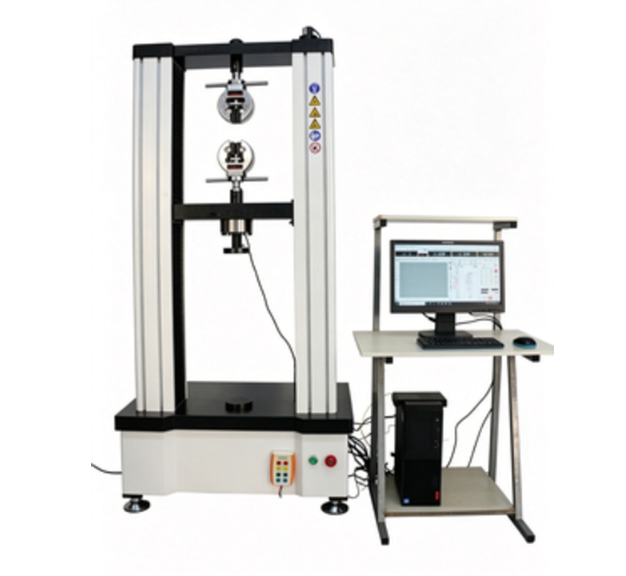
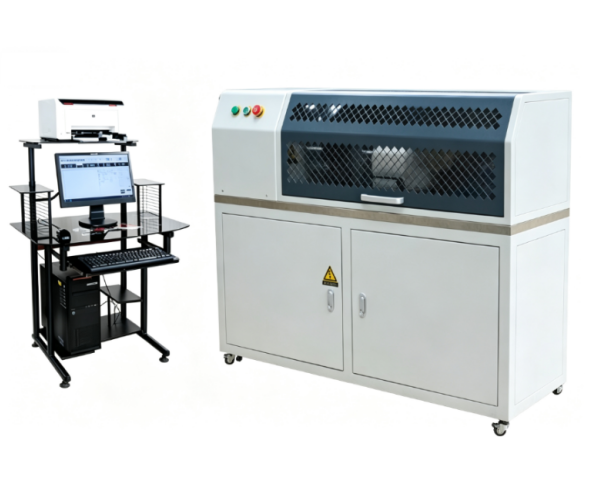
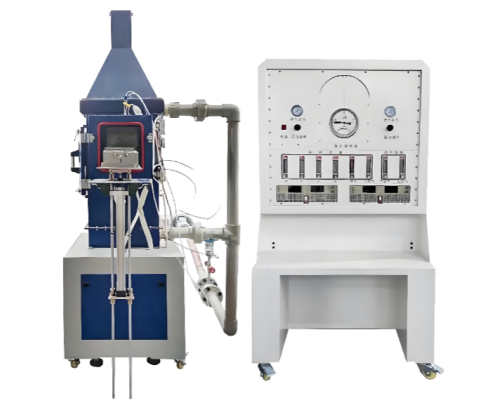
Thermal Conductivity Tester (Heat Flow Method) is a precision instrument designed for measuring thermal conductivity, thermal resistance, and interfacial contact thermal resistance of thin thermally conductive and electrically insulating solid materials. The system is fully designed and manufactured in accordance with ASTM D5470-2017. adopting the steady heat flow method with optimized temperature gradient measurement. With automated pressure loading, automatic thickness measurement, multi-point temperature detection, and computer-controlled operation, the instrument enables accurate evaluation of thermal resistance curves under different pressures and temperatures. It is widely used for thermal performance analysis of solid sheet materials, interface materials, and high-conductivity components in laboratory and industrial environments.
Application
The Thermal Conductivity Tester is mainly used for thermal performance evaluation of thin solid materials and interface materials, including:
Thin thermally conductive solids and electrically insulating materials
Thermal interface materials such as thermal grease, thermal silicone, resins, and rubber
Ceramic materials including beryllium oxide ceramics and alumina ceramics
Metal substrates and composite boards such as aluminum substrates and copper-clad laminates
Engineering plastics and polymer-based materials
Graphite materials including graphite paper, graphite sheets, carbon felt, and foam copper
Solid sheet samples, with optional frames for testing powder and paste materials
The instrument measures thermal conductivity, thermal resistance, and interfacial contact thermal resistance, supporting testing under different pressures and temperatures.
Standards
ASTM D5470-2017
Standard Test Method for Thermal Transmission Properties of Thin Thermally Conductive Solid Electrical Insulation Materials
MIL-I-49456A
Insulation Sheet Materials, Thermally Conductive, Resin-Based and Glass Fiber Reinforced
GB/T 5598-2015
Method for Determination of Thermal Conductivity of Beryllium Oxide Ceramics
GB/T 29313-2017
Test Method for Thermal Conductive Properties of Electrical Insulating Materials
Parameters
| Item | Specification |
|---|---|
| Thermal conductivity range | 0.01–50 W/m·K; 5–500 W/m·K (high-conductivity mode, automatic software switching) |
| Thermal resistance range | 0.05–500 cm²·K/W |
| Sample size (standard) | Φ30 mm or 20 × 20 mm |
| Optional sample sizes | Φ15 mm, Φ50 mm, 25.4 × 25.4 mm (customized by contract) |
| Sample thickness range | 0.001–50 mm (typical: 0.02–20 mm) |
| Hot plate temperature range | Room temperature to 99.99 °C (standard) |
| Optional hot plate range | Room temperature to 299.9 °C / 500 °C |
| Cold plate temperature range | 0–99.99 °C |
| Cold plate control accuracy | 0.01 °C |
| Pressure range | 0–1000 N |
| Pressure control | Servo motor control, accuracy 0.1 N |
| Thickness measurement range | 0–50.00 mm |
| Thickness resolution | 0.001 mm, automatic measurement |
| Number of samples | 1 piece (thin films or stacked layers supported) |
| Measurement error | ≤3% (thermal conductivity & resistance) |
| Contact thermal resistance error | ≤5% |
| Power supply | AC 220 V / 50 Hz |
| Power consumption | 1000 W |
Features
Designed and manufactured fully in accordance with ASTM D5470-2017
Automated servo motor pressure control with precise force setting and holding
Automatic thickness measurement with high resolution
Six-point temperature gradient detection for improved measurement accuracy
Thermal protection structure around the test rod to reduce environmental influence
Capable of measuring thermal resistance curves under different pressures and temperatures
Optimized mathematical models for thermal conductivity and contact thermal resistance
Automatic cold-end temperature compensation without ice-water compensation
Fully computer-controlled operation with data acquisition, analysis, and reporting
Available in standard floor-standing and compact benchtop configurations
Accessories
Main testing unit
Thermal analysis software (Chinese and English versions)
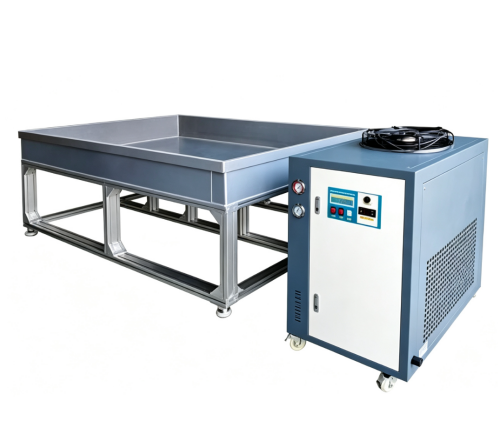
Precision low-temperature constant-temperature water bath (0.01 °C accuracy)
Computer (user-selectable)
Calibration reference samples (2 pieces)
Sample fixtures and accessories (solid sample molds, powder, paste, and grease sample cells)
Maintenance Information
Keep hot and cold plates clean and free from surface damage
Regularly inspect pressure and thickness measurement systems
Verify system accuracy using reference samples when required
Maintain stable water bath operation for cold-end temperature control
Store accessories and sample fixtures properly when not in use
FAQ
1. What types of materials can be tested with the Thermal Conductivity Tester?
The system is designed for testing thin solid thermally conductive and electrically insulating materials. Typical materials include thermal greases, silicone pads, resins, rubber, beryllium oxide ceramics, alumina ceramics, engineering plastics, aluminum substrates, copper-clad laminates, graphite sheets, carbon felt, and foam copper. Solid sheet samples are tested directly, while powder or paste materials can be measured using optional frames and sample cells. The instrument supports both conventional and high-conductivity materials.
2. What thermal parameters can be obtained from one test?
The instrument measures thermal conductivity, thermal resistance, and interfacial contact thermal resistance. It can also generate thermal resistance curves under different pressures and temperatures. By applying optimized mathematical models and multi-point temperature gradient detection, the system provides reliable evaluation of material heat transfer behavior as well as interface performance between contacting surfaces.
3. How is pressure applied and controlled during testing?
Pressure is applied automatically using a servo motor control system with a range of 0–1000 N. The pressure value can be precisely set and maintained, with a control accuracy of 0.1 N. This enables stable and repeatable testing under different loading conditions, which is essential for evaluating contact thermal resistance and pressure-dependent thermal performance.
4. Does the system require ice-water compensation for temperature control?
No. The instrument uses an automatic cold-end temperature compensation system, eliminating the need for traditional ice-water compensation. This design improves operational convenience and measurement stability while maintaining high temperature control accuracy.
5. How should I select the suitable configuration for different thermal materials?
Material type, thermal conductivity range, thickness, sample size, and testing temperature requirements affect configuration selection. For solutions and application guidance, please contact QINSUN engineers for professional support.
Leave Message Get Price