Transient Fast Hot-Wire Thermal Conductivity Tester
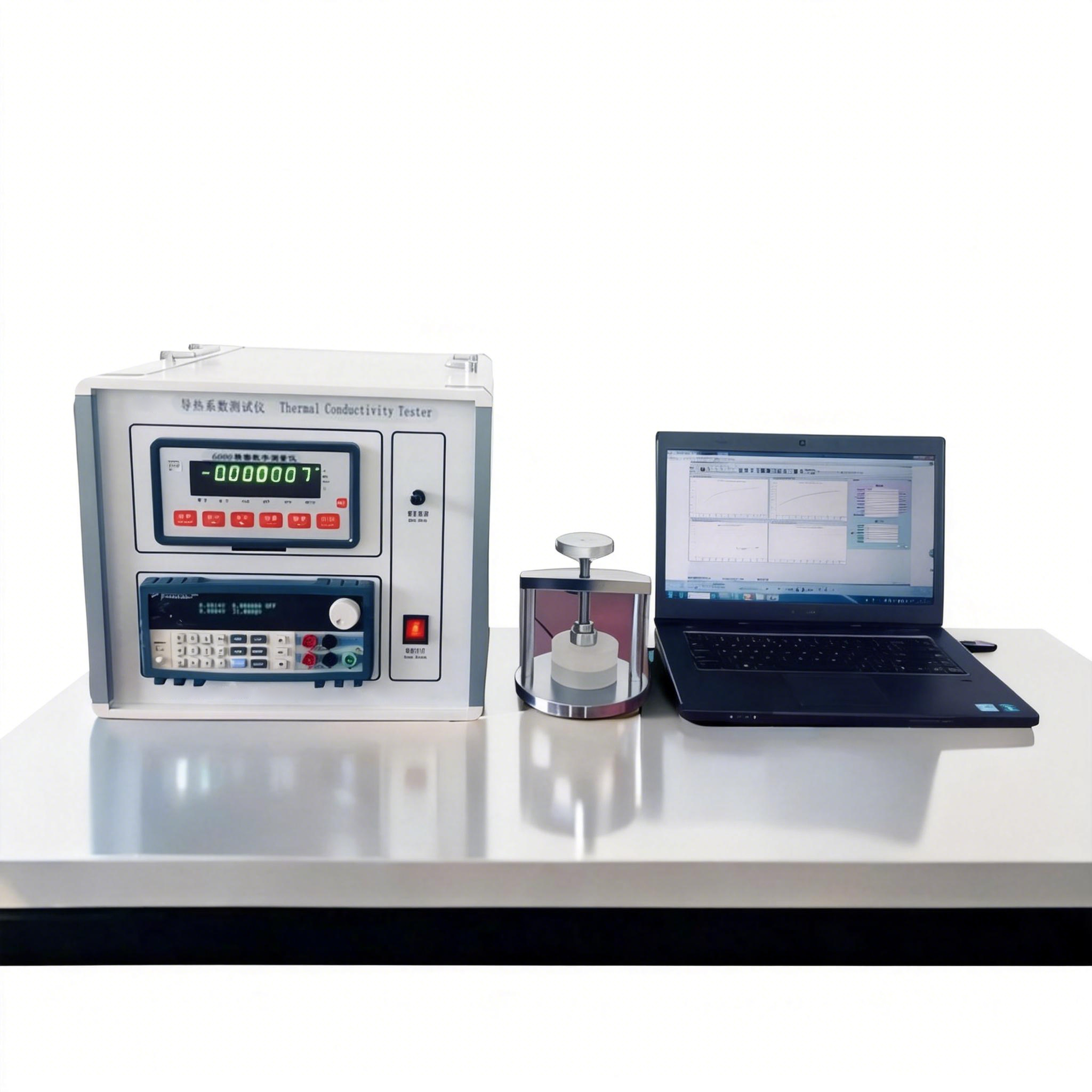


Transient Fast Hot-Wire Thermal Conductivity Tester is a compact and high-precision device designed for fast and accurate measurement of thermal conductivity using the hot wire (transient) method. The instrument employs a line-source heat probe with a very high length-to-diameter ratio to simulate an infinitely long, infinitely thin heat source. Its plug-and-play sensor interface and intuitive software allow rapid setup and operation, producing reliable results in just 1–2 minutes. The instrument is small, portable, and cost-effective, making it suitable for production, quality control, and R&D across multiple industries.
Application
The instrument is suitable for testing thermal conductivity of a wide range of materials, including:
Plastics and polymers
Soil and soft rock samples
Liquid and paste materials
Powders, granules, and colloids
Its versatility, fast measurement speed, and high accuracy make it ideal for:
Industrial production monitoring
Quality control laboratories
Research and development in materials science
Field testing where portability and rapid results are required
Standards
The instrument complies with and references the following international and national standards:
ASTM D5334-2008
Standard Test Method for Thermal Conductivity of Soil and Soft Rock by Thermal Needle Probe Procedure
GB/T 10297-2015
Determination of Thermal Conductivity of Non-Metallic Solid Materials — Hot Wire Method
GB/T 11205-2009
Determination of Thermal Conductivity of Rubber — Hot Wire Method
ASTM C1113-2009
Test Method for Thermal Conductivity of Refractory Materials by Hot Wire Method
ASTM D5930-2009
Standard Test Method for Thermal Conductivity of Plastics by Transient Linear Source Technique
Parameters
| Item | Specification |
|---|---|
| Thermal conductivity range | 0.0001–50 W/m·K |
| Resolution | 0.00001 W/m·K |
| Relative measurement error | ≤3% |
| Repeatability error | ≤3% |
| Temperature resolution | 0.01 °C |
| Measurement time | 2–180 s (adjustable) |
| Sample testing temperature | -40–130 °C (standard configuration: room temperature) |
| Sample types | Plastics, soil, soft rock, liquids, pastes, powders, granules, colloids |
| Sample shapes | Block, sheet, paste, powder, particle, colloid, liquid; round, square, irregular shapes |
| Sample size | Cylinder: Ø30 mm; Square: 30 × 30 mm; Thickness >1 mm |
| Power supply | AC 220 V ±10%, 50/60 Hz |
| Power consumption | <200 W |
| Instrument dimensions | 380 × 400 × 165 mm |
| Weight | 5 kg |
Features
High-precision transient hot-wire thermal conductivity measurement
Plug-and-play sensor interface and intuitive software
Rapid measurement, typically 1–2 minutes from setup to results
Wide applicability: solids, liquids, pastes, powders, granules, colloids
Small, portable, and cost-effective, ideal for lab and field use
Optional high/low temperature or vacuum chambers available (custom contract)
Accessories
Main instrument
Hot wire sensor probe
Sample holders for block, paste, powder, and liquid materials
Analysis software
Calibration reference sample
Power cable
Test Procedures
Select the appropriate sensor probe for the sample type.
Prepare the sample with a relatively flat surface.
Connect the sensor using the plug-and-play interface.
Set measurement parameters (time, temperature) through the software.
Place the sample in the testing area or holder.
Start the measurement; data acquisition occurs automatically.
Review results in the software and save or export reports.
Maintenance Information
Keep the sensor probe clean and free from debris.
Inspect and replace sample holders or inserts if worn.
Ensure the instrument is powered correctly with stable AC supply.
Store in a dry environment to prevent moisture or dust damage.
Perform calibration checks regularly using the reference sample.
FAQ
1. What types of materials can be tested with this instrument?
The
Transient Fast Hot-Wire Thermal Conductivity Tester supports a wide range of materials, including plastics, soil, soft rock, liquids, pastes, powders, granules, and colloids. Sample shapes can be round, square, or irregular, as long as there is a relatively flat surface for the probe. This versatility allows testing in labs, production lines, and field environments.
2. How fast can a measurement be completed?
The instrument is designed for rapid testing. From sample preparation to obtaining results, typical measurement times range from 1 to 2 minutes. This efficiency is achieved through the plug-and-play sensor interface and streamlined software operation, making it suitable for both high-throughput production monitoring and research applications.
3. Is the instrument suitable for low-temperature or high-temperature samples?
Yes. The standard configuration allows testing from room temperature up to 130 °C. Optional environmental chambers can extend the measurement range to lower or higher temperatures or even provide vacuum conditions. Custom configurations are available per contract to meet specific testing requirements.
4. How accurate and repeatable are the measurements?
Thermal conductivity measurements have a relative error of ≤3%, and repeatability is also ≤3%. Temperature resolution is 0.01 °C, ensuring precise and reliable results for a wide range of materials, from solids to liquids and pastes.
Leave Message Get Price