Universal Finger Abrasion Tester EN 60068
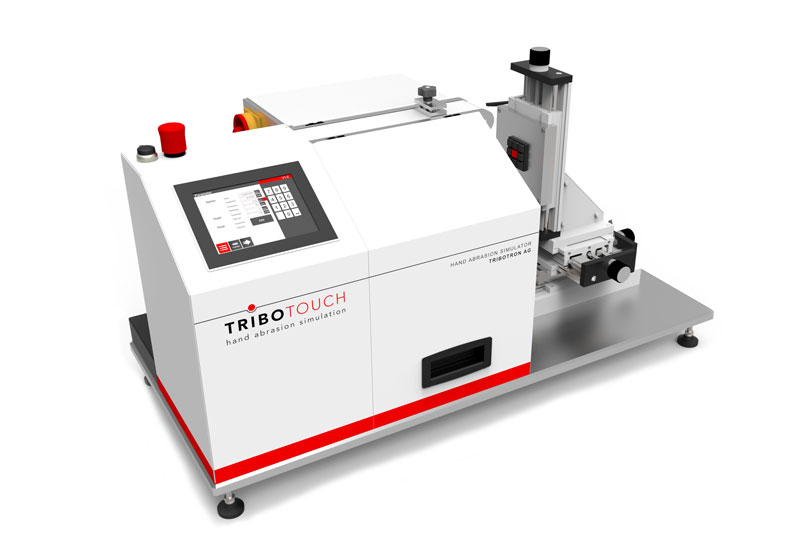


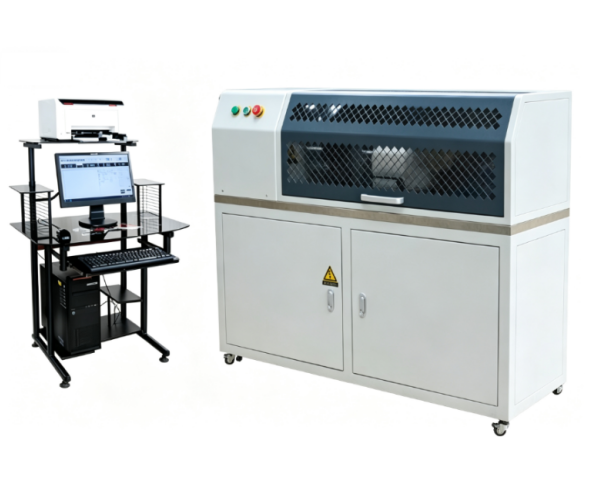
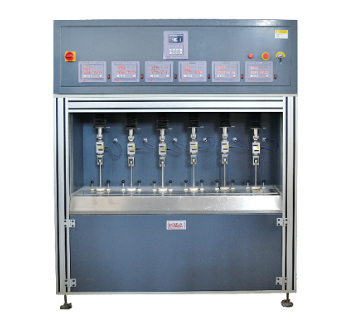
The Universal Finger Abrasion Tester simulates the mechanical and chemical interactions between a human finger and a surface. It evaluates the effects of friction, body oils, sweat, and potential chemical reactions on material surfaces over time. The device uses an electronically controlled piston (artificial finger) to replicate realistic wear patterns, providing precise, reproducible results for product durability and surface performance testing.
Application
(1) Friction simulation between fabric and skin
(2) Material wear and dust accumulation simulation
(3) Leather abrasion resistance testing
(4) High-roughness surface mechanical wear evaluation
(5) Chemical effect simulation from hand cream or sunscreen
(6) Artificial sweat chemical interaction testing
Standards
(1) EC 68-2-70 – Environmental testing, mechanical and chemical durability
(2) EN 60068-2-70 – European standard for mechanical and chemical stress testing
(3) DIN 60068-2-70 – German standard for material abrasion and durability
Parameters
| Parameter | Value |
|---|---|
| Normal Load | 1, 5, 10, or 20 N |
| Number of Cycles | 1 – 100 million |
| Friction Diameter | 1 – 40 mm |
| Power Supply | 110V / 230V |
| Supply Mode | Cyclic |
| Control Method | Electronically controlled linear motor |
| Piston Type | Artificial finger with adjustable pressure |
Features
(1) Flexible system design allowing adjustment of all key test parameters
(2) High-quality, reliable construction for long-term use
(3) Accurate and reproducible testing results
(4) Adjustable settings for various operational conditions
(5) Minimal maintenance requirements
(6) Simulates both mechanical wear and chemical interactions
Accessories
(1) Artificial finger piston assembly
(2) Friction pads of different diameters
(3) Power and control unit
(4) Software for test programming and monitoring
Test Procedures
Mount the artificial finger piston onto the test unit.
Fix the material sample securely on the test platform.
Set the desired load, friction diameter, and cycle count.
Initiate the test program; the linear motor applies precise cyclic motion to simulate wear.
Monitor results via the software; after completion, remove the sample for evaluation of wear, abrasion, or chemical effect.
Maintenance Information
(1) Periodically inspect the artificial finger and friction pads for wear.
(2) Clean the sample platform and friction surfaces after each test.
(3) Check electrical connections and linear motor operation regularly.
(4) Calibrate force and cycle counters annually to maintain accuracy.
(5) Lubricate moving components as recommended by the manufacturer.
FAQ
(1)What is a Universal Finger Abrasion Tester used for?
A Universal Finger Abrasion Tester is used to evaluate the wear resistance of surfaces exposed to repeated finger contact. It is commonly used for testing coatings, printed layers, plastic housings, electronic panels, and automotive interior parts.
(2)What materials can be tested with a Finger Abrasion Tester?
It can test various surfaces, including paint coatings, powder coatings, plastics, leather, films, printed labels, touch panels, and decorative materials.
(3)Which standards are related to finger abrasion testing?
Common references include IEC 60068-2-70 for abrasion of markings and surfaces. Specific industries may also use internal OEM test methods depending on product requirements.
(4)What parameters affect finger abrasion test results?
Key factors include abrasion load, rubbing stroke, rubbing speed, abrasion material, and number of cycles. These conditions must remain consistent to achieve repeatable results.
(5)How to choose a suitable Universal Finger Abrasion Tester?
Selection should consider test force range, stroke length, speed control, abrasion head design, fixture compatibility, and whether the equipment can meet required industry testing methods.
Leave Message Get Price