UV Solar Simulators
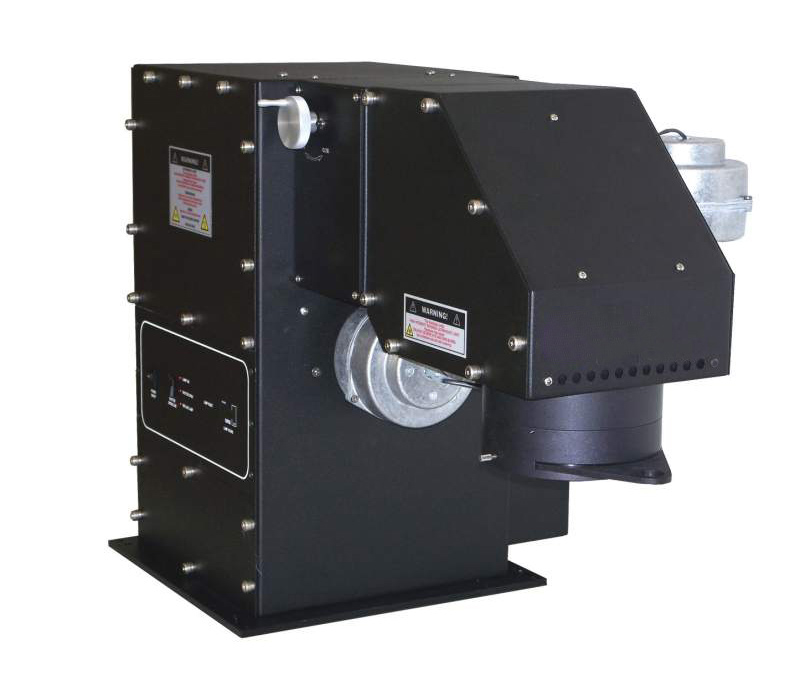


The UV Solar Simulator is a high-precision ultraviolet irradiation system designed for photobiology research, sunscreen evaluation, and UV-related safety testing. It uses a xenon arc lamp with optimized optical filters to reproduce solar UV radiation conditions, providing stable, uniform, and adjustable UV output for both in-vivo and in-vitro studies.
With a patented optical design, the system achieves irradiance non-uniformity below 5% across the working area and allows adjustable output from 10% to 100% of the maximum solar constants. It is widely used for SPF testing, UVA/UVB photoprotection evaluation, photo-toxicity research, photo-allergy studies, and photo-genotoxicity investigations.
Application
The UV Solar Simulator is mainly applied in photobiology, cosmetics, medical research, and material evaluation fields, including:
(1) Sunscreen and Photoprotection Testing
SPF evaluation of sunscreen products
UVA photoprotection performance testing
Broad-spectrum sunscreen research
Pre-irradiation testing of sunscreen formulations
(2) Photobiology Research
In-vivo skin response studies
In-vitro cellular UV exposure experiments
Photo-toxicity evaluation
Photo-allergy mechanism research
Photo-carcinogenicity and photo-genotoxicity studies
(3) Cosmetics and Dermatology Research
UV resistance evaluation of cosmetic ingredients
Skin protection product development
Active ingredient stability studies under UV exposure
(4) Material UV Exposure Testing
UV aging evaluation of polymers and coatings
Optical material degradation studies
UV durability analysis of medical and consumer products
Standards
The UV Solar Simulator complies with international photobiology and sunscreen testing standards:
(1) FDA 21 CFR Part 201, §201.327 – Sunscreen Drug Products for Over-the-Counter Human Use
(2) ISO 24444:2019(E) – Cosmetics – Sun Protection Test Methods – In Vivo Determination of the Sun Protection Factor (SPF)
(3) ISO 24443:2021(E) – Cosmetics – Determination of UVA Photoprotection In Vitro
(4) CTFASA/COLIPA/JCIA/CTFA International SPF Test Method (May 2006)
Parameters
| Item | UV-2 | UV-4 | UV-6 |
|---|---|---|---|
| Lamp Type | Xenon Arc Lamp | Xenon Arc Lamp | Xenon Arc Lamp |
| Lamp Power | 1000 W | 1000 W | 1600 W |
| Output Beam Size | 2 × 2 in. | 4 × 4 in. | 6 × 6 in. |
| Beam Uniformity | ≤5% | ≤5% | ≤5% |
| Beam Divergence Half Angle | <±4° | <±4° | <±3° |
| Typical Output Power | 8 Solar Constants | 6 Solar Constants | 4 Solar Constants |
| Working Distance | 11.5 ±0.5 in. | 4.0 ±0.5 in. | 6.0 ±0.5 in. |
| Spectral Match | FDA CFR Part 201.327, ISO 24444, ISO 24443, CTFASA/COLIPA/JCIA/CTFA | Same | Same |
| Temporal Instability | <2% over 24 hrs | <2% over 24 hrs | <2% over 24 hrs |
| Irradiance Uniformity | <5% non-uniformity | <5% non-uniformity | <5% non-uniformity |
| Line Regulation | 0.01% | 0.01% | 0.01% |
| Lamp Housing Power Supply | 95–264 VAC / 3A / 47–63 Hz | Same | 95–264 VAC / 3A / 47–63 Hz |
| Power Supply Unit | 95–264 VAC / 12A / 47–63 Hz | Same | 190–264 VAC / 15A / 47–63 Hz |
FAQ
(1) What is the main purpose of the UV Solar Simulator?
The UV Solar Simulator is designed to reproduce controlled solar UV radiation for evaluating biological effects, sunscreen protection performance, and UV durability of materials. It provides stable and repeatable irradiation conditions required for SPF testing, UVA evaluation, photo-toxicity studies, and photobiological research.
(2) Why is xenon arc lamp technology used in this UV simulator?
Xenon arc lamps provide a broad and stable spectrum similar to natural sunlight, making them suitable for photobiological testing where accurate UV simulation is required. Combined with optical filters, the system can reproduce specific solar UV conditions required by international SPF and UVA testing standards.
(3) What standards can this UV Solar Simulator support?
The system is designed for applications following FDA sunscreen regulations, ISO 24444 SPF testing, ISO 24443 UVA photoprotection evaluation, and international CTFASA/COLIPA/JCIA/CTFA testing methods. It helps laboratories perform standardized UV exposure experiments with reliable repeatability.
(4) How should users select the suitable UV Solar Simulator model?
Model selection mainly depends on the required exposure area, irradiation intensity, sample size, and testing purpose. The UV-2 model is suitable for smaller biological samples, while UV-4 and UV-6 provide larger exposure areas for broader testing applications. Users should also consider required solar constants, working distance, and automation requirements.
(5) Can the UV Solar Simulator be customized for different research applications?
Yes. The system can be configured with different beam sizes, optical filters, calibration systems, shutter controls, and automation functions according to specific testing requirements. For customized UV simulation solutions, SPF testing systems, or laboratory integration support, please contact our engineering team.
Leave Message Get Price