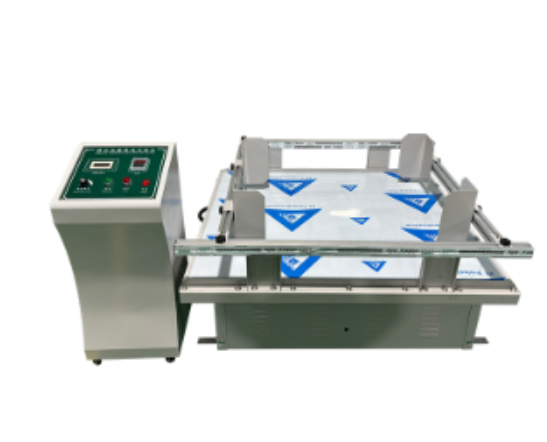
BBA-Grade Desktop/Vertical Solar Simulator
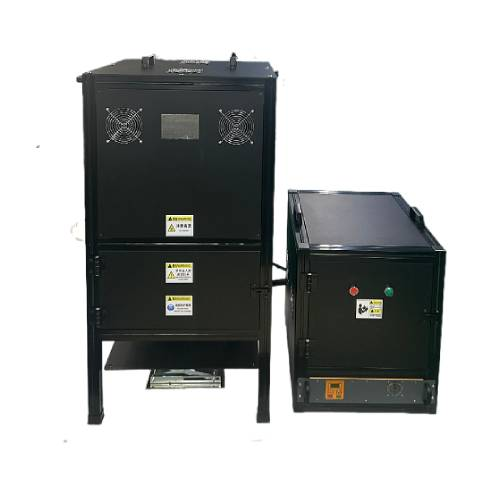


The BBA-Grade Desktop/Vertical Solar Simulator for Photovoltaic Module Testing is a high-precision laboratory solar simulation system designed to provide controlled and stable solar irradiation environments for photovoltaic testing and solar-related research. By accurately reproducing solar intensity, spectral distribution, and illumination conditions on a defined test plane, the system enables reliable evaluation of photovoltaic module performance, I-V characteristics, thermal response, and light-induced material behavior. With a compact desktop or vertical structure, intelligent LED spectral control, and BBA-grade illumination performance, it is suitable for laboratories, research institutions, and photovoltaic development centers requiring accurate indoor solar simulation.
Application
(1) Photovoltaic Module and Solar Cell Testing
Used for evaluating photovoltaic conversion efficiency, current-voltage (I-V) characteristics, output performance, and thermal behavior of solar cells and PV modules.
(2) Solar Thermal Research
Provides simulated solar heat sources for testing solar thermal collectors, heat absorption materials, and thermal storage systems.
(3) Photochemistry and Solar Material Research
Used for studying reaction kinetics, photoelectric effects, and degradation behavior of materials under controlled solar exposure.
(4) Plant Growth and Photobiology Research
Provides standardized artificial sunlight conditions for indoor plant cultivation studies and biological light response experiments.
(5) Indoor Solar Lighting Simulation
Suitable for simulating natural sunlight environments in laboratories, offices, and commercial spaces with insufficient sunlight exposure.
Standards
(1) IEC 60904-9 – Photovoltaic Devices: Requirements for Solar Simulators
(2) ASTM E927 – Laboratory Simulation of Solar Radiation
(3) IEC 60904-3 – Measurement of Photovoltaic Current-Voltage Characteristics
(4) ISO 9060 – Solar Irradiance Measurement Standards
(5) ASTM G173 – Reference Solar Spectra for Testing
(6) JIS C 8912 – Performance Guidelines for Solar Simulators
Technical Parameters
| Performance Item | Technical Specification |
|---|---|
| Simulator Type | Desktop / Vertical BBA-Grade Solar Simulator |
| Light Source Type | High-brightness LED with multi-channel spectral control |
| Light Source Lifespan | ≥20,000 hours |
| Illuminated Area | Adjustable plane, typical 0.3 × 0.3 m to 1 × 1 m |
| Maximum Irradiance | Up to 1000 W/m² adjustable |
| Minimum Irradiance | 100 W/m² |
| Spectral Range | 400–1100 nm (adjustable) |
| Spectral Matching | BBA-grade standard, multi-channel LED control |
| Light Uniformity | ±2% across effective test plane |
| Control Modes | Manual mode / Program mode / Timed flash mode |
| Desktop Dimension | Approx. 0.8 × 0.5 × 0.7 m |
| Vertical Dimension | Approx. 1.2 × 0.6 × 1.8 m |
| Operating Voltage | 220 V ±10% AC, 50/60 Hz |
| Cooling System | Integrated air cooling with thermal protection |
Features
(1) BBA-Grade Solar Simulation Accuracy
Provides controlled spectral output and irradiance distribution suitable for professional photovoltaic and solar research applications.
(2) Multi-Channel LED Spectral Control
Uses independently controlled LED channels to adjust spectral composition according to different testing requirements.
(3) Excellent Illumination Uniformity
Maintains ±2% illumination uniformity across the effective testing area to improve measurement reliability.
(4) Adjustable Irradiance and Operating Modes
Supports flexible adjustment of irradiance, timing, and illumination programs for different experiments.
(5) Long-Life LED Light Source
LED technology provides extended service life, stable output, low maintenance requirements, and reduced energy consumption.
(6) Compact Desktop and Vertical Configurations
Available in different installation structures to fit various laboratory spaces and testing environments.
(7) Intelligent Control System
Supports manual operation, programmed testing, and timed flash modes for efficient experimental control.
(8) Wide Application Compatibility
Suitable for photovoltaic testing, solar thermal research, photochemistry, photobiology, and indoor sunlight simulation.
Maintenance Information
(1) Regularly clean the LED optical components and diffusion surfaces to maintain illumination accuracy.
(2) Periodically calibrate irradiance sensors and spectral control systems.
(3) Check cooling channels and thermal protection devices for proper operation.
(4) Keep the testing environment clean and prevent dust accumulation on optical components.
(5) Inspect electrical connections and control system functions regularly.
Conclusion
The BBA-Grade Desktop/Vertical Solar Simulator for Photovoltaic Module Testing provides a precise, stable, and flexible solution for indoor solar radiation simulation. With advanced LED spectral control, BBA-grade performance, excellent uniformity, and long-life operation, it supports accurate photovoltaic testing, solar material research, and controlled light experiments. Its compact desktop and vertical designs make it an ideal choice for laboratories, universities, and photovoltaic technology developers.
FAQ
(1) What is the BBA-Grade Desktop/Vertical Solar Simulator mainly used for?
The simulator is mainly used to reproduce controlled sunlight conditions for photovoltaic testing and solar-related research. It can evaluate PV module performance, I-V characteristics, conversion efficiency, thermal response, and material behavior under stable artificial sunlight. Compared with outdoor testing, it eliminates environmental fluctuations caused by weather, location, and time, providing more repeatable and reliable experimental conditions.
(2) How is this BBA-Grade Solar Simulator different from ordinary solar simulators?
The BBA-Grade Solar Simulator uses multi-channel LED spectral control technology to achieve more flexible spectrum adjustment and stable illumination output. Compared with traditional light sources, LED systems provide longer service life, lower maintenance requirements, and better controllability. It is especially suitable for laboratories requiring stable, programmable, and repeatable solar simulation conditions.
(3) How should users choose between desktop and vertical configurations?
The selection depends on the sample size, laboratory space, and testing application. Desktop models are suitable for small solar cells, materials, and research samples where compact installation is required. Vertical models are more suitable for larger samples, module testing, or applications requiring a larger illumination area. Users should consider sample dimensions, test distance, and future expansion requirements.
(4) Can this solar simulator be used for photovoltaic module efficiency testing?
Yes. The system provides controlled irradiance and spectral conditions for photovoltaic performance evaluation. When combined with electrical measurement equipment, it can be used to measure I-V characteristics, output performance, and conversion efficiency of solar cells and photovoltaic modules under standardized indoor solar conditions.
(5) How to select the suitable BBA-Grade Solar Simulator configuration?
The selection should be based on the test sample size, required irradiation area, spectral requirements, testing standards, and automation needs. For PV module testing, factors such as illumination uniformity, irradiance stability, and effective test area are important. For customized applications involving special spectra, integrated measurement systems, or automated testing platforms, please contact our engineers for a suitable configuration recommendation.
Leave Message Get Price