Rubber Hardness Tester (Shore D Durometer)
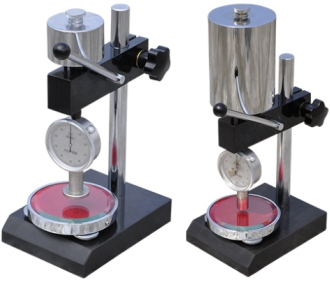


This Shore D hardness tester is an instrument used to measure the hardness of nitrile rubber and plastic products. When mounted on a compatible load test stand of the same model, it can be used in laboratories to determine the standard hardness of rubber or plastic specimens. It can also be used as a handheld device to measure the surface hardness of rubber or plastic parts mounted on equipment.
The Rubber Hardness Tester (Shore D Durometer) provides a simple and reliable method for measuring the hardness of hard rubber and plastic materials. With portable operation, accurate indentation measurement, and compliance with standard test methods, it is suitable for laboratory evaluation, production inspection, and material quality control.
Application
This tester is widely used in material testing and quality control:
(1) Hard rubber products — hardness verification and quality control
(2) Plastic materials — rigidity and surface hardness testing
(3) Industrial components — on-site hardness inspection
(4) Laboratory testing — standardized hardness evaluation
(5) Manufacturing quality control — consistency monitoring
(6) Research and development — material comparison and development
Standards
GB/T 531.1-2008 “Rubber, vulcanized or thermoplastic — Determination of indentation hardness — Part 1: Durometer method (Shore hardness)”, which is equivalent to ISO 7619-1:2004.
It also follows JJG 1039-2008 “Verification Regulation of Shore D Hardness Tester”.
Note: The hardness tester can also be used for plastic specimens and products; however, specimen conditioning and preparation must comply with GB/T 2918-1998 “Standard environments for conditioning and testing of plastics specimens”.
Technical Parameters
Item | Specification |
Indenter travel range | 0–2.5 mm |
Dial scale range | 0–100 HD |
Recommended measurement range | 20–90 HD |
Measurement error | ±1 HD |
Indenter tip radius | SR0.1 mm |
Indenter tip force | F = 455 HD (mN), where HD is Shore hardness reading |
Overall dimensions | 115 × 60 × 25 mm |
Features
(1) Dual-use design: handheld operation or bench-mounted testing
(2) High measurement accuracy with ±1 HD tolerance
(3) Wide hardness scale (0–100 HD) for various materials
(4) Compact and lightweight for portable use
(5) Durable structure suitable for industrial environments
(6) Standard-compliant testing ensuring reliable results
(7) Easy-to-read dial for quick measurement
(8) Suitable for both laboratory and field applications
FAQ
(1) What materials can be tested with a Shore D Durometer?
The tester is mainly used for hard rubber, vulcanized rubber, thermoplastic rubber, and plastic materials. It is suitable for evaluating material hardness and consistency during development and production.
(2) What does Shore D hardness indicate?
Shore D hardness indicates the resistance of a material surface to indentation. A higher value generally represents a harder material with greater resistance to deformation.
(3) What is the difference between laboratory and on-site testing?
In laboratories, the tester can be mounted on a test stand for more stable measurement. For field inspection, it can be used as a handheld device for quick hardness checks.
(4) Which standards are used for Shore D hardness testing?
Common standards include GB/T 531.1, ISO 7619-1, and JJG 1039. Plastic specimen preparation should also follow the required conditioning procedures.
(5) How to choose the right hardness tester?
Selection depends on the material type and hardness range. QINSUN engineers can recommend a suitable model based on your testing requirements. Contact us for professional support.
Leave Message Get Price