Vacuum Leak Tester
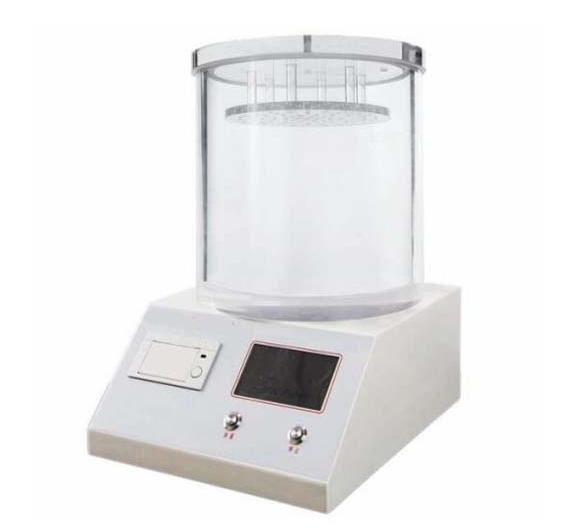


Vacuum Decay Leak Tester specializes in the detection of leaks in ampoules, vials, injection bottles, freeze-dried powder injection bottles, and pre-filled packages.
Applications
1. Automotive Industry
In automobile manufacturing, sealing performance is directly related to the safety and stability of the entire vehicle. Micro-leak testing ensures the sealing performance of automotive components, such as fuel tanks, braking systems, and exhaust pipes, under high-pressure environments, effectively improving the overall performance and safety of the vehicle.
2. Medical Devices
Leaks in medical devices can have serious consequences. In the medical field, using vacuum leak testers for rigorous quality control to ensure that equipment such as syringes and medical tubing maintain good sealing performance is crucial for patient safety.
3. Food Packaging
To maintain the freshness and safety of food, food packaging materials must have excellent sealing performance. Micro-leak testing can effectively detect the sealing effect of packaging materials, preventing food spoilage due to packaging defects.
4. Pharmaceutical Industry
Pharmaceutical companies have extremely high requirements for the clean environment during the production process. Vacuum leak testers can be used to test the sealing performance of pharmaceutical production equipment and containers, ensuring the sterility and safety of products.
Standards
YY/T 0681.18-2020: Test Methods for Sterile Medical Device Packaging - Part 18: Non-destructive Testing of Packaging Leaks Using the Vacuum Decay Method
ASTM F2338-13: Standard Test Method for Packaging Leaks - Vacuum Decay Method
USP1207: United States Pharmacopeia Standard
Technical Parameters
| Technical Specification | Specification |
|---|---|
| Application | Ampoule, Vial, Injection Bottle, and Pre-filled Package |
| Test Method | Vacuum Decay Method (Non-destructive Test) |
| Test Chamber | Customization per Samples |
| Vacuum Degree | 0 ~ -100 kPa |
| Testing System | Dual-sensor Technology |
| Detection Sensitivity | 1 ~ 2 μm in diameter |
| Test Time | Less than 30s |
| Vacuum Source | Vacuum Pump |
| Environment Temperature | 15℃ ~ 30℃ |
| Relative Humidity | Up to 80%RH. No condensation. |
| Power Supply | AC 100-240V 50/60Hz (can be changed to local requirement) |
| Instrument Dimension | 320 mm (W) x 520 mm (D) x 350 mm (H) |
| Net Weight | 20 kg |
Features
Micro leaks are detected in packages. The samples can be reused to reduce costs effectively.
Environmental temperature and humidity monitoring device.
Detect small and large leaks and the system determines qualified or unqualified automatically.
Test method: Vacuum Decay Method
Test time is less than 30s.
Test chambers can be selected for different samples and can be easily replaced.
Print test results automatically, ensuring accuracy and objectivity.
Statistical analysis is automatically performed on the test results, including yield statistics and sample normal distribution chart.
Equipped with micro printer, USB.
Automatically save, query, and export reports to Excel and PDF formats.
Meet GMP requirement, user-graded permission setting, historical record audit tracking function.
PC software is optional.
Accessoriess
Instrument, Vacuum Pump, Micro Printer, Test Chamber, Professional Software, 485 Communication Cable, Calibrated Flow Meter, Customized Test chamber, Positive Specimen, Negative Specimen.
FAQ
1. What is this product?
Answer: It is a high-precision electronic tester specifically designed to measure the degree of electrical resistance on material surfaces.
2. What is the purpose of this product?
Answer: By quantifying resistivity values, you can intuitively determine whether a fabric is conductive, static dissipative, or insulating.
3. How does this product work?
A: By applying a known DC voltage to the sample surface, measuring the minute current passing through the sample, and calculating the resistance value based on Ohm's Law.
4. Why is this product important?
A: Surface resistivity is the most fundamental and intuitive indicator for evaluating a fabric's anti-static performance. Lower resistance facilitates easier charge dissipation, enhancing safety.
5. For which industries is this product suitable?
Answer: It is suitable for textile and apparel, petrochemical safety protection, electronic packaging materials, plastic films, and university laboratories.
Leave Message Get Price