Guidewires Tip Flexibility Tester
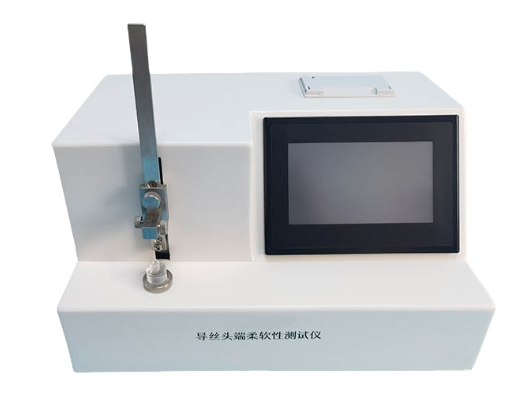


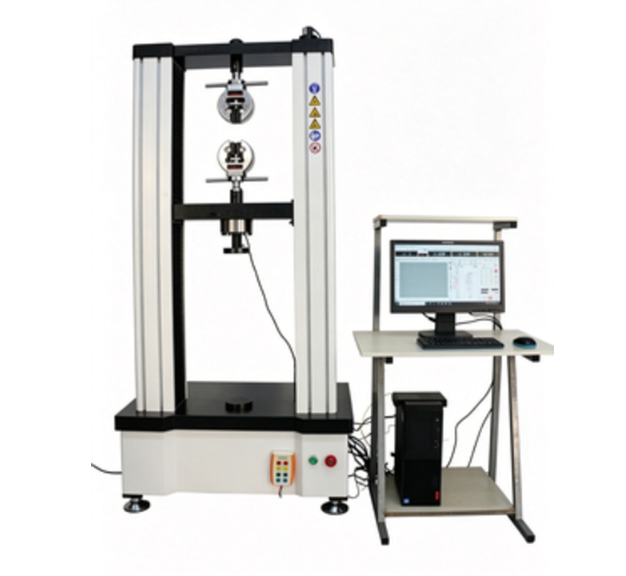
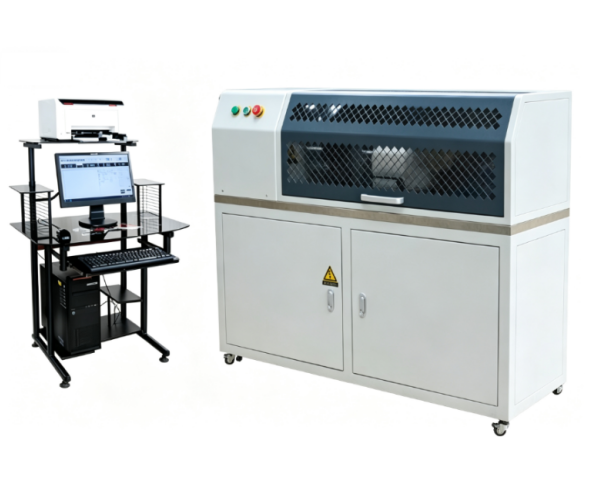
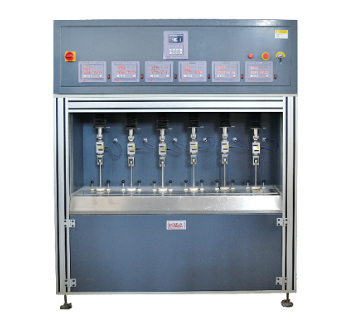
The Guidewires Tip Flexibility Tester is designed and manufactured in accordance with the relevant clauses of YY/T 1554-2017 and YY 0450.1-2003. It is specifically designed for testing the flexibility of interventional guidewires and catheters, and is suitable for determining the tip flexibility of various interventional guidewires and catheters.
Applications
The guidewire tip flexibility tester is a specialized device used to evaluate the flexibility of the tips of medical guidewires. Its main uses include: Ensuring Quality and Safety in Clinical Use: By testing the flexibility and bendability of the guidewire tip during puncture procedures, it ensures that the guidewire can smoothly enter blood vessels or other target positions and adapt to different puncture angles and bending situations, thus improving the effectiveness and safety of puncture operations. Assisting Manufacturers in Quality Control: In the medical device manufacturing field, this tester can be used by manufacturers for quality control of guidewire products, ensuring that guidewire products meet relevant medical standards and regulatory requirements. Biomedical Research and Bioengineering Applications: The tester can also be used to measure the flexibility and bendability of various biological materials, evaluate the toughness of biological stents and biological materials, and provide technical support for biomedical research and the bioengineering field.
Standards
FDA-16007 FDA Guidance: Coronary, Peripheral, and Neurovascular Guidewires –Performance Tests and Recommended Labeling
ISO 11070: Cardiovascular implants and extracorporeal systems — Balloon dilatation catheters
YY 0450.1-2003: Disposable sterile intravascular catheters — Part 1: General requirements
YY/T 1554-2017: Medical devices — Surface lubricious coatings — Test method for coefficient of friction
Technical Parameters
| Technical Parameter | Specification |
|---|---|
| Testing Speed | It can be adjusted within a certain range, such as 3mm/min or 8mm/min. Some testers can reach 100mm/s and can be set arbitrarily with stepless speed regulation, and the speed accuracy can reach 0.01mm/s. |
| Displacement Range and Resolution | The displacement range is generally 0.001 - 40.000mm, and the displacement resolution is 0.001mm. |
| Force - measuring Mechanism | Mostly built - in, using high - precision force sensors. |
| Control System | Commonly, there is a PLC (Programmable Logic Controller). The operation interface is generally a color touch screen, which can be switched between Chinese and English. |
| Clamping Device | It is used to fix the guidewire tip to ensure the stable position of the guidewire during the testing process. It is generally made of high - quality materials such as 304 stainless steel. |
Accessoriess
The package includes: 1 main unit, 1 set of fixtures, 1 set of testing software, 1 set of sensors, 1 power cord, 1 instruction manual, 1 operation video, and 1 certificate of conformity.
Features
1. Intelligent Operation: A large LCD screen displays the testing process in real time. Built-in standard testing programs enable one-click operation and automatic completion of the experiment.
2. High-Precision Sensors: Utilizes advanced displacement sensors to ensure accurate speed and displacement transmission, making testing more scientific and reliable.
3. Secure and Compliant Design: Supports hierarchical access control and password protection to prevent unauthorized operations and ensure data traceability.
4. Complete Data Output: Equipped with a mini printer, it can directly print information on test personnel, testing time, and results, ensuring complete retention of experimental records.
5. Personalized Upgrades: The system program supports ISP online upgrades and can provide customized services based on user needs.
FAQ
1. What is the main purpose of the Guidewires Tip Flexibility Tester?
The Guidewires Tip Flexibility Tester is designed to evaluate the flexibility of the tips of interventional guidewires and catheters. By testing the bendability and flexibility during puncture procedures, it ensures that guidewires can smoothly navigate blood vessels or target positions and adapt to various puncture angles. This helps improve clinical effectiveness, reduces the risk of vascular injury, and ensures patient safety during interventions.
2. Which medical devices can be tested using this tester?
This tester is suitable for various interventional guidewires and catheters, including coronary, peripheral, and neurovascular guidewires. It can also be applied in biomedical research to measure the flexibility of biological materials or stents. Manufacturers use this instrument for quality control to ensure guidewire products meet relevant medical standards and regulatory requirements, providing reliable data for both clinical and production purposes.
3. How does the instrument ensure precise and reliable testing?
The tester uses high-precision displacement and force sensors to capture exact speed, displacement, and bending force applied to the guidewire tip. The intelligent operation system and built-in standard testing programs allow one-click operation and automatic completion of the experiment. Additionally, hierarchical access control and password protection prevent unauthorized operations, ensuring that data is secure, traceable, and scientifically valid.
4. What are the technical parameters of the tester?
Testing speed can be adjusted from 3 mm/min to 100 mm/s with a speed accuracy of 0.01 mm/s. The displacement range is generally 0.001–40.000 mm, with a resolution of 0.001 mm. Force measurement is achieved using built-in high-precision sensors. The PLC-controlled color touch screen allows easy parameter setting in either Chinese or English, ensuring flexible and accurate test operation.
5. How is a typical test performed?
First, the instrument and sample are prepared by checking power supply and cleaning the guidewire. The guidewire tip is fixed using 304 stainless steel clamps, ensuring stability without affecting tip flexibility. Test parameters such as speed and displacement are set via the touchscreen. The tester automatically applies bending force to the tip, collects flexibility data, and stores multiple test groups. After testing, data can be processed to generate a detailed test report, helping assess guidewire performance and compliance with standards.
Leave Message Get Price