Catheter Flow Meter
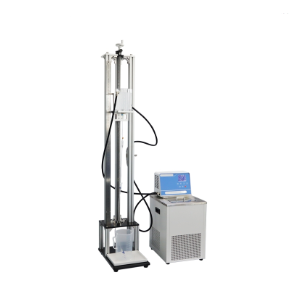


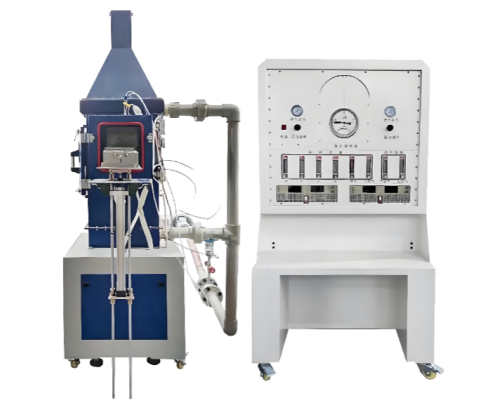
The Catheter Flow Meter is specifically designed for measuring the water flow rate of medical catheters, including non-vascular catheters, intravascular catheters, and single-use sterile catheters. It is also known as a catheter flow meter, catheter flow detector, non-vascular catheter flow device, infusion set flow tester, or medical device flow tester.
Applications
The catheter flow tester is mainly used to measure and evaluate the flow performance of medical catheters, such as intravascular catheters, non - intravascular catheters, and infusion set catheters. In the medical field, this tester has a wide range of applications, including but not limited to the following aspects: Product R & D: During the design and R & D stage of catheter products, the tester can help engineers accurately assess the flow performance of different design schemes, providing powerful data support for product iteration. Quality Control: Through batch testing, the tester can ensure that each batch of catheters meets the established flow standards and performance requirements, thus improving the overall quality of products. Clinical Application: The tester can be used to monitor the flow changes of catheters in patients, providing real - time physiological parameter feedback to doctors, which is helpful for adjusting treatment plans, assessing the progress of the disease, and preventing complications.
Standards
GB/T 15812.1 - 2005 Non - Vascular Intravascular Catheters - Part 1: General Performance Test Methods
YY 0285.1 - 2017 Disposable Sterile Intravascular Catheters
Technical Parameters
| Parameter | Specification |
|---|---|
| Testing Range | Usually within a weight/volume range (e.g., 1.00 - 600.00g, varying by catheter specifications) or a specific flow range |
| Accuracy | High testing accuracy (e.g., ±0.01%FS, one-ten-thousandth of full scale) or higher requirements |
| Static Water Level Height | e.g., 200±5mm, 1000±5mm (meets different testing needs); water pump has automatic circulation function; static water level is adjustable |
| Time Controller | Usually 0 - 60min, with an error ≤ ±1S; used to control testing time |
| Fixtures | Adapt to various catheter specifications/types, ensuring test versatility and flexibility |
| Flow Calculation | Generally uses the weighing method (imported flowmeters optional) to calculate flow, ensuring result accuracy |
| Flow Rate | e.g., 525ml/min (arbitrary selection) ±25ml/min, etc.; adapts to different testing scenarios |
| Intelligent Temperature Control | Equipped with a micro-computer intelligent temperature-control system, ensuring constancy and accuracy of test temperature |
| Special Accessories | Includes stainless-steel thermostatic water baths, special connectors, etc.; meets testing needs of different catheter specifications/types |
Accessoriess
Static pressure head, height adjustment device, constant temperature water bath, PU tubing
Test Procedures
1. Before testing, appropriate test conditions, such as water flow rate and pressure, should be set according to the pipe specifications and testing requirements. This helps to ensure the accuracy and reliability of the measurement results.
2. When connecting the pipes, ensure a tight, leak-free connection. Any leaks will affect the accuracy of the measurement results.
3. During the testing process, keep the testing instrument and pipes clean to avoid contamination affecting the test results. Regularly clean and maintain the instrument to ensure its proper functioning and extend its service life.
4. After the test is completed, turn off the testing instrument, disconnect the pipes, and clean and dry them for future use. This helps prevent corrosion and damage to the instrument and pipes due to prolonged disuse.
Features
• Independently developed hydrostatic pressure testing device, capable of maintaining a liquid level of 1000 ± 10 mm.
• Flow rate of 525 ml/min, meeting standard flow rate requirements.
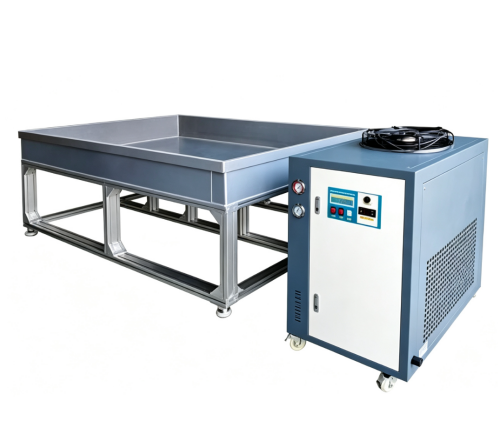
• Equipped with a constant temperature water bath to ensure the test water temperature is 23℃.
• Equipped with a timer for timed testing.
• Test fixture designed strictly according to standard requirements, easy to operate and highly efficient.
• Uniquely designed lifting and lowering structure allows for height adjustment, facilitating testing at different water pressures.
• Equipped with a balance station for convenient placement of balances or measuring cylinders.
• Equipped with an adjustable precision water pump for easy flow rate adjustment.
FAQ
1. What is the primary purpose of the Catheter Flow Meter?
The Catheter Flow Meter is designed to measure and evaluate the water flow rate of medical catheters, including non-vascular catheters, intravascular catheters, and single-use sterile catheters. It is widely used in product research and development to assess flow performance of different catheter designs, in quality control to ensure batch consistency and compliance with standards, and in clinical settings to monitor catheter flow in patients, providing real-time feedback that helps adjust treatment plans and prevent complications.
2. How does the Catheter Flow Meter ensure accurate measurements?
The device features a hydrostatic pressure testing system capable of maintaining a water level of 1000 ±10 mm, a constant temperature water bath at 23℃, and a precision adjustable water pump. The weighing method or optional imported flowmeters are used for flow calculation, ensuring high accuracy. Additionally, a timer controls test duration with a maximum error of ±1 second. These combined features ensure that measurements are precise, repeatable, and reliable under various testing conditions.
3. What are the standard testing procedures for the Catheter Flow Meter?
Before testing, operators set appropriate conditions such as water flow rate and pressure according to catheter specifications. Pipes must be connected tightly to avoid leaks, which could affect measurement accuracy. During testing, the instrument and pipes should be kept clean to prevent contamination from impacting results. After completion, the instrument is turned off, pipes are disconnected, and all components are cleaned and dried to prevent corrosion and ensure the longevity of the device.
4. What features make the Catheter Flow Meter suitable for different catheter types?
The tester is equipped with versatile fixtures that adapt to various catheter specifications and types, a lifting/lowering structure for height adjustment to test under different water pressures, and a balance station for convenient placement of measuring cylinders. It also includes a microcomputer-based intelligent temperature control system, stainless-steel thermostatic water baths, and PU tubing. These features ensure compatibility with multiple catheter types while maintaining high testing efficiency and accuracy.
Leave Message Get Price