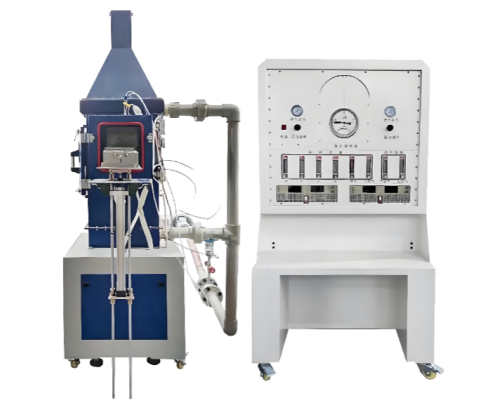
Catheter Airflow Resistance Tester
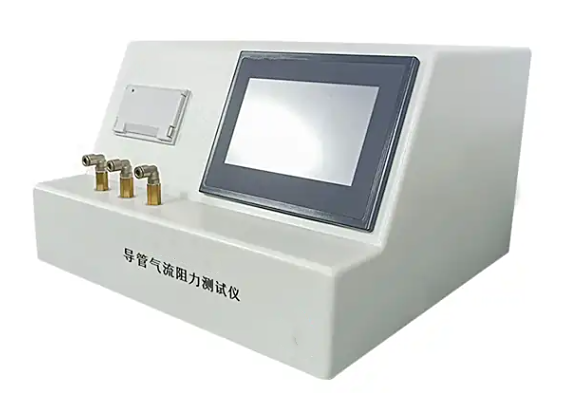


The Catheter Airflow Resistance Tester is a precision testing instrument specifically designed for measuring the airflow resistance of catheters.
Applications
The catheter airflow resistance tester is an important tool for evaluating the resistance of gas flow in catheters. It is specifically designed to measure the airflow resistance inside medical devices such as breathing catheters. It is widely applied in multiple fields, including medical care, environmental protection, and the chemical industry. Especially in the production and quality - control processes of medical devices, this tester plays a crucial role. Through testing, it can ensure that catheter - related products like breathing tubes can meet the predetermined performance standards, thereby improving the overall product quality and production efficiency. In the medical field, the tester is used to assess the performance of breathing circuits for anesthesia machines and ventilators, ensuring that the products meet relevant standards and requirements.
Standards
YY0461 - 2003:Technical Requirements for Protective Masks for Medical Use
Features
Embedded Linux operating system, secure, efficient, and durable.
Get both English and Chinese input capabilities for the same price.
Non-standard customized services to create exclusive equipment tailored to your company.
Expand to various testing projects by changing dedicated custom fixtures.
Personalized input of production units and batches to obtain original production reports.
Processing speed up to 72MHz per second, testing resolution improved to 0.0001.
Touchscreen control for easier operation and more intuitive data display.
Multiple specifications, one machine compatible with various applications, automatic generation of test reports.
Onboard printer for quick printing of test results.
Real-time display of test pressure values, automatic power off in case of overload, and automatic data storage upon power failure.
Three-level password protection for secure and reliable information.
Technical Parameters
| Parameter | Specification |
|---|---|
| Pressure Measurement Range | Usually 0.01kPa to 10kPa; error ≤ ±1%; display resolution: 0.01kPa. This range covers airflow resistance measurement requirements for most catheters. |
| Flow Measurement Range | Typically 0L/min to 50L/min (varies by tester model), enabling airflow resistance testing of catheters under different flow conditions. |
| Test Duration | Usually 1 second to 10 minutes; error ≤ ±1 second. This range ensures test accuracy and stability. |
| Accuracy | Pressure measurement accuracy: ±0.01kPa; flow measurement accuracy: ±2.5% (or lower, depending on specific model). |
Accessoriess
Standard accessories: Dedicated clamps/connectors for different diameter tubes, airflow connecting tubing, sensor calibration parts, operating manual, and calibration certificate.
Optional accessories: Sample fixing bracket (for assisting tube installation), data export cable (for some models).
Test Procedures
1. Preparation
Ensure the instrument is in normal working condition and check that the power cord, sensors, and other components are intact. Connect the tubing and ensure a good seal between the tubing and the instrument interface.
2. Setting Parameters
According to the test requirements, set the relevant parameters of the instrument, such as flow rate and pressure measurement range.
3. Starting the Test
Start the instrument to begin the test. The instrument will automatically inject gas into the tubing and measure the pressure difference between the inlet and outlet. Based on the measurement results, the instrument will calculate the airflow resistance of the tubing.
4. Data Recording and Analysis
After the test is completed, the instrument will output the test results. The operator should carefully record this data and analyze it to evaluate the performance of the tubing.
FAQ
1. What is the Catheter Airflow Resistance Tester used for?
The Catheter Airflow Resistance Tester is a precision testing instrument specifically designed to measure the airflow resistance inside catheters and similar medical tubing. Its primary function is to evaluate the resistance encountered by gas as it flows through medical devices such as breathing catheters, breathing tubes, and respiratory circuits. By accurately measuring pressure differences and flow rates, the tester helps determine whether catheter-related products meet predefined performance requirements. This is especially important in medical device production and quality control, where ensuring stable airflow performance directly impacts product quality, safety, and compliance with relevant technical requirements.
2. In which application fields is this tester commonly used?
This tester is widely applied in medical care, environmental protection, and the chemical industry. In the medical field, it plays a crucial role in evaluating the performance of breathing circuits used in anesthesia machines and ventilators. During manufacturing and quality-control processes, the instrument ensures that catheters and breathing tubes meet predetermined airflow resistance standards. By identifying excessive resistance or performance deviations early, manufacturers can improve production efficiency and overall product consistency, ensuring that medical devices function reliably in clinical environments.
3. What standards does the Catheter Airflow Resistance Tester comply with?
The tester is designed in accordance with YY0461-2003. which specifies the technical requirements for protective masks for medical use. Compliance with this standard ensures that the instrument’s airflow resistance testing capabilities align with established industry requirements. This makes the tester suitable for evaluating airflow-related performance parameters in medical devices where resistance characteristics are critical to safety and effectiveness.
4. What key technical parameters support accurate airflow resistance testing?
The instrument features a pressure measurement range typically from 0.01 kPa to 10 kPa with an error of no more than ±1% and a display resolution of 0.01 kPa, covering most catheter airflow resistance testing needs. The flow measurement range usually extends from 0 L/min to 50 L/min, depending on the model, allowing testing under different flow conditions. Test duration ranges from 1 second to 10 minutes, ensuring both flexibility and stability. Pressure accuracy can reach ±0.01 kPa, while flow accuracy is typically ±2.5% or better, providing reliable and repeatable results.
Leave Message Get Price