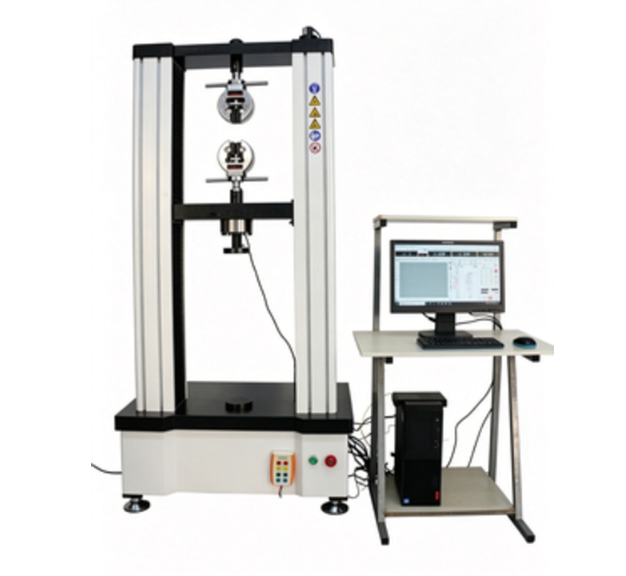
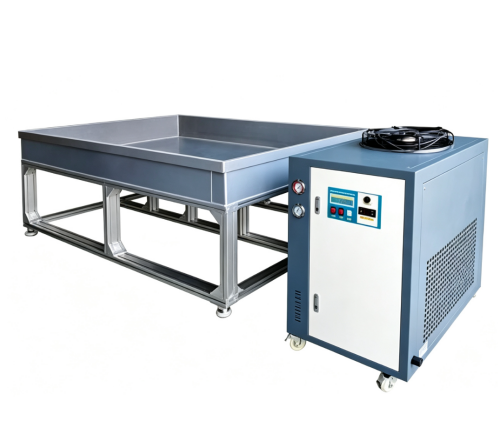
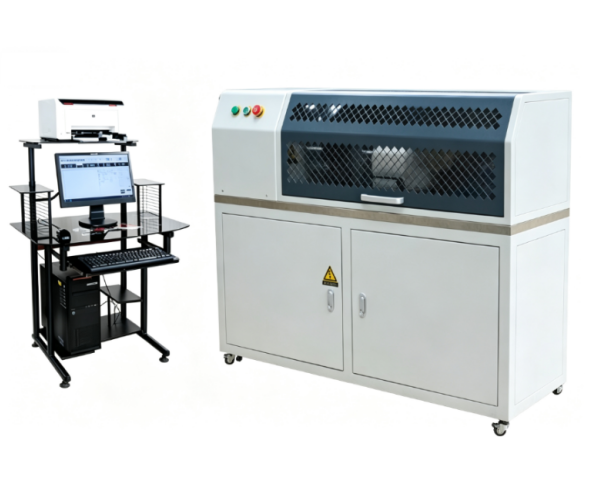
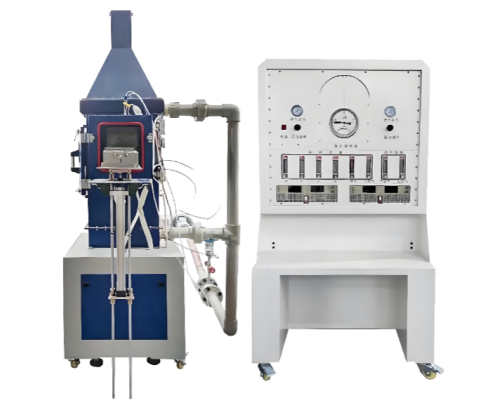
Guide Pin Anchoring Force Tester
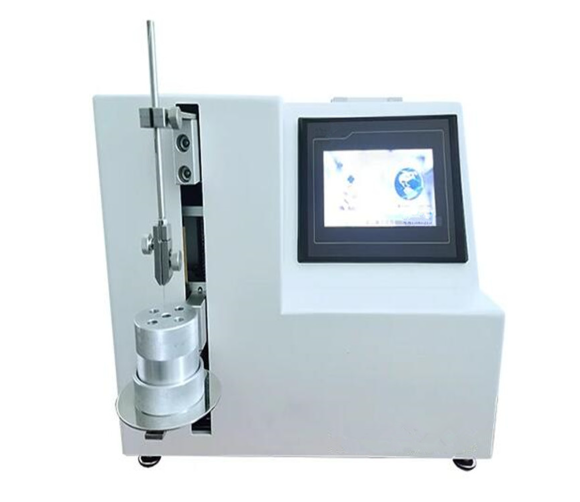


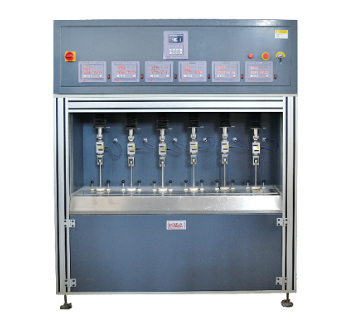
The Guide Pin Anchoring Force Tester is designed to evaluate the anchoring performance of mammary positioning wires and guide needles. It ensures that the positioning filament remains stable within tissue, preventing displacement or dislodgement prior to surgery. This testing is essential for accurate tumor localization and safe surgical procedures.
Application
This instrument is suitable for a variety of medical and surgical applications, including:
(1) Mammary positioning wires for breast surgery – ensuring stability during preoperative procedures.
(2) Guide needles used in tumor localization – verifying anchoring effectiveness.
(3) Surgical R&D – testing new positioning wire or guide needle designs.
(4) Quality control in manufacturing – confirming the reliability of disposable guide needles and positioning filaments.
(5) Preclinical trials – simulating in-tissue performance of positioning devices.
Standards
The device is designed to meet the following standards:
(1) YY/T 0880-2013: Disposable Breast Positioning Wire and Guide Needle (China)
Optional international reference standards for extended compliance:
(2) ISO 10555-1: Sterile single-use intravascular catheters – General requirements
(3) ASTM F2084: Mechanical testing for medical guidewires
Parameters
| Parameter | Specification |
|---|---|
| Tensile force range | 0 – 20 N, accuracy ±1%, resolution 0.01 N |
| Test time | 1 – 999 s, error ±0.5 s |
| Test speed | 10 mm/min, 50 mm/min, 100 mm/min |
| Distance adjustment | 10 – 50 mm, adjustable |
| Force sensor | High-precision, with hardware/software protection |
| Fixture | 304 stainless steel |
| Force measuring mechanism | Built-in |
| Printer | On-board micro printer |
| Data storage | USB compatible, export to computer |
| Machine power | 70 W |
| Power supply | AC 90–240 V, 50 Hz |
Accessories
(1) Main test unit – 1 set
(2) USB storage device – 1 set
(3) Micro printer paper – 1 roll
(4) Operation manual – 1 set
(5) Optional fixtures/adapters for different guide needle diameters
Features
(1) Accurately measures anchoring force to ensure clinical reliability.
(2) High-precision force sensor with hardware and software protection.
(3) Adjustable test speed and distance for flexible simulation.
(4) Built-in printer for immediate recording of test results.
(5) USB connectivity for data storage and export.
(6) Durable fixture made of high-quality 304 stainless steel.
(7) Simple operation with real-time force monitoring.
Maintenance Information
(1) Keep the fixture, sensors, and printer clean and free of debris.
(2) Regularly calibrate the force sensor to ensure measurement accuracy.
(3) Avoid exposure to excessive moisture or vibration.
(4) Inspect mechanical components periodically for wear or loosening.
(5) Follow electrical safety standards during operation.
FAQ
1. What is the primary function of the Guide Pin Anchoring Force Tester?
The Guide Pin Anchoring Force Tester is designed to evaluate the anchoring performance of mammary positioning wires and guide needles, ensuring that the positioning filament remains stable within tissue and does not become displaced before surgery.
2. Why is anchoring force testing important for mammary positioning wires?
Anchoring force testing is essential to ensure accurate tumor localization and safe surgical procedures by preventing movement or dislodgement of the positioning wire prior to surgery.
3. What types of products can be tested with this instrument?
The tester is suitable for mammary positioning wires, guide needles used for tumor localization, disposable guide needles in manufacturing quality control, surgical R&D samples, and positioning devices used in preclinical trials.
4. Which standards does the Guide Pin Anchoring Force Tester comply with?
The device is designed to meet YY/T 0880-2013 and may reference ISO 10555-1 and ASTM F2084 for extended compliance in medical guidewire mechanical testing.
5. What force range and accuracy does the tester provide?
The instrument measures tensile force from 0 to 20 N with an accuracy of ±1% and a resolution of 0.01 N, allowing precise evaluation of anchoring performance.
6. How are test results recorded and stored?
Test results are automatically recorded using the built-in micro printer, and data can also be stored and exported via a USB storage device.
Leave Message Get Price