Catheter Guidewire Friction Tester
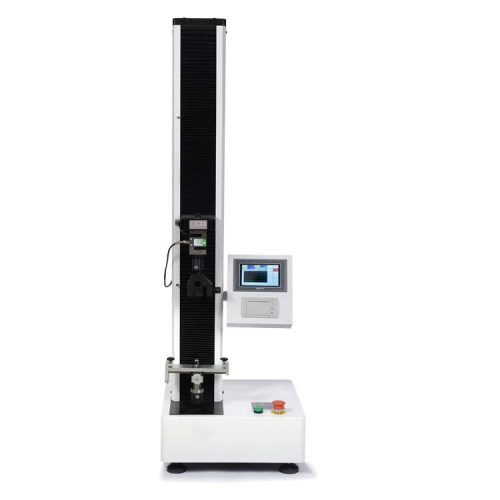


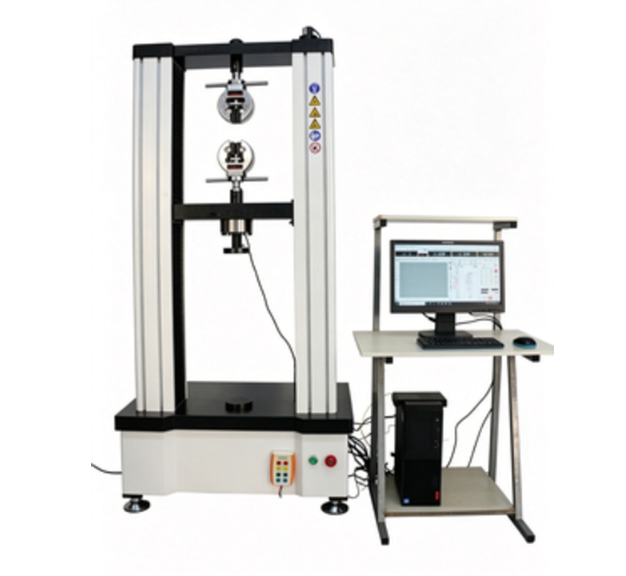
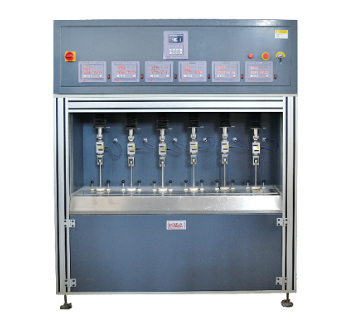
The Catheter Guidewire Friction Tester is designed to accurately measure the frictional forces between catheters and guidewires. It is a critical tool for medical research and surgical practice, helping clinicians and engineers understand the movement behavior of guidewires and catheters within the human body. The device provides reliable data to optimize surgical procedures, improve catheter design, and enhance patient treatment outcomes.
Application
This tester is suitable for a wide range of medical devices and scenarios, including:
(1) Vascular catheters – assessing friction during navigation through blood vessels.
(2) Guidewires – evaluating smoothness and performance in different sizes and coatings.
(3) Interventional cardiology devices – testing guidewire-catheter interaction for stent delivery or balloon angioplasty.
(4) Neurovascular procedures – verifying low-friction performance for delicate cerebral interventions.
(5) Peripheral vascular interventions – assessing devices for minimally invasive surgery.
(6) R&D and quality control – optimizing material, coating, and design for improved surgical outcomes.
Standards
The instrument is designed to comply with the following standards:
(1) YY/T 1536-2017: Cardiovascular guidewire test method (China)
(2) ISO 11070: Sterile single-use intravascular catheters – Performance testing
Optional international standards for extended compliance:
(3) ISO 10555-1: Sterile single-use intravascular catheters – General requirements
(4) ASTM F2084: Guidewire mechanical performance testing
Features
(1) Measures friction force accurately between catheters and guidewires.
(2) High-precision force and displacement sensors capture real-time data.
(3) Stepless adjustable test speed to simulate different clinical scenarios.
(4) Adjustable chuck size accommodates a variety of catheter and guidewire diameters.
(5) Compact design suitable for laboratory and R&D use.
(6) Data acquisition system records force-displacement curves for analysis.
Parameters
| Parameter | Specification |
|---|---|
| Test range | 0 – 500 N (optional: 50 N, 100 N, 200 N, 1000 N) |
| Measurement accuracy | 0.5 level |
| Travel | 800 mm |
| Test speed | 0.5 – 500 mm/min, stepless transmission |
| Displacement accuracy | 0.01 mm |
| Sample quantity | 1 piece |
| Chuck size | 0 – 30 mm |
| Dimensions (L × W × H) | 450 × 500 × 1500 mm |
| Weight | 75 kg |
Accessories
(1) Test fixture with adjustable chucks – 1 set
(2) Force sensor – integrated
(3) Displacement sensor – integrated
(4) Control and data acquisition system – 1 set
(5) Operation manual – 1 set
(6) Optional adapters for different catheter or guidewire diameters
Test Procedures
(1) Secure the catheter or guidewire sample between the two chucks of the fixture.
(2) Set the test speed and range on the control system.
(3) Start the test; the moving chuck applies relative movement to the sample.
(4) Force and displacement sensors record frictional force in real-time.
(5) Analyze the force-displacement data to evaluate friction performance.
Maintenance Information
(1) Keep the fixture and sensors clean and free from liquids or debris.
(2) Periodically calibrate the force and displacement sensors to maintain accuracy.
(3) Avoid exposure to excessive vibration or high humidity.
(4) Check mechanical components for wear or loosening before each test.
(5) Follow standard electrical and safety guidelines when operating the instrument.
FAQ
1. What is the Catheter Guidewire Friction Tester used for?
The Catheter Guidewire Friction Tester is used to accurately measure the frictional forces between catheters and guidewires, providing data to evaluate their movement behavior during medical procedures.
2. Which medical devices can be tested with this instrument?
The tester is suitable for vascular catheters, guidewires, interventional cardiology devices, neurovascular devices, and products used in peripheral vascular interventions.
3. Why is friction testing between catheters and guidewires important?
Friction testing helps understand how catheters and guidewires move relative to each other, supporting optimization of device design, surgical procedures, and patient treatment outcomes.
4. Which standards does the Catheter Guidewire Friction Tester comply with?
The instrument complies with YY/T 1536-2017 and ISO 11070. with optional compliance to ISO 10555-1 and ASTM F2084.
5. How does the tester measure friction force?
During testing, relative movement is applied between the catheter and guidewire, while force and displacement sensors record real-time friction force and generate force-displacement curves.
6. What are the main technical capabilities of this tester?
The tester supports a test range of up to 500 N, stepless adjustable test speed from 0.5 to 500 mm/min, high displacement accuracy of 0.01 mm, and accommodates various catheter and guidewire diameters.
Leave Message Get Price