Urinary Catheter Strength Tester
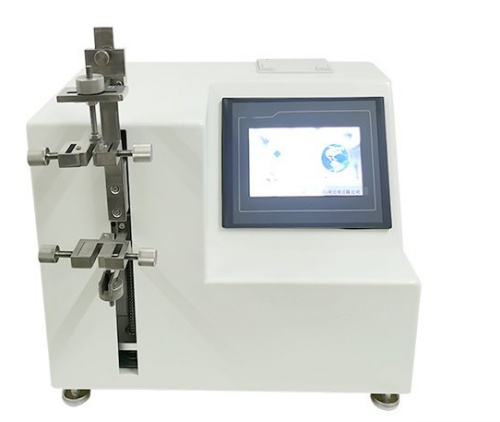


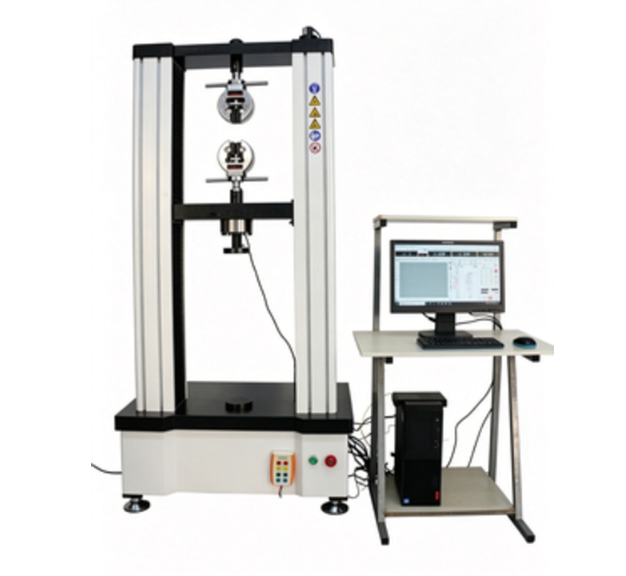
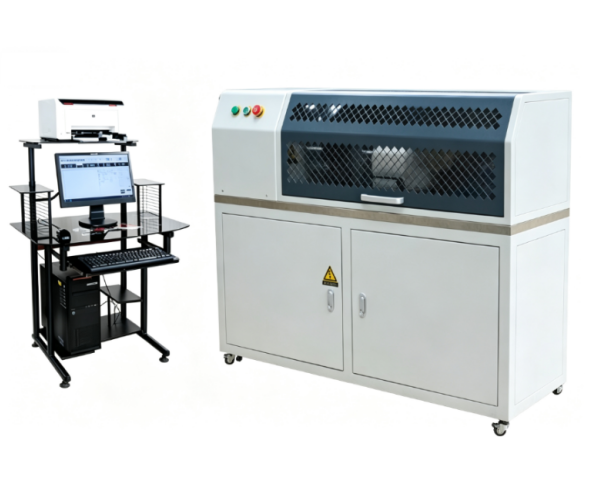
The Urinary Catheter Strength Tester is designed to evaluate the physical strength and mechanical properties of urinary catheters. It provides accurate, quantitative measurement of tensile strength, elongation, and other mechanical parameters, serving as a critical tool for catheter certification, quality control, and R&D.
Application
The tester is suitable for testing urinary catheters in the following industries and products:
(1) Medical Device Manufacturing: Quality control and validation of single-use sterile urinary catheters.
(2) Research & Development: Mechanical testing of new catheter designs, wall thickness, and material properties.
(3) Certification & Regulatory Testing: Compliance testing according to national and international standards.
(4) Third-Party Testing Laboratories: Independent verification of catheter strength and performance.
(5) Educational & Training Institutions: Demonstration and training for medical device testing protocols.
Standards
The instrument is compliant with the following standard:
(1) YY 0325-2016 – Single-use Sterile Urinary Catheters, specifying requirements for mechanical and physical strength testing
(2) ISO 10555-1:2013 – Intravascular catheters — Sterile single-use catheters — Part 1: General requirements
(3) ASTM F2081-15 – Standard Test Method for Tensile Strength of Catheter Tubing
(4) EN ISO 10555-2 – Sterile single-use urinary catheters — Part 2: Materials, tensile strength, and elongation testing
Features
(1) High-precision testing: load measurement from 0.01 to 120 N with ±0.001 N accuracy
(2) Adjustable loading speed: 0–500 mm/min ±0.5 mm/min
(3) Multi-language interface: Simplified Chinese and English
(4) Integrated data management: stores up to 100 test records per cycle including deviation values
(5) Real-time monitoring: movement control (up/down), timing, and calibration system
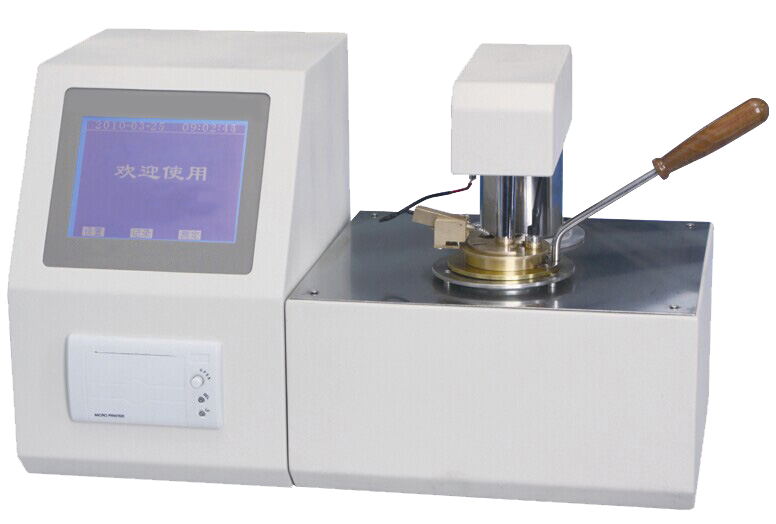
(6) High-resolution touchscreen: 7-inch K600+ core, 800×480 resolution, 65k colors
(7) Built-in thermal printer for immediate test report generation
(8) Compact and lightweight: net weight 15 kg, easy to move and operate
Technical Parameters
| Parameter | Specification |
|---|---|
| Interface Language | Simplified Chinese / English |
| Nominal Specifications | Supports all catheter sizes |
| Load Range | 0.01–120 N |
| Accuracy | ±0.001 N |
| Loading Speed | 0–500 mm/min ±0.5 mm/min |
| Printing System | Stores 100 test records per cycle (data + deviation) |
| Net Weight | 15 kg |
| Dimensions (L×W×H) | 430 × 290 × 250 mm |
| Power Supply | AC 110–220 V, 50 Hz (auto-adaptive) |
| Power Consumption | 70 W |
| Control System | PLC + ARM programmable controller |
| Touchscreen | 7-inch K600+ core, 800×480 resolution, 65k colors |
| Sensor | High-precision force transducer |
| Force Measurement | Built-in load cell system |
| Printing Device | Onboard thermal printer |
Accessories
(1) Standard catheter clamps and fixtures
(2) Power cable
(3) Touchscreen interface manual
(4) Thermal printer paper rolls
(5) Calibration certificate
Test Procedures
(1) Mount the catheter sample in the provided clamps
(2) Set the nominal specification and span for the test
(3) Configure the load range and desired loading speed on the touchscreen
(4) Start the automated test, controlling movement up and down as needed
(5) Monitor load, deformation, and timing in real time
(6) Upon test completion, review results on the display
(7) Print test report using the onboard thermal printer
(8) Repeat for additional samples as required
Maintenance Information
(1) Keep the instrument clean and free from debris after each test
(2) Inspect clamps, sensors, and load cells regularly for wear or damage
(3) Calibrate the force transducer periodically to maintain measurement accuracy
(4) Avoid exposure to liquids and extreme temperatures
(5) Ensure proper grounding of the power supply to protect electronic components
(6) Maintain logs of calibration, testing, and maintenance for compliance purposes
FAQ
1. What is the core advantage of this product?
The core advantage of the Urinary Catheter Strength Tester is its ability to provide precise and quantitative measurement of catheter mechanical properties, including tensile strength and elongation. The high-accuracy force measurement system and controlled loading speed ensure consistent evaluation of catheter strength across different sizes and materials.
2. Are the test results reliable?
Yes. The tester employs a high-precision force transducer, PLC and ARM-based control system, and real-time monitoring of load and displacement. Regular calibration support and automated data recording help ensure repeatable and dependable test results.
3. Which international or industry standards does it comply with?
The instrument complies with YY 0325-2016 for single-use sterile urinary catheters, ISO 10555-1 and EN ISO 10555-2 for sterile catheter mechanical testing, and ASTM F2081-15 for tensile strength testing of catheter tubing.
4. Why is this product important?
Mechanical strength is a critical safety parameter for urinary catheters. Reliable testing helps verify that catheters can withstand clinical use without breaking or excessive deformation, supporting patient safety, product quality assurance, and regulatory compliance.
5. Which fields is this product suitable for?
The tester is suitable for medical device manufacturers, research and development laboratories, certification and regulatory testing organizations, third-party testing laboratories, and educational or training institutions involved in medical device testing and evaluation.
Leave Message Get Price