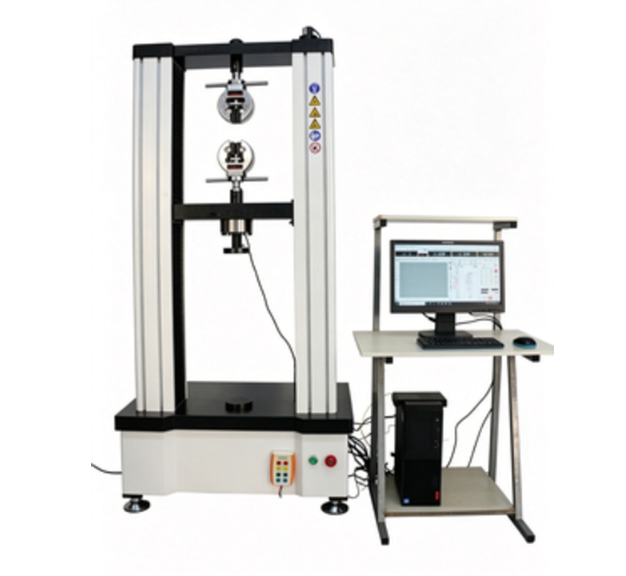
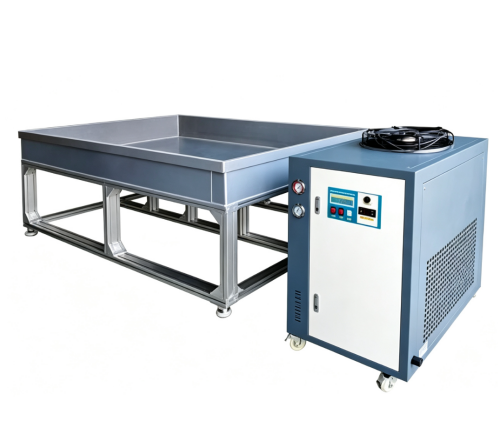
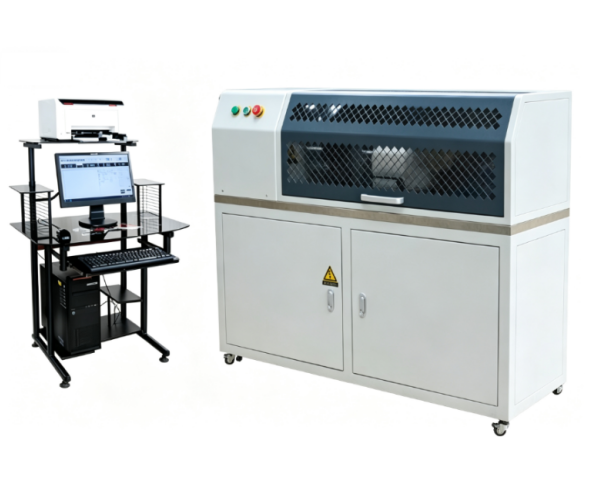
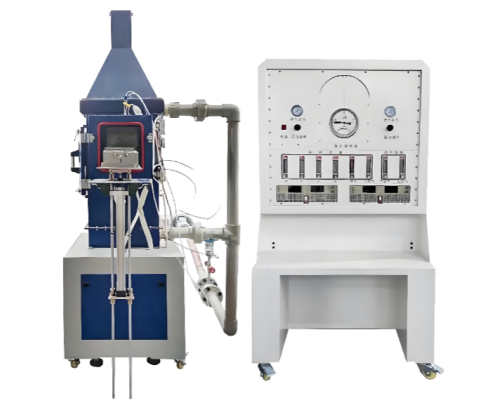
Double Plate Thermal Conductivity Apparatus
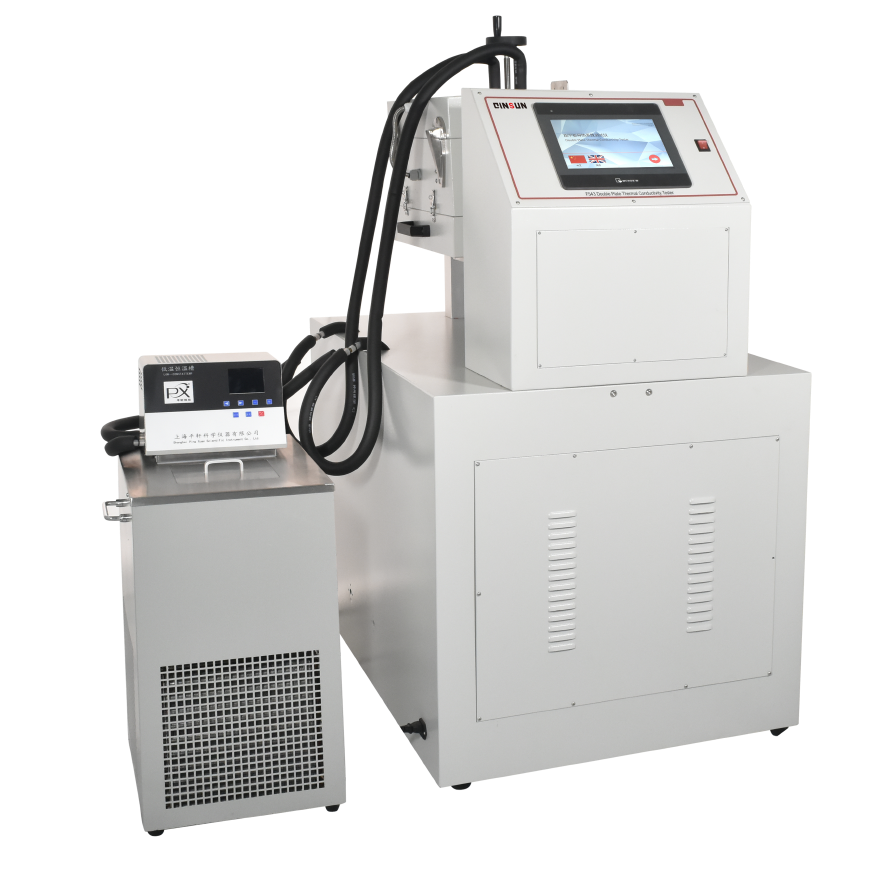


The double plate thermal conductivity tester, with an integrated water bath thermostat and computer-controlled measurements, tests thermal conductivity of homogeneous plates (e.g., plastics, rubber, glass) and granular/bulk/soft materials. It is widely used by heat insulation material producers, quality inspection departments, universities, and research institutes.
Application
Building Engineering: Used to evaluate and optimize the thermal performance of building materials to improve the insulation and heat-resistant properties of buildings.
Industrial Engineering: Used to monitor and control the thermal conductivity performance of industrial equipment to improve production efficiency and reduce energy consumption.
Environmental Monitoring: Used to monitor and evaluate the environmental impact of building materials, such as thermal pollution and thermal environment.
Scientific Research: Used to research and develop new materials to improve their thermal conductivity and application value.
The design and operation procedures of these devices ensure the accuracy and reliability of measurements, providing important technical support for the fields of materials science and engineering.
Standards
GB/T 10294-2008: Determination of Steady State Thermal Resistance and Related Properties of Thermal Insulation Materials
GB/T 3399-1982: Test method for thermal conductivity of plastics - Heat - resistant plate method
GB/T 10801.1-2002: Thermal insulation polystyrene foam
GB/T 10801.2-2002: Extruded polystyrene foam
GB/T 3139-2005: Test method for thermal conductivity of fiber reinforced plastics
GB/T 17794-2008: Flexible foam rubber and plastic insulation products
ASTM C518: Standard Test Method for Steady-State Thermal Transmission Properties by Means of the Heat Flow Meter Apparatus
IS0 8301: Thermal Insulation — Determination of Steady-State Thermal Resistance and Related Properties — Heat Flow Meter Apparatus
DIN EN 12667: Thermal Performance of Building Materials and Products - Determination of Thermal Resistance by Means of Guarded Hot Plate and Heat Flow Meter Methods - Products of High and Medium Thermal Resistance
Features
Chassis is nice. Test box shell uses spray method. It has strong mechanical strength, anti-corrosion
The device is small and the unique casters are designed to increase the flexibility of the thermometer movement.
High safety performance. It not only adopts the use of circuit and refrigeration cycle independent design, but also can ensure that the electrical part of the collected data from the impact of water, and improve stability.
Good performance of temperature stability and unique protection board design, can form a one-dimensional protection, so that it has no loss of temperature.
Online double standard company unique technology which can calibrate the temperature, calibration system error, is accurate, fast and convenient.
Technical Parameters
| Items | Parameters |
| Specimen standard size | 300mm × 300mm × H (5 ~ 40) mm |
| Specimen flatness | 0.1mm |
| Thermal conductivity measurement display range | (0.001 ~ 2.000) W / (m • K) |
| Thermal conductivity measurement accuracy | ± 3% |
| Thermal conductivity measurement Repeatability | ± 1% |
| Temperature resolution | 0.01 ℃ |
| Temperature control accuracy | 0.05 ℃ |
| Different types of thermal conductivity tester temperature measurement range | Model | Cold plate temperature control interface ℃ | Hot plate temperature control range ℃ |
| IMDRY3001-I | Room temperature - 95 ℃ | Room temperature - 100 ℃ | |
| IMDRY3001-Ⅱ | -℃ -5 ℃ - 95 ℃ | 15 ℃ - 95 ℃ | |
| IMDRY3001-Ⅲ | -10 ℃ - 95 ℃ | 10 ℃ - 95 ℃ | |
| IMDRY3001-IV | -15 ℃ - 95 ℃ | 5 ℃ - 95 ℃ | |
| IMDRY3001-V | -20 ° C - 95 ° C | 0 ° C - 95 ° C | |
| IMDRY3001-Ⅵ | -30 ℃ -95 ℃ | -10 ℃ -95 ℃ | |
| IMDRY3001-VII | -40 ℃- 95 ℃ | -20 ℃ - 95 ℃ | |
| Power supply | AC 220V ± 10%, 2.5KW | ||
| Specimen thickness | Standard 25mm, range (5 ~ 40) mm | ||
| Specimen thermal resistance requirements | the thermal resistance of the specimen should not be less than 0.1 (m2 • K) / W, and should meet the thickness of the standard thickness Requirements; if the lower limit of thermal resistance of the specimen is as low as 0.02 (m2 • K) / W, the accuracy does not necessarily meet the requirements. | ||
| Clamping force | No more than 2.5kPa | ||
Test Procedures
First: Prepare the accessories and test samples;
Open the instrument's test chamber;
Place the sample inside the chamber;
Close and lock the test chamber lid;
Measure the sample thickness using a depth gauge;
Open the positioning rod on the side of the chamber and flip it over;
Release the positioning rod;
Place another sample inside this chamber (the instrument has two identical heating units);
Turn on the low-temperature bath and power switch;
Pour in a certain amount of water;
Turn on the instrument and access the LCD screen operating interface;
Set the hot plate temperature, sample thickness, preheating time, and test time, etc.;
Click "Start";
The system forms a thermal cycle, and the sample is tested;
When the set time is reached, the instrument automatically stops. Open the chamber and remove the sample;
The test is complete. Turn off the instrument;
Analyze and compare the test data to evaluate the material's thermal conductivity.
FAQ
1. What types of materials can be tested?
Homogeneous plates such as plastics, rubber, glass, as well as granular, bulk, and soft materials.
2. How accurate is the thermal conductivity measurement?
The apparatus achieves ±3% accuracy with ±1% repeatability, with temperature control accuracy of 0.05 ℃.
3. Can this instrument test samples at sub-zero temperatures?
Yes, depending on the model (IMDRY3001-II to VII), the cold plate can reach temperatures as low as -40 ℃.
4. How is sample thickness accounted for?
The instrument allows sample thickness measurement and input; standard thickness is 25 mm, with a range of 5–40 mm.
5. Is calibration required for accurate results?
Yes, the apparatus features an online dual-standard calibration system to ensure temperature measurement accuracy.
Leave Message Get Price