Fogging Tester T114
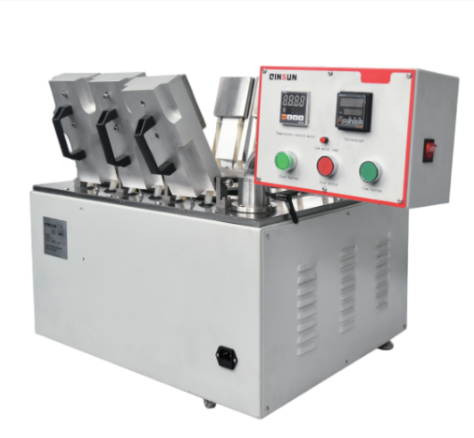


Fogging Tester is mainly used to test the evaporation of volatile components in materials such as interior plastic parts of automobiles and aircraft, polyurethane, textiles, leather, adhesives, non-woven fabrics, and thermoplastic elastomers at high temperatures.
Application
1. Evaluating Material Fogging Performance
The fogging tester is primarily used to evaluate the evaporation of volatile components from interior materials of automobiles, aircraft, and other vehicles at high temperatures. These interior materials include plastic parts, polyurethane, textiles, leather, adhesives, non-woven fabrics, and thermoplastic elastomers. The test reveals the generation of volatile substances from the materials at high temperatures, thus determining their fogging performance.
2. VOC Detection
This instrument is one of the essential instruments for VOC (Volatile Organic Compounds) detection in the automotive interior industry. The test provides evaporation data of volatile substances from interior materials at high temperatures, providing important information for controlling indoor air pollution and ensuring the health of drivers and passengers.
3. Screening Environmentally Friendly Materials
Through testing with the fogging tester, environmentally friendly interior materials that meet environmental standards can be selected, helping automobile manufacturers improve the market competitiveness of their products while reducing environmental pollution.
Standard Test
DIN 75201: Automotive trim material fogging resistance.
ISO 6452: Coated fabrics fogging behavior in vehicle interiors.
SAE J1756: Automotive interior material fogging test protocol.
BS EN 14288 & QB/T 2728: Leather and textile fogging evaluation.
PV 3920/3015: VDA-standard fog value determination for non-metallic materials.
ES-X83231. NES M0161. GM 9305P: OEM-specific fogging requirements for automotive suppliers.
Parameters
| Parameter | Specification |
|---|---|
| High-Temperature Range | Room temperature – 150°C (280°C optional) |
| Low-Temperature Range | 0–100°C |
| Temperature Stability | ±0.1°C (at 200°C) |
| Heat-Up Time | <45 min (to 150°C) |
| Cooling Capacity | 500W (low bath) |
| Power Supply | AC 220V, 50Hz, 3.5kW |
| Dimensions | 500 (W) × 650 (D) × 600 (H) mm |
| Net Weight | 50 kg (excluding thermal media) |
| Data Interface | USB 2.0. remote sensor compatibility |
| Safety Systems | Magnetic switch, thermostat, audible alerts |
Feature
Dual-Bath System:
High-Temperature Bath: 670×490×540mm, 3kW heating power (up to 150°C).
Low-Temperature Bath: 400×220×520mm, 500W cooling capacity (0–100°C).
Automated Controls:
Digital thermoregulator with microprocessor for precise temperature programming.
Programmable timer (1–9999 min) with auto-stop and end-test buzzer.
Modular Accessories:
18/8 stainless steel test cups, flat beakers, and chrome steel rings for sample mounting.
Six interchangeable cooling plates and haze/gloss measurement kits.
Safety Compliance:
CE-certified with anti-acid epoxy coating, emergency stop, and overpressure relief.
Accessoriess
Standard accessories:Main unit *1, constant temperature controller (cooling device) *1, glass beakers (fogging cups) *6,circular glass plates *6, square glass plates *6 (for reflection method testing), haze meter *1, metal rings *6,Fluororubber sealing rings *6, aluminum foil *1 pack, φ80mm sampler *1, dioctyl phthalate (DOP), silicone oil (heat transfer oil) / 32Kg, diisodecyl phthalate (DIDP)
Test Procedures
1.First of all , get the accessories and test samp.
2.Prepare an aluminum foil,place it in the scale to weigh it, and record the value.
3.Place aluminum foil and glass plate over the fog cup.
4.Set the cycle parameters of the low temperature control box, set host temperature and time parameters.
5.Start the instrument,the sample is heated inithe fog cup.
is started.When the timing is reached, remove.
the aluminum paper fZrom the station.
6.Put it into the scale again and weigh it, and record the value.
FAQ
1.What is the fogging test used for?
Fogging During the Binocular Balancing Step
Binocular balancing tests balance the accommodation during binocular vision. The fogging process is employed in binocular balancing using the modified Humpriss and the Humphriss immediate contrast techniques.
2.What are the side effects of fogging?
Air Pollution: The fine mist generated by fogging machines can contribute to air pollution. The aerosolized insecticides can drift away from the targeted area, spreading to neighboring regions and affecting air quality. Prolonged exposure to these airborne chemicals can pose risks to both human and animal health.
3.How to do the fog test?
There are a number of simple tests you can do if you are in any doubt about the authenticity of the diamonds you want to buy. One of these is the fog test. Blow warm air onto the stone creating a vapour or fog. If this quickly disperses, the stone is probably real.
4.What is a fogging test?
It is a crucial test for assessing and controlling the release of volatile substances in materials used in vehicles and enclosed spaces. Home / Laboratories / Security and health / Emission tests in car interiors / Fogging test.
5.Which chemical is used in a fogging machine?
Pyrethroids, derived from chrysanthemum flowers, are popular for their ability to quickly knock down insects while remaining effective for extended periods. Common pyrethroids used in thermal fogging include permethrin and lambda-cyhalothrin.
6.What should be considered when selecting a fogging tester?
Key factors include temperature range, control accuracy, supported standards, and available accessories for different evaluation methods. Selection should match testing requirements. For more details, contact QINSUN engineers.
Leave Message Get Price