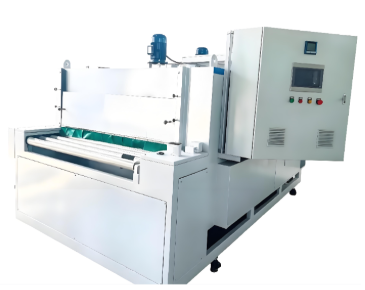
Leather Low-Temperature Flexing Tester
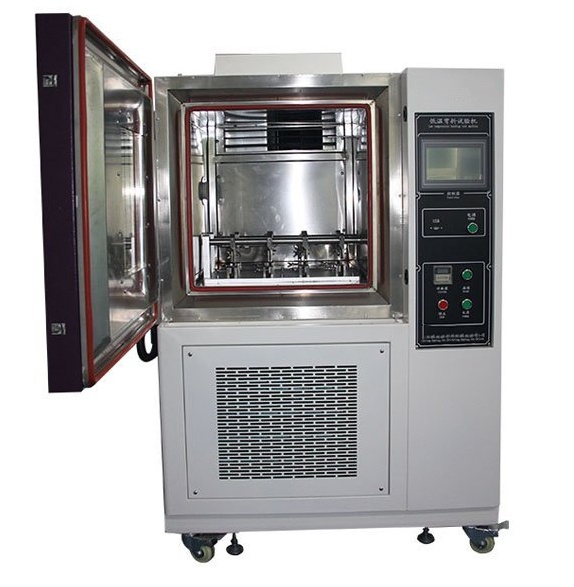


The Leather Low-Temperature Flexing Tester is a high-precision durability assessment system specifically engineered to evaluate the flexing endurance and crack resistance of leather and synthetic coatings under extreme cold conditions. By simulating harsh sub-zero environments within an integrated stainless steel cooling chamber, this tester allows you to determine how materials or finished products perform in cold climates or high-altitude regions. Featuring a robust mechanical drive and modular gripping system, it provides a standardized platform to observe the physical transformation, delamination, or fracture points of leather surfaces during repetitive bending cycles.
Applications
Leather Low-Temperature Flexing Tester is used to evaluate the cold resistance and flexing durability of leather and leather-coated materials, assessing their suitability for low-temperature climates or cold regions. Constructed entirely of stainless steel, this machine can be fitted with various fixtures to accommodate different testing requirements.
Standards
QB/T 2714-2018 Leather - Physical and Mechanical Tests - Determination of Flexing Resistance
GB/T 20991:Personal Protective Equipment — Safety Footwear
JIS K6545 Specification for Testing Flexing Resistance (or Flexing Strength) of Leather
ISO 20344:Personal Protective Equipment — Test Methods for Footwear
ASTM D1790:Standard Test Method for Brittleness Temperature of Plastic Materials by Impact
ASTM D1593:Standard Test Method for Resistance to Impact of Plastic Film by the Falling Dart Method
ASTM D1052:Standard Test Method for Measuring Rubber Deterioration — Cut Growth Using Ross Flexing Apparatus
CNS 7705:Footwear — Test Method for Abrasion Resistance of Outsole Materials
Features
1. Inner and Outer Tank Material: Stainless Steel #304
2. Controller: PLC Control System with Touchscreen Display
3. Protective Devices: Thermal Protection Shutdown, Ground Fault Protection Shutdown, Over-Temperature Protection, Overload Protection, and other functions
Parameters
| Item | Specifications |
|---|---|
| Temperature Range | Room temperature ~ -30°C |
| Inner Chamber with Low-Temperature Flexing Fixture | - Fixture quantity: 12 sets- Sample size: 70mm×45mm- Flexing angle: (22.5±0.5)°- Flexing rate: (100±5) cycles/min- Flexing count range: 0 ~ 999.999 cycles- Distance between upper edge of lower fixture and upper fixture: (25.0±0.5) mm |
| Control Accuracy | ±0.5°C, V4.0 |
| Temperature Uniformity | ±2°C |
| Cooling Rate | Approximately 45 minutes from room temperature to -30°C |
| Refrigerant | R404 (environmentally friendly refrigerant) |
| Compressor Start Delay | 5 minutes |
| Power Consumption | 4KW |
| Insulation Material | Rigid foam and glass wool |
| Counter | Touchscreen display, adjustable from 0 ~ 999.999 |
| Viewing Window | (210×35×270) mm, two-layer vacuum glass |
| Viewing Window Light | P1 lamp, 5W |
| Power Supply | AC220V 50Hz |
| Motor | Beltless, multi-imported gear reduction motor |
| Inner Chamber Dimensions | (60×60×55) cm |
| Overall Dimensions | (110×105×160) cm |
| Weight | Approximately 420 kg |
Accessories
Main Unit: 1 unit
Flexing Fixture: 1 set
Chinese Instrument Manual: 1 copy
Instrument Warranty Card: 1 copy
Upper Material Low-Temperature Flexing Test Piece: 70×65mm
Product Certificate of Conformity: 1 sheet
Laser Engraving Die Cutter: 1 piece
Product Operation Manual: 1 copy
Delivery Note: 1 sheet
Acceptance Note: 1 sheet
FAQ
1.Can this machine be used for materials other than leather?
Yes. While optimized for leather, you can use this tester for various flexible sheet materials such as PU synthetic leather, PVC coatings, and rubber-coated fabrics, provided they fit within the grip dimensions and standard parameters.
2.What is the significance of the 22.5-degree flexing angle?
The 22.5-degree angle is a standardized value established in benchmarks like QB/T 2714 and ISO 5402. It replicates the typical sharp folding action that occurs at the vamp of a shoe during walking, providing a realistic simulation of wear-and-tear.
3.How does the vacuum layer window prevent fogging at low temperatures?
The window consists of a multi-layer vacuum-sealed glass unit that provides superior thermal insulation. This prevents the outer surface from reaching the dew point, allowing you to have a clear, fog-free view of your specimens during the entire test duration.
4..How should I handle the results if only the coating cracks but the leather substrate remains intact?
In professional reporting, this is usually classified as a coating failure. You should record the specific cycle count when the coating began to delaminate or show micro-cracks, as this directly affects the aesthetic and waterproof performance of the finished product.
5.What water quality is recommended for cleaning the SUS#304 interior?
Always use a soft cloth with deionized water or a neutral detergent. Avoid using cleaners containing chlorine or abrasive pads, as these can strip the protective oxide layer from the stainless steel and eventually lead to pitting corrosion in a high-humidity/condensation environment.
Leave Message Get Price