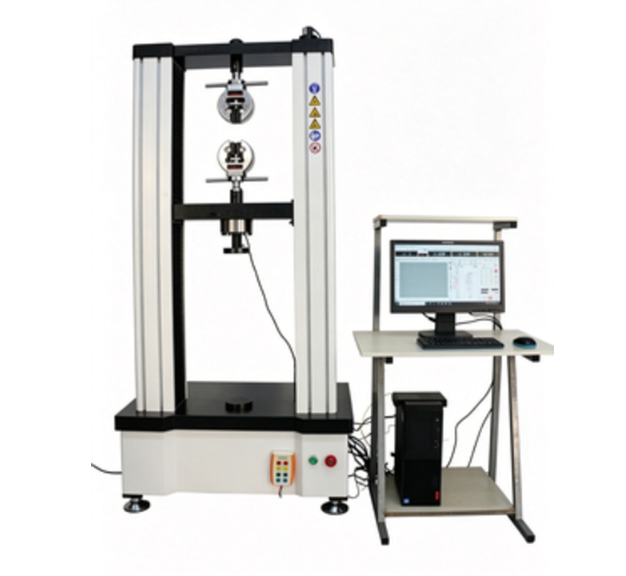
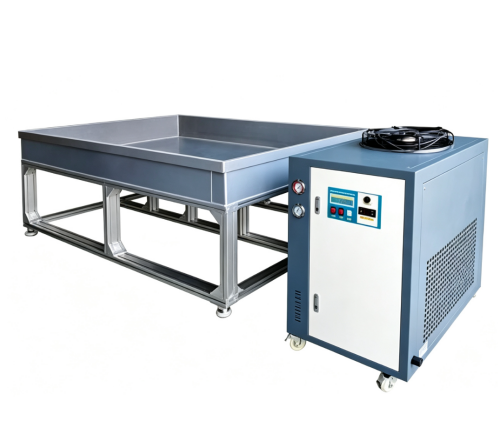
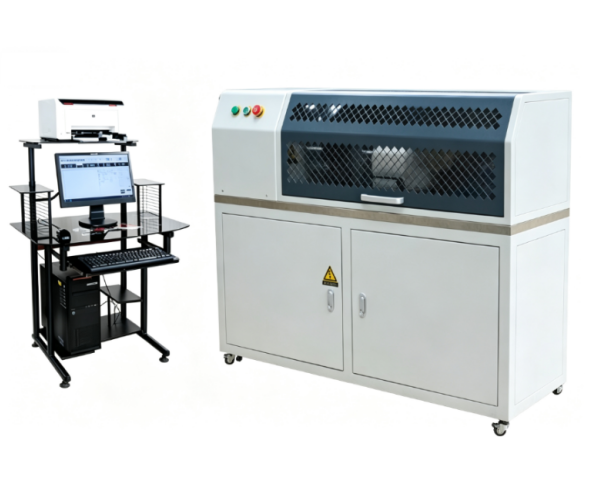
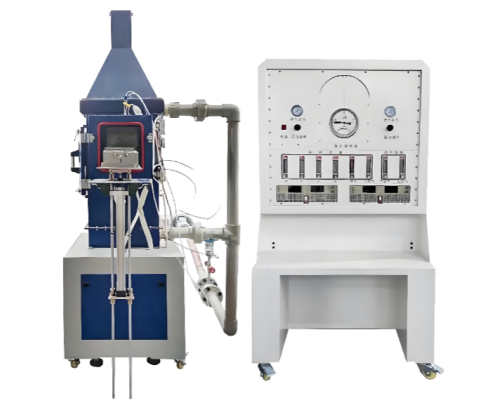
Impact Testing Machine
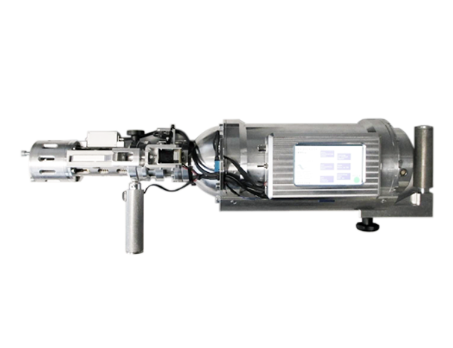


The Impact Testing Machine is a precision instrument designed for material testing in the aerospace and railway sectors. You can use it to assess coatings, paints, and rigid materials by delivering controlled impacts with a defined energy level. The machine uses compressed air to generate impacts ranging from 3 to 140 joules, allowing accurate evaluation of material resistance to sudden deformation or stone-chip impact.
Application
The Impact Testing Machine is suitable for a wide range of material testing applications:
Aerospace Materials: Test aircraft coatings and structural materials for impact resistance.
Railway Components: Evaluate durability of railcar coatings and interior panels under sudden mechanical stress.
Automotive Coatings: Assess stone-chip and high-speed particle impact resistance on vehicles.
Paint and Coating Development: Optimize formulation for durability and adhesion under impact loads.
R&D and Quality Control: Perform controlled energy impact tests for material validation and certification.
Typical test products include aircraft panels, railway interior panels, automotive paint samples, and rigid plastic components.
Standards
The system supports compliance with international and automotive material standards:
ISO 6272‑1:2011 – Paints and varnishes – Impact resistance tests – Part 1: Large-area falling-weight test.
ISO 6272‑2:2011 – Paints and varnishes – Impact resistance tests – Part 2: Small-area falling-weight test.
ASTM D2794‑04(2022) – Standard test method for resistance of coatings to impact.
ASTM D5420‑21 – Test method for rigid plastic impact performance (falling-weight method).
GB/T 14123‑2012 – Mechanical impact testing machine performance characteristics.
GB/T 20624.1‑2006 – Paints and varnishes – Large-area falling-weight impact test.
GB/T 20624.2‑2006 – Paints and varnishes – Small-area falling-weight impact test.
ISO 20567‑1 – Road vehicles – Automotive materials resistance to stone-chip impact.
SAE J400 Series – Impact testing and material performance standards.
ASTM D3170 – Stone-chip impact performance test method.
GMW14668‑3.4.9 – GM stone-chip impact requirements.
Parameters
| Parameter Category | Details |
|---|---|
| Impact Device Dimensions | 270 × 600 × 200 mm (W × H × D) |
| Impact Device Weight | 10 kg |
| Impact Energy | 3 – 140 J (at 6 bar maximum) |
| Energy Adjustment | Via controller, adjustable within range |
| Data Sampling Rate | 50 kHz |
| Display | 4.3" touch screen, 480 × 272 pixels |
| Data Storage | SD card |
Features
Specifically designed for aerospace and railway material testing.
Generates impact using compressed air at controlled energy levels.
Multiple impact heads available with varying weight and tip type.
Impact energy adjustable from 3 to 140 joules using the controller.
Built-in touchscreen displays test analysis in real time.
Test data recorded at 50 kHz for accurate distance, velocity, and acceleration measurements.
Data is stored on an SD card for easy retrieval and analysis.
Compact impactor size for flexibility: 270 × 600 × 200 mm.
Maximum impact energy: 140 J at 6 bar.
Accessories
Interchangeable impact heads (different weights and tips)
Compressed air supply system
4.3-inch touchscreen controller
SD card for data storage
Sample mounting fixture
Safety shields and enclosure
Maintenance Information
Inspect impact heads, sample fixtures, and air connections regularly.
Calibrate pressure and energy settings periodically to ensure accuracy.
Clean the impact device and enclosure to remove debris or coating residues.
Replace worn or damaged impact tips to maintain testing consistency.
Verify data recording and touchscreen functionality before each test session.
FAQ
1. What is this product?
The Impact Testing Machine is a laboratory system designed to assess material resistance to sudden mechanical impacts for aerospace, railway, and automotive applications.
2. What is it used for?
It tests coatings, paints, plastics, and rigid materials for impact resistance, durability, and adhesion under controlled energy levels.
3. How does it work?
The system uses compressed air to drive a falling-weight impactor with adjustable energy. Sensors record distance, velocity, and acceleration, providing precise measurement of material response.
4. Why is it important?
It ensures critical materials meet international durability and safety standards, preventing failures in vehicles and infrastructure.
5. Which industries is it suitable for?
It is suitable for aerospace, railway, automotive manufacturers, coatings and material suppliers, and R&D or quality control laboratories.
Leave Message Get Price