Luer Taper Multifunction Testing Machine


Introduction
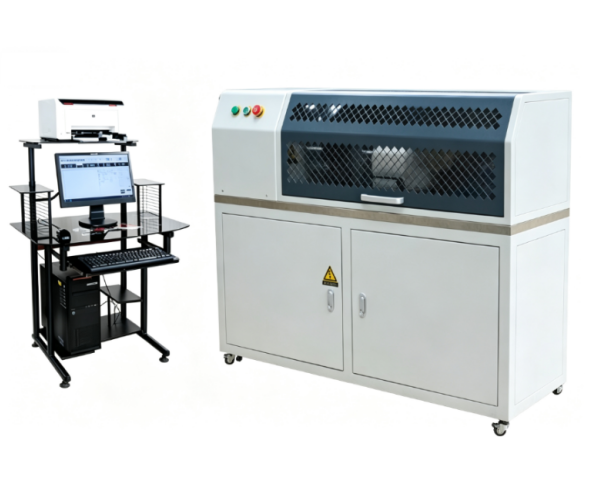
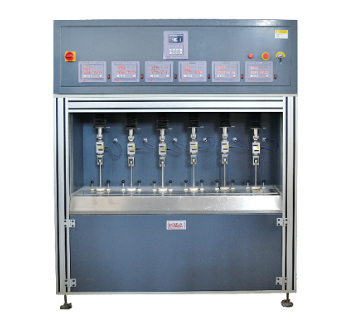
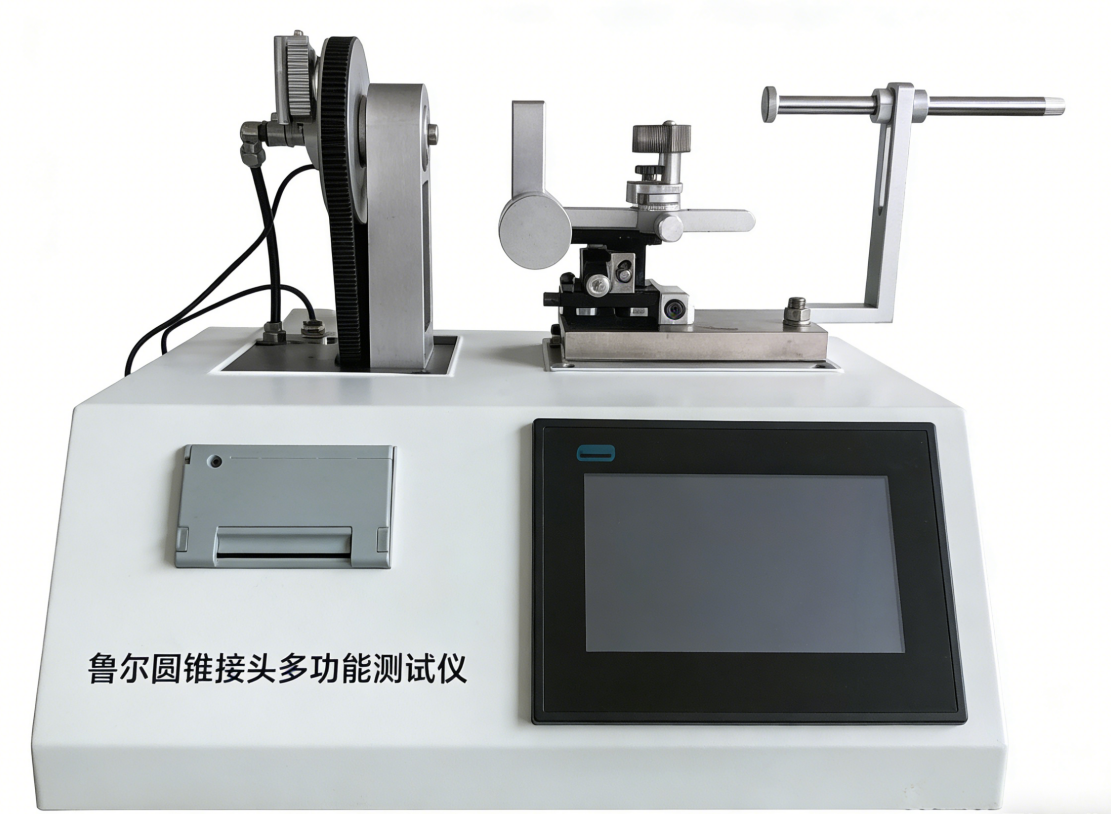
This Luer Taper Multifunction Testing Machine serves as a high-efficiency testing device for evaluating the performance of products manufactured by state-inspected producers. It comprises a PLC+ARM programmable controller, touchscreen, force sensor, transmission mechanism, and onboard printer, featuring Chinese and English menu displays. It enables human-machine interaction for parameter setting and automatic test mode operation. Additionally, it incorporates machine-printed input for production units and batch numbers, ensuring more standardized and regulated test results. Information security is safeguarded through a three-level password system, guaranteeing reliable data protection.
Test control functions include: test items, nominal specifications, product names, print settings, testing, forward movement, backward movement, left movement, right movement, time, calibration, and verification. Integrated onboard printing displays real-time test data. The system automatically evaluates results, triggering an audible alarm for non-conforming items while printing test data and outcomes for analysis.
During testing, the system displays applied axial force, torque, hold time, internal water pressure, separation force, and evaluates syringes and needles for leakage (fluid/air), separation force, unscrewing torque, ease of assembly, overload resistance (stripping), stress cracking, nominal syringe volume, and displays during assembly the applied axial force, torque, hold time, internal water pressure, and separation force. It accommodates various 6:100 (Luer) connectors (locking and non-locking), such as infusion sets, blood transfusion sets, infusion needles, catheters, and anesthesia filters.
Application
The Luer Taper Multifunction Testing Machine is mainly used for evaluating the physical performance of Luer taper connectors and is one of the essential instruments for verifying the quality and compliance of medical Luer fittings.
Standards
(1)GB/T 1962.1-2015 — Syringes, needles, and other medical devices with 6% (Luer) tapered connectors — Part 1: General requirements
(2)GB/T 1962.2-2001 — Syringes, needles, and other medical devices with 6% (Luer) tapered connectors — Part 2: Locking connectors
Parameters
Item | Specification |
User Interface | Simplified Chinese / English |
Controller | PLC + ARM |
Touch Screen | 7-inch K600+ core, dot-matrix display, 65K colors, 800 × 480 resolution |
Test Items | Liquid leakage, air leakage, separation force, unscrewing torque, ease of assembly, overload resistance (thread stripping), stress cracking |
Axial Force | 1 N – 100 N, accuracy ±0.2% of reading (software adjustable) |
Internal Water Pressure | 200 kPa – 400 kPa, accuracy ±0.2% of reading (software adjustable) |
Torque | 0.01 N·m – 0.50 N·m, accuracy ±0.2% of reading (software adjustable) |
Separation Force | 1 N – 100 N, accuracy ±0.2% of reading (software adjustable) |
Holding Time | 0 – 9999 s, accuracy ±0.1 s (software adjustable) |
Net Weight | 26 kg |
Dimensions (L × W × H) | 440 × 350 × 384 mm |
Power Supply | AC 220 V ±20%, 50 Hz (wide-voltage adaptive) |
Rated Power | 60 W |
Sensor | High-precision force sensor |
Force Measuring System | Built-in |
Printer | Built-in dot-matrix printer |
Configuration List
1. Main unit x1; Power cord x1
2. Dedicated connector set x1 (41 pieces);
3. Multi-functional fixture x1;
4. Onboard printer with 2 rolls of paper;
5. Touchscreen;
6. User manual x1;
7. Human-machine interface x1;
8. Water storage tank x1 (3L capacity);
9. Air compressor: 1 unit;
10. Wireless module: 1 set;
11. Third-party calibration certificate: 1 copy.
FAQ
(1)What medical devices can be tested with this equipment?
This equipment is designed for medical devices using 6% Luer tapered connectors, including syringes, needles, infusion sets, blood transfusion sets, catheters, and anesthesia filters. It helps evaluate connection reliability, sealing performance, and mechanical stability.
(2)What performance tests can be performed on Luer connectors?
The system can evaluate liquid leakage, air leakage, separation force, unscrewing torque, assembly performance, overload resistance, and stress cracking. These tests help verify whether connectors maintain safe and reliable connections during medical use.
(3)Why is leakage testing important for Luer connector products?
Leakage testing verifies whether the connector can maintain proper sealing under specified conditions. For medical devices that transport fluids or gases, reliable sealing performance is essential to prevent leakage risks during clinical operation.
(4)How does the instrument improve testing efficiency in laboratories?
The system combines multiple test functions in one platform and uses automatic control through PLC and touchscreen operation. It reduces manual operation steps while providing consistent test conditions and traceable printed test results.
(5)What should manufacturers consider when selecting Luer connector testing equipment?
Manufacturers should consider required test items, connector types, measurement accuracy, pressure range, torque range, and compliance with applicable standards such as GB/T 1962.1 and GB/T 1962.2 to ensure suitable testing capability.
Leave Message Get Price