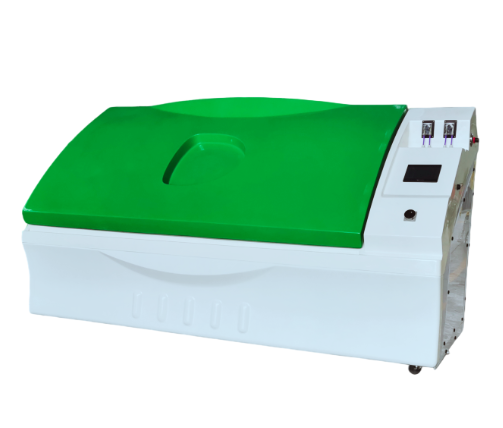
1300L Salt Spray Test Chamber


Introduction
Item | Specification |
Product Name | 1300L Salt Spray Test Chamber |
Working Chamber Dimensions | 135 × 95 × 125 (W × D × H) cm |
External Dimensions | 206 × 135 × 168 (W × D × H) cm |
Power Supply | AC3ø 380V 35A 50Hz |
Materials used
2.1 Test Chamber Interior:Formed in one piece from GRP with a thickness of 5 mm, it can withstand temperatures ranging from -40°C to 120°C, ensuring the equipment remains deformation-free during long-term CASS, ACSS, and NSS tests.
2.2 Thermostatic Chamber Outer Shell:Constructed from GRP and gray, heat-resistant, impact-resistant PVC panels. The PVC panels primarily serve for protection and aesthetic enhancement.
2.3 Laboratory Top Cover:Formed in one piece from GRP with a thickness of 5 mm, it can withstand temperatures ranging from -40°C to 120°C, ensuring the equipment remains deformation-free during long-term CASS, ACSS, and NSS tests. It is equipped with one set of reinforced safety viewing windows and one set of pneumatic cylinders on the left and right (for automatic opening and closing).
2.4 Reagent Replenishment Tank:Made of white PP board with a capacity of 100 L, it is an independent unit.
2.5 Laboratory Basket Rack:Made of heat-resistant GRP angle material, which can set the product test angle at 20° ± 5°, and custom test brackets are available.
2.6 Saturated Air Barrel:Fabricated from SUS#304 stainless steel plate with a thickness of 2 mm, and equipped with an automatic water level controller to eliminate the inconvenience of manual water addition.
Operating temperature
The temperature can be set according to CNS, JIS, and ASTM standards.
3.1 Water Test Method:(1) Laboratory: 35°C ± 1°C(2) Saturated air barrel: 47°C ± 1°C
3.2 Corrosion Resistance Test Method:(1) Laboratory: 50°C ± 1°C(2) Saturated air barrel: 63°C ± 1°C
3.3 Drying Test:
Laboratory temperature: 40°C ~ 70°C ± 0.5°C
Humidity: 30 ± 5%RH and natural humidity
3.4 Humidity Test:
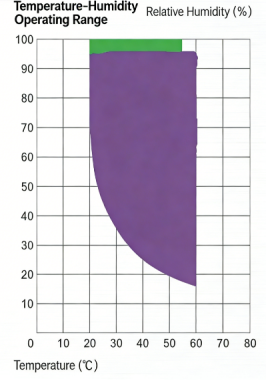
Laboratory temperature: RT (room temperature) ~ 70°C ± 2°C
Cooling rate: 60°C ~ RT ≤ 1°C/min
Heating rate: RT ~ 70°C ≤ 1.5°C/min
Temperature deviation: ± 2°C
Humidity: 20%–98% ± 5%RH
3.5 Spray Test (Optional):Adopts automatic pressurized spraying of salt water or pure water (as per customer requirements). After the test, the liquid is automatically discharged outside the chamber, and customization is available according to specific needs.
3.6 Condensation Test:Compliant with GB2423.3–93 Basic Environmental Test Procedures for Electric and Electronic Products, Test Ca: Constant Damp Heat Test Method (here, only specified temperature and humidity tests are satisfied).a. Test temperature: 40–60°C ± 2°Cb. Test humidity: 95%–100% ± 2%RH
3.7 Heating Method:Uses thermal radiation and heat conduction to achieve temperature changes and stability in the laboratory. In the salt spray test, the collected salt water concentration, specific gravity, and pH value meet the standards such as GB2423-17, 18, GBT10125, ISO-9227, ISO7384-1986, GB-T229, Z2371, VOS, CETP, GMW, DIN, and VW.
Spraying method
4.1Spraying is achieved through a combination of a corrosion-resistant pump and air pressure. The corrosion-resistant pump allows for adjustment of the spray volume, producing fine and uniformly distributed mist, which delivers a more pronounced natural environmental corrosion effect on the test specimens.
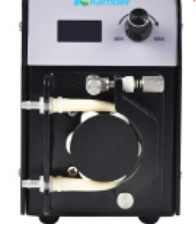
4.2Nozzle: Manufactured from corrosion-resistant resin through precision processing (produced in-house).
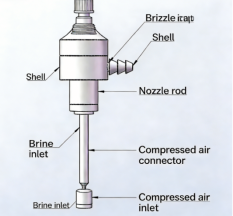
4.3Spray Volume: 1~3 mL / 80 cm²·1 hour
Defogging method
The fog is expelled by air compression.
Refrigeration system
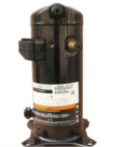
(1) Fully enclosed refrigeration compressor
(2) All systems use R404 environmentally friendly refrigerant
(3) Heating and cooling systems are completely independent
(4) Titanium alloy evaporators are used in the laboratory to prevent corrosion.
Humidification and dehumidification system
(1) The humidification and dehumidification systems must be completely independent.
(2) The water level control adopts mechanical float control to prevent electronic malfunctions.
(3) The water supply system adopts an automatic water replenishment system, suitable for long-term continuous operation of the machine.
Control System
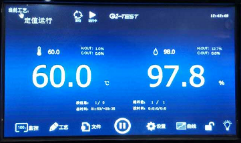
The saturated air barrel of the test chamber adopts a touch-screen PLC controller (brand: QI-TEST HL-1000) with temperature control ranging from 0 to 99°C and a precision of 0.1°C. It can perform continuous salt spray tests, intermittent salt spray tests, and corrosion resistance tests. The test time can be set, and the operation is simple, convenient, and clear at a glance.
The safety temperature controller adopts a digital display and liquid expansion temperature controller, with a range of 0 to 85°C, and there are 2 units in total.
Equipment water and electricity installation requirements
(1) Power Supply: 3Φ 380V 40A
(2) Water: A 1/4-inch tap water pipe with two screw-connected faucets must be installed near the salt spray tester. The water pressure must be above 2kg and filtered (pure water is better) for heating the test chamber and saturated air tank. (Also prepare 50kg of distilled or purified water for preparing the salt solution.)
(3) Compressed Air: Oil-free and impurity-free, with a pressure between 3kg and 8kg, including national standard quick-connect fittings. Connect it to the side of the machine for easy installation.
(4)Exhaust Port: The exhaust port must be able to discharge upwards or downwards to the outside (machine pipe diameter is 50mm). Because the CASS test gas is acidic and harmful to objects and people, it must be discharged outdoors to a place where it will not harm people or objects. Note: Because the gas contains a high amount of moisture, the exhaust must be unobstructed and without bends to prevent blockage. The machine comes with a 3m PVC hose.
(5) Drainage outlet: The drainage outlet can be directly discharged into the sewage ditch (machine outlet is 20mm). The machine itself comes with a 2.5-meter hose.
(6) Recommendation: Due to the water and electricity requirements of the salt spray test machine, the exhaust cannot be discharged too far (because the gas has no pressure and high moisture content), so it is better to discharge it as close as possible to the sewage outlet.
Leave Message Get Price