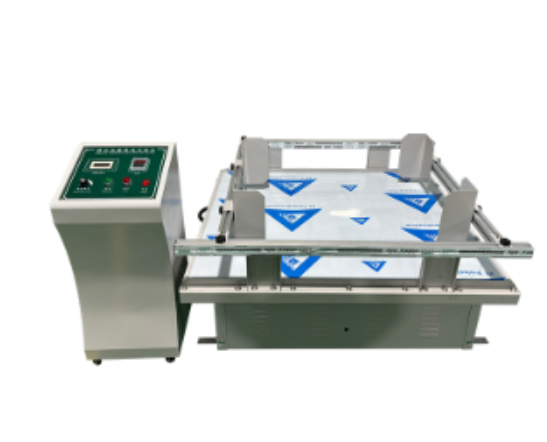
Battery Nail Penetration Tester
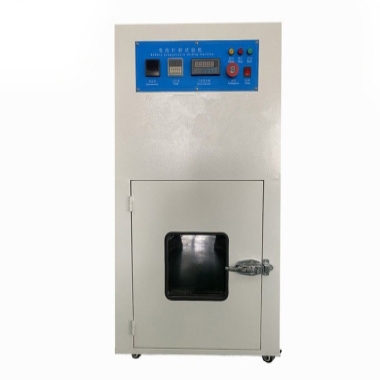


Battery Nail Penetration Tester is designed for evaluating the safety performance of lithium-ion batteries and battery packs under extreme internal short-circuit conditions.
The tester simulates thermal runaway caused by mechanical penetration by driving a rust-free steel nail through the center of the largest surface of the battery at a controlled speed and force. The test is conducted at an ambient temperature of 20 °C ± 5 °C, with temperature monitoring to assess battery reaction such as ignition, explosion or thermal instability.
Application
(1) Consumer Electronics Batteries
Lithium-ion batteries used in smartphones, tablets, laptops, power banks, Bluetooth earphones, smart watches and wearable devices.
(2) Power Tool Batteries
Rechargeable lithium battery packs for electric drills, screwdrivers, garden tools and portable industrial tools.
(3) Electric Vehicle Power Batteries
Cylindrical, prismatic and pouch lithium-ion cells and battery modules used in electric vehicles (EV), electric motorcycles and hybrid electric vehicles (HEV).
(4) Energy Storage Batteries
Lithium battery cells and modules used in residential, commercial and industrial energy storage systems (ESS).
(5) New Energy Battery Systems
Battery packs applied in solar energy storage systems, backup power supplies and communication base stations.
(6) Small Portable Lithium Batteries
Button cells, coin cells and small-capacity lithium batteries used in medical devices, sensors and portable electronic equipment.
(7) Battery Certification & Compliance Testing
Applicable for safety testing in battery manufacturers, third-party laboratories and certification institutions.
Standards
(1) GB/T 18332.2-2001
General Specification for Lithium-Ion Batteries
(2) MT/T 1051-2007
Safety Performance Test Method for Lithium-Ion Batteries Used in Coal Mines
(3) GB/T 31485-2015
Safety Requirements and Test Methods for Power Batteries of Electric Vehicles
(4) GB/T 31241-2014
Safety Requirements for Lithium-Ion Batteries and Battery Packs for Portable Electronic Products
(5) UN 38.3
United Nations Manual of Tests and Criteria – Section 38.3 (Transport of Dangerous Goods)
(6) IEC 62133
Secondary Cells and Batteries Containing Alkaline or Other Non-Acid Electrolytes – Safety Requirements for Portable Applications
(7) UL 1642:2012
Standard for Lithium Batteries
Technical Parameters
| Parameter Category | Specification |
|---|---|
| Nail Diameter | ф2 mm – ф8 mm high-temperature resistant steel needle |
| Penetration Speed | 10 – 40 mm/s |
| Penetration Force | Approx. 2000 kg |
| Stroke | Approx. 200 mm |
| Needle Tip to Base Distance | 250 mm |
| Clamping Distance | 150 mm |
| Driving Mode | Hydraulic drive or motor drive |
| Force Display | Pressure sensing LED display |
| Test Environment | 20 °C ± 5 °C |
| Explosion-Proof Box Size (W × H × D) | Approx. 450 × 750 × 550 mm |
| Explosion-Proof Box Material | Galvanized steel with baked paint finish |
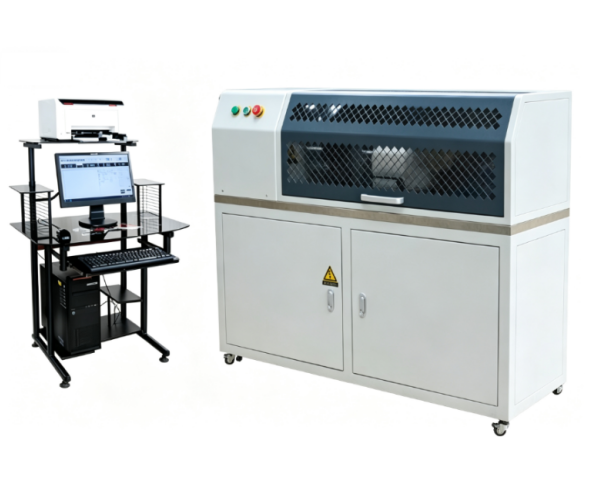
| Machine Dimensions (L × W × H) | Approx. 1640 × 570 × 730 mm |
| Control Box Size (W × H × D) | Approx. 300 × 260 × 170 mm |
| Equipment Weight | Approx. 75 kg |
| Power Supply | Single-phase AC 220 V, 50 Hz |
Features
(1) Controlled nail penetration speed and stable penetration force to ensure repeatable test results.
(2) Supports multiple steel needle diameters to meet different standard requirements.
(3) Hydraulic or motor-driven penetration system for high penetration force stability.
(4) Integrated pressure sensing system with LED force display.
(5) Fully enclosed explosion-proof box design for enhanced operator safety.
(6) Fire-resistant, corrosion-resistant and easy-to-clean structure.
(7) Designed for laboratory and production safety testing environments.
FAQ
(1) Why is nail penetration testing important for lithium batteries?
Nail penetration testing simulates internal short-circuit conditions caused by mechanical damage, which is one of the potential causes of thermal runaway in lithium batteries. The test helps manufacturers evaluate battery safety characteristics, identify design risks, and improve battery structures before mass production or certification testing.
(2) What types of batteries can be tested with the Battery Nail Penetration Tester?
The equipment can test various lithium battery formats, including cylindrical cells, prismatic batteries, pouch cells, small portable batteries, battery modules, and power battery systems. It is commonly used for consumer electronics batteries, electric vehicle batteries, and energy storage battery products.
(3) How does the Battery Nail Penetration Tester evaluate battery safety performance?
The tester drives a steel nail through the battery sample under controlled conditions to simulate internal short-circuit damage. During the test, the system monitors battery behavior and allows users to evaluate reactions such as temperature changes, smoke generation, ignition, explosion, or thermal instability.
(4) How should I choose a suitable Battery Nail Penetration Tester?
The selection should consider the battery type, applicable safety standards, testing purpose, and laboratory requirements. Users should evaluate factors such as penetration control method, safety protection design, data monitoring requirements, and whether customized fixtures are needed for different battery structures.
(5) Who needs a Battery Nail Penetration Tester?
This equipment is mainly used by lithium battery manufacturers, electric vehicle battery suppliers, energy storage companies, third-party testing laboratories, universities, research institutes, and certification organizations that require battery safety verification and compliance testing.
Leave Message Get Price