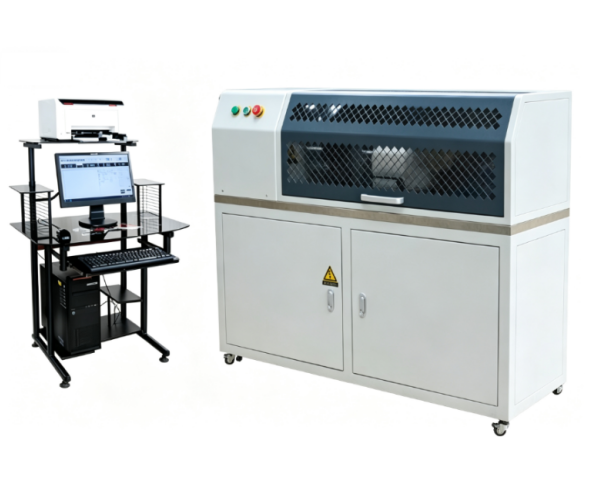
Circular Locus Pilling Tester
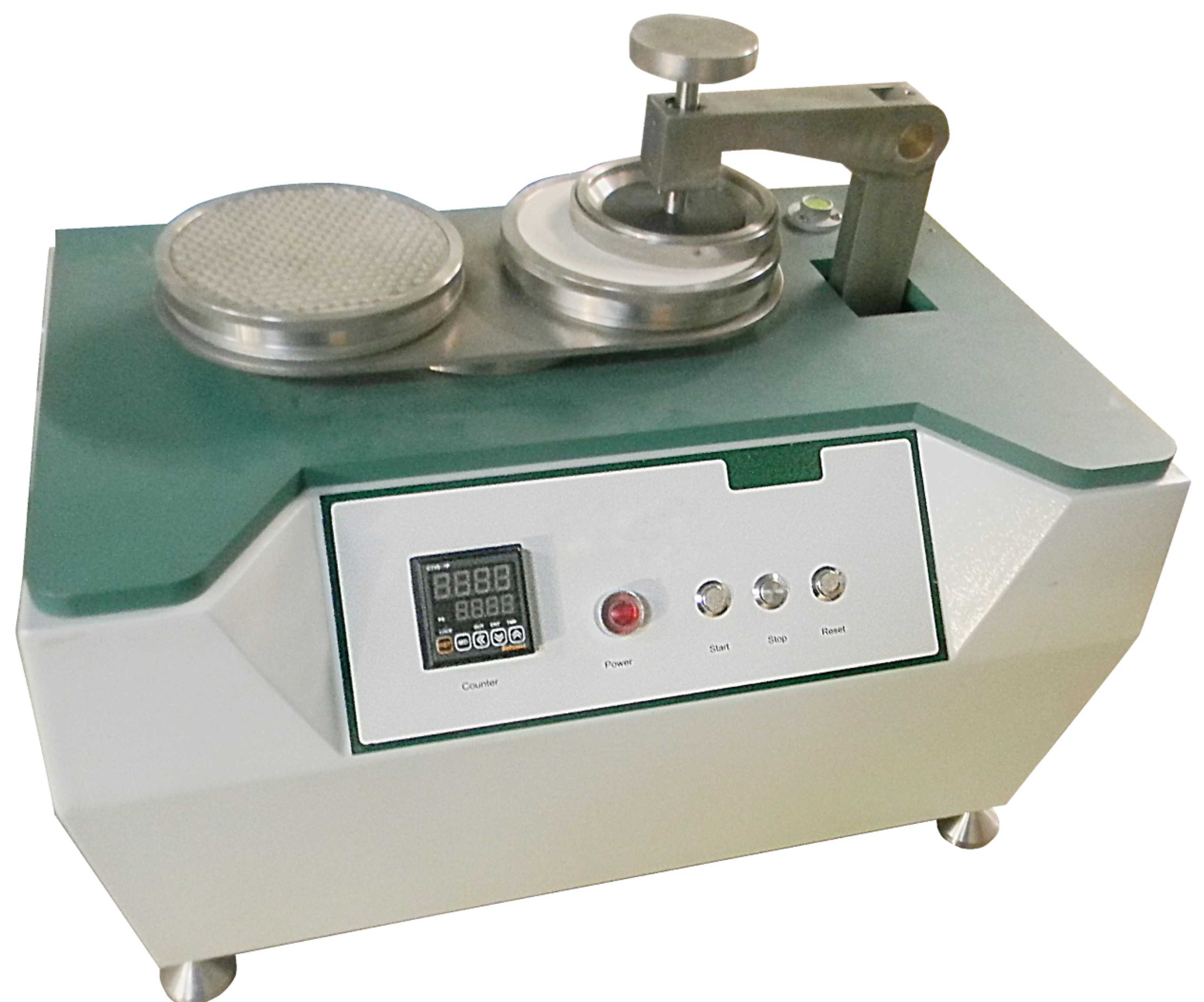


The Circular Locus Pilling Tester is used to test the pilling conditions of wool fabric, chemical fiber cotton, and blended, knitted, woven fabric to identify product quality and process effect. When testing, the fabric is rubbed against nylon brush and abrasive, or rubbed against abrasive only in the humidity state.
Application
The Circular Locus Pilling Tester is mainly used for evaluating fabric pilling resistance and wear behavior during textile development and quality control.
(1) Wool fabric testing
Used to evaluate pilling performance of combed wool fabrics, coarse wool fabrics, and other wool-based textiles.
(2) Chemical fiber fabric evaluation
Suitable for testing polyester, nylon, acrylic, and other synthetic fiber fabrics to compare surface durability.
(3) Blended fabric quality control
Used for analyzing pilling characteristics of cotton-polyester blends, wool blends, and other mixed fiber materials.
(4) Knitted and woven fabric inspection
Supports performance comparison during fabric production, finishing process optimization, and supplier quality evaluation.
(5) Textile research and development
Helps researchers study the influence of fiber composition, yarn structure, and finishing processes on fabric pilling behavior.
Standard
GB/T.1Determination of pilling properties of textile fabrics - Part 1: Circular trajectory method
JIGBell-type gas flow standard device verification procedures
DIN.2Testing of textiles - Wear test of flat fabrics – Roll to mill
Test Parameters
| Items | Parameters |
| Grinding head is in contact with grinding plane | ≤0.2mm |
| The parallelism of grinding head and grinding plane | ≤0.3mm |
| The relative movement trajectory of grinding head and grinding plane | 40±1mm |
| Nylon brush surface is flush, its height difference | <0.5mm |
| Grinding plane reciprocating speed | 60±1 times/min |
| Weight of grinding head | 490cN±1% |
| Weight of heavy hammer | 290cN±1% |
| Weight of hammer | 100cN±1% |
| Select the number of times | 1~9999 |
Features
1. Scientific mechanical structure, smooth rotation, no mechanical noise, no contact fatigue failure, suitable for long continuous operation.
2. The use of standard nylon brush, the rigidity of nylon wire must be uniform, so as to control the fluff effect of nylon brush.
3. Ergonomic design, the surface using a spray forming, smooth and beautiful.
Test Reference
| Sample type | Pressure / cN | Number of fluff times | Number of pilling times |
| Synthetic fiber knitted fabric | 590 | 150 | 150 |
| Chemical fiber woven fabric | 590 | 50 | 50 |
| Military service (combed blended) | 490 | 30 | 50 |
| Combed wool fabric | 780 | 0 | 600 |
| Coarse wool fabric | 490 | 0 | 50 |
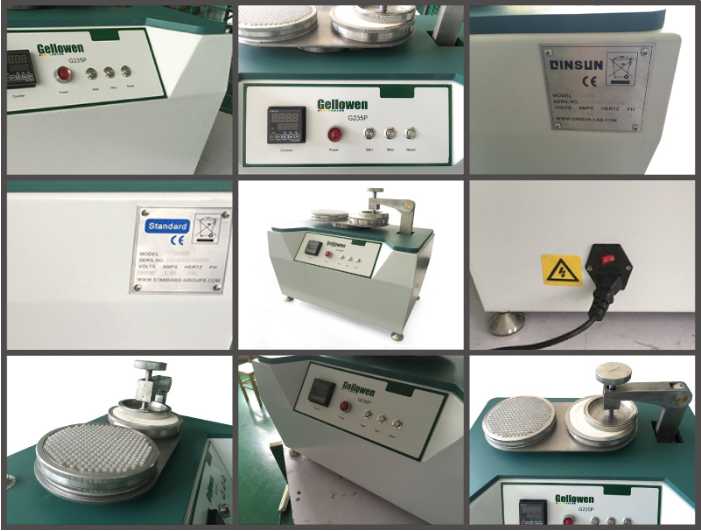
Product Display
FAQ
(1) What fabrics can be tested with a Circular Locus Pilling Tester?
This tester is suitable for wool, chemical fiber, cotton blended, knitted, and woven fabrics. It is commonly used to compare pilling resistance between different materials, yarn structures, and finishing processes during textile production and quality evaluation.
(2) What is the testing principle of this pilling tester?
The instrument simulates fabric friction during actual use by moving the specimen along a circular trajectory against nylon brushes or abrasive materials. After a controlled number of cycles, the fabric surface condition is evaluated for fuzzing and pilling performance.
(3) Which standards are commonly used for fabric pilling evaluation?
The circular trajectory method is commonly referenced in textile standards such as GB/T 4802.1. Different markets or customers may also require additional methods depending on fabric type, application, and product specifications.
(4) How can laboratories ensure accurate pilling test results?
Accurate results depend on proper specimen preparation, standard abrasive materials, correct loading force, and equipment calibration. QINSUN instruments are inspected and calibrated before delivery to ensure stable operation and reliable measurement performance.
(5) Can QINSUN provide guidance for selecting suitable textile testing equipment?
Yes. QINSUN provides professional support for textile laboratories based on fabric type, testing standards, and application requirements. Our engineers can recommend suitable configurations and provide complete testing solutions for different textile quality control projects.
Leave Message Get Price