Falling Ball Rebound Instrument
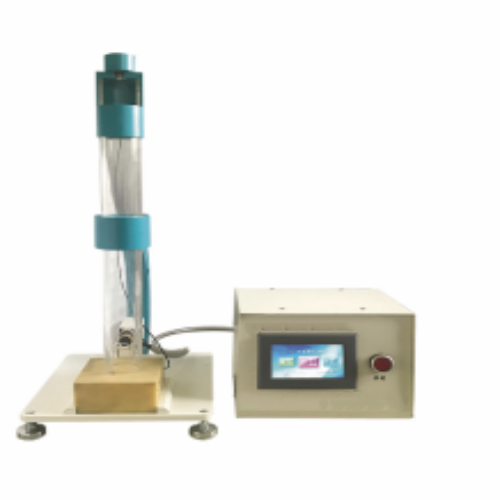


The falling ball rebound instrument is designed and manufactured according to GB/T6670-2008 or ISO8307 or ASMD3574. It is suitable for determining the falling ball rebound property of soft polyurethane foam. The instrument calculates the maximum rebound height of the steel ball and the percentage of the falling height of the steel ball by the steel ball with a given diameter and quality falling freely on the foam sample at a specified height, and the rebound rate represents the resilience of the foam.
Application
The Falling Ball Rebound Instrument is mainly used to determine the resilience characteristics of soft foam materials by evaluating their energy recovery capability after impact.
Typical applications include:
(1)Flexible polyurethane foam
Used for measuring rebound resilience of foam materials used in mattresses, sofas, cushions, and padding products.
(2)Automotive interior materials
Applicable for evaluating the elasticity and recovery performance of foam components used in vehicle seats, headrests, and interior cushioning structures.
(3)Furniture and bedding materials
Used for quality inspection of foam products to ensure consistent comfort and durability performance.
(4)Foam material research and development
Helps researchers compare different foam formulations, densities, and production processes through rebound performance testing.
Standards
(1)GB/T 6670-2008 — Flexible cellular polymeric materials — Determination of resilience by ball rebound
(2)ISO 8307 — Flexible cellular polymeric materials — Determination of resilience by ball rebound
(3)ASTM D3574 — Standard Test Methods for Flexible Cellular Materials — Slab, Bonded, and Molded Urethane Foams
Parameters
| Items | Parameters |
|---|---|
| Drop ball rebound accuracy | Relative accuracy <1.5% |
| Steel ball falling height | 460 ±0.5% mm (GB/T6670-97) |
| 500 ±0.5% mm (ASTM D3574 / ISO 8307) | |
| Plastic pipe diameter | 40 ±4 mm |
| Steel ball diameter | Φ16 ±0.5 mm |
| Steel ball mass | 16.7 ±1.5 g |
| Measuring range | 10%~100% |
| Reading mode | Color crystal display |
| Sample size | 100 × 100 × 50 mm |
Features
(1)Standard-compliant rebound testing
Designed according to GB/T6670, ISO8307, and ASTM D3574 requirements for accurate evaluation of foam resilience.
(2)Accurate rebound measurement
Calculates rebound height and rebound percentage to provide quantitative evaluation of foam elasticity.
(3)Wide measurement range
Supports rebound measurements from 10% to 100%, suitable for different flexible foam materials.
(4)Stable impact testing system
The controlled steel ball diameter, mass, and falling height ensure consistent impact conditions during testing.
(5)Easy operation and reading
Equipped with a color crystal display for convenient observation and result reading.
FAQ
(1)What materials can be tested with this rebound instrument?
This instrument is mainly used for flexible polyurethane foam materials, including foam used in mattresses, furniture cushions, automotive seats, and other cushioning products where resilience performance needs to be evaluated.
(2)How is foam resilience calculated during the test?
The test determines resilience by measuring the maximum rebound height of a steel ball after impact. The rebound height is compared with the original falling height, and the result is expressed as a percentage representing the foam recovery capability.
(3)Which standards are commonly used for foam rebound testing?
Foam rebound testing is commonly performed according to GB/T6670, ISO8307, and ASTM D3574. These standards define requirements for steel ball size, falling height, test procedures, and evaluation methods for flexible cellular materials.
(4)Why is rebound performance important for foam products?
Rebound performance reflects the ability of foam materials to recover after compression or impact. It is an important factor for evaluating comfort, support characteristics, and material consistency in applications such as bedding, furniture, and vehicle seating.
(5)What factors should be considered when selecting foam rebound testing equipment?
Users should consider compliance with required standards, measurement accuracy, falling height control, sample dimensions, and operation convenience. Equipment suitable for laboratory testing should provide stable impact conditions and repeatable measurement results.
Leave Message Get Price