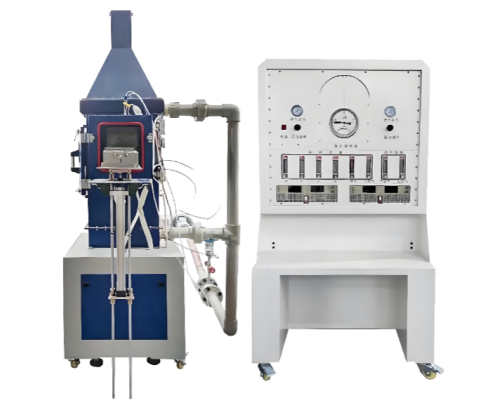
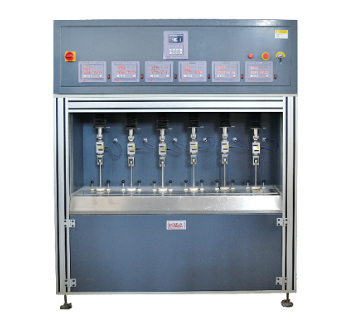
Steam Jet Test Chamber
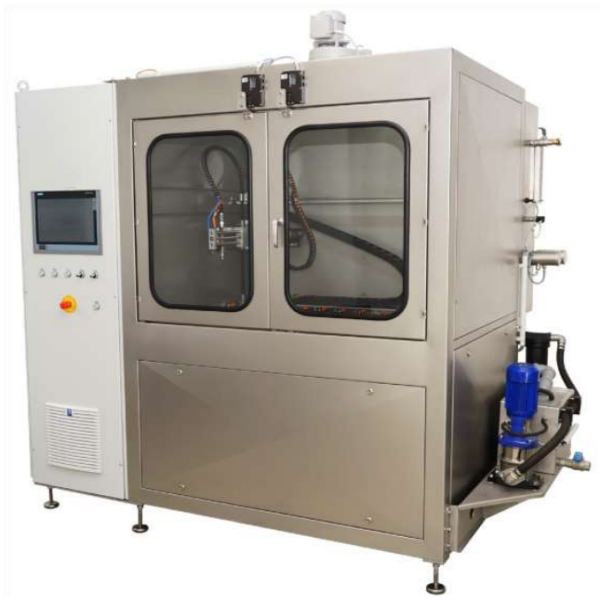


The Steam Jet Test Chamber is designed to evaluate the durability and performance of materials and components under high-pressure steam exposure. All parts in contact with the medium are rust-resistant and suitable for operation with deionized water. The system features a ceramic plunger pump with direct-drive motor, high safety, low wear, and an integrated safety valve. You can precisely control the steam injection duration, from 1 second up to 9 minutes, and adjust the pressure externally depending on nozzle specifications.
Application
You can use the Steam Jet Test Chamber to assess the environmental resistance and mechanical durability of various components and coatings. Typical applications include:
Testing automotive components for resistance to high-pressure steam or water jets.
Evaluating surface coatings, protective layers, and material integrity under thermal and mechanical stress.
Simulating cleaning, decontamination, or sterilization processes for industrial or automotive parts.
Long-term durability and functional performance testing of system components.
Commonly tested components with this machine:
Automotive parts and components exposed to high-pressure cleaning
Coatings and surface-treated materials
Mechanical assemblies requiring durability assessment
Industrial cleaning and sterilization targets
Standards
The Steam Jet Test Chamber complies with a broad set of international automotive and industrial standards, including:
DIN EN 16925:2014-06 – German and European standards for environmental and mechanical performance testing of coatings and materials
DBL 5416 – German DBL internal engineering standard for component durability and functionality
Ford BO 160-04 – Ford engineering standard for functional and reliability testing of components
GM 9531 – General Motors global engineering standard for material and component durability
Volvo STD 423-0015 – Volvo Group internal standard for functional and durability testing of components
VW PV 1503 – Volkswagen Group specification for material and functional performance
BMW AA-0136 – BMW Group engineering standard for system component functionality and durability
Renault D 252018 – Renault engineering standard for component performance and testing
PSA D 255376 – PSA Group engineering standard for component functionality and durability
MAN M 3022 – MAN Commercial Vehicles internal standard for component performance and durability
Parameters
| Parameter | Details |
|---|---|
| Flow Rate | 14.8 L/min |
| Working Pressure (P) | 30 – 140 bar (adjustable via external pressure valve) |
| Motor (N) | 6.5 kW, 400 V |
| Plug | 32 A, 5-pole |
| Water Supply | 2 – 3 bar, 15°C |
| Nozzle Distance | 0 – 450 mm |
| Test Angles | 90°, 45°, 30° ±2° |
| Other Components | Door with inspection glass, exhaust Ø 102 mm, connectors, discharge port with dirt filter |
| Base Frame | Stainless steel with enclosure and four guide rails |
| Sterilization/Water Replacement | Automatic weekly cycle: water heated to 68°C, sprayed through nozzles; stops at 70°C; manual water replacement possible. Cooling to working temperature required after sterilization, can be accelerated with cold water addition |
| Door Locking | Electromagnetic locking during pump operation; door cannot be opened while pump is running |
| Heating Vessel | 9.0 kW, max temperature 80°C ±2°C, digital display, preheat time 1 hour |
Features
All medium-contact parts are rust-resistant and suitable for deionized water.
Ceramic plunger pump with direct-drive motor ensures high safety and minimal wear.
Steam injection duration adjustable from 1 second to 9 minutes.
External pressure control valve allows precise adjustment depending on nozzle specifications.
Equipped with door inspection glass, dirt filters, and exhaust port for safe operation.
Automatic sterilization/water replacement system with temperature control.
Electromagnetic door locking ensures safety during pump operation.
Heating vessel with digital temperature display and controlled preheating.
Accessories
Horizontal sliding unit
Exhaust fan
Laser pointer
Flow meter
Volume-measuring testing equipment (in liters)
Clamping device
Test Procedures
Install the component to be tested inside the chamber and connect the water supply.
Set the nozzle distance and test angle according to the manufacturer’s specifications.
Adjust working pressure via the external control valve.
Configure the steam injection duration on the display (1 second – 9 minutes).
Start the pump using the control unit; the door will automatically lock for safety.
Monitor real-time parameters including pressure, flow, and temperature.
After completion, allow the system to cool to working temperature; perform sterilization/water replacement if required.
Remove tested components and review recorded data for evaluation.
Maintenance Information
Inspect the pump and ceramic plunger for wear and proper operation.
Check pressure valves and flow control system for functionality.
Clean the chamber, inspection glass, and discharge filters regularly.
Perform weekly sterilization/water replacement cycles and monitor water quality.
Verify heating vessel operation and temperature calibration periodically.
Check electromagnetic door locking system for safety compliance.
FAQ
1. What is this product?
It is a high-pressure steam jet test chamber designed to evaluate material and component durability under steam exposure.
2. What is it used for?
You use it to simulate environmental and mechanical stress on coatings, automotive parts, and industrial components, assessing durability, functional reliability, and resistance to steam and high-pressure fluids.
3. How does it work?
The machine pumps water or deionized water through ceramic-plunger pumps at controlled pressure and temperature. Steam is injected through nozzles at specified angles and distances while the system monitors and records flow, pressure, and temperature.
4. Why is it important?
It ensures that components meet international durability and functional standards, preventing premature failures in real-world applications and validating coating or material performance under high-pressure steam conditions.
5. Which industries is it suitable for?
Automotive component manufacturing and R&D
Coating and surface treatment industries
Industrial cleaning or sterilization process validation
Quality assurance and durability testing laboratories
Leave Message Get Price