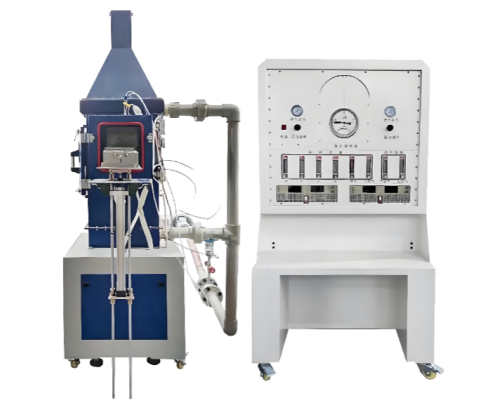
Smoke Density Tester ASTM D2843
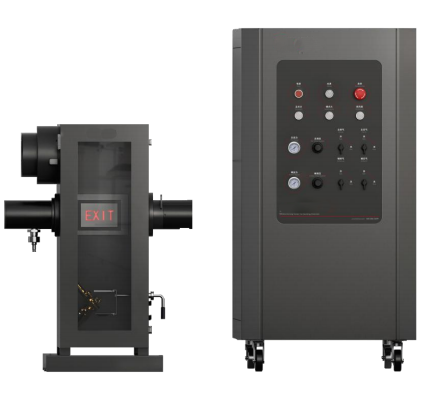


Mainly used for building materials and their products when the static smoke generated by the determination of smoke, is the test of textile materials, solid material burning smoke production of special equipment.
Standards Compliant:
GB / T 8627, ASTM D2843
Main Parameters:
1, gas source: 95% propane gas, or the same purity of the gas (customer-owned);
2, burning lights: for the students light, length 260mm, nozzle diameter 0.13mm, 45 ° angle with the smoke box;
3, photoelectric system: light source for the lamp, power 15W, operating voltage 6V;
4, smoke density measurement range: 0 ~ 100%;
5, smoke density measurement accuracy: ± 3%;
6, the receiver: for the silicon photovoltaic cells, light transmission rate of 0% without light through, light transmission rate of 100% light without cover completely through;
7, after processing the focal length: 60 ~ 65mm;
8, the main burner working pressure: 276KPa (adjustable);
9, auxiliary burner pressure: 138KPa (adjustable).
Feature:
1, automatic timing, automatic ignition, automatic smoke; luminous flux can be automatically corrected;
2, equipped with a strong fan, after the test, the exhaust can be discharged outdoors;
3, computer control, with a set of light transmission measurement software can be output curve report, the data automatically saved and can be printer.
FAQ
(1)What materials can be tested with a smoke density tester?
This instrument is mainly used for building materials, textile materials, plastics, and other solid combustible materials. It evaluates smoke generation characteristics during combustion and provides data for material safety assessment and research.
(2)What does smoke density measurement indicate about a material?
Smoke density testing reflects the amount of smoke produced during combustion by measuring changes in light transmission. The results help researchers understand combustion behavior and compare the smoke generation performance of different materials.
(3)Which standards are commonly used for this smoke testing method?
The instrument is designed according to GB/T 8627 for building material smoke density testing and ASTM D2843 for smoke density evaluation of plastics, depending on the material type and testing requirements.
(4)How does the instrument measure smoke density?
During combustion, generated smoke reduces the amount of light passing through the test chamber. The photoelectric system detects these changes and converts them into smoke density values ranging from 0% to 100%.
(5)What should laboratories consider when selecting smoke density testing equipment?
Laboratories should consider applicable standards, measurement range, optical accuracy, combustion control system, smoke exhaust capability, and data analysis functions to ensure reliable and repeatable material evaluation.
Leave Message Get Price