Gravel Impact Tester
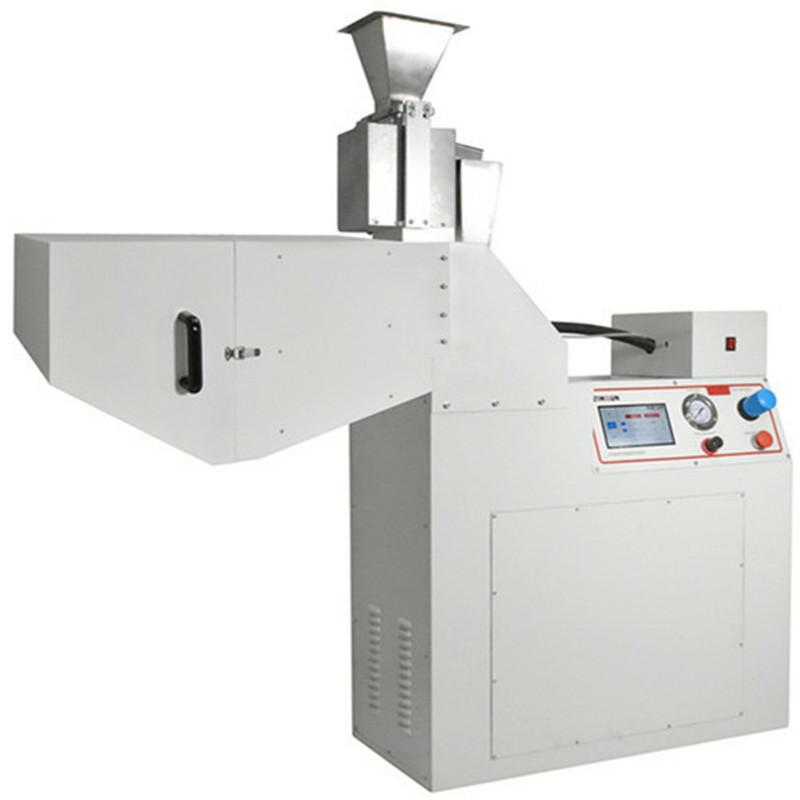


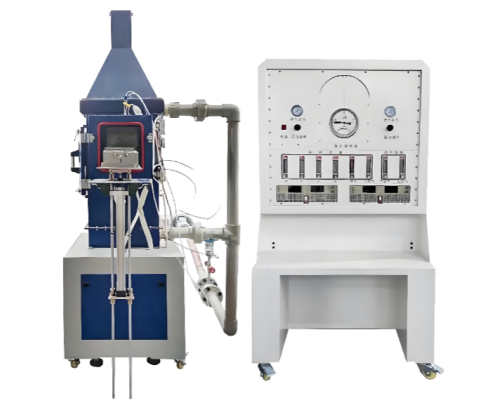
The Gravel Impact Tester is a specialized testing instrument designed to evaluate the resistance of materials and components against high-speed gravel impact. By using controlled airflow to accelerate gravel particles onto a test specimen at a specified speed and angle, the tester simulates real road conditions and assesses surface damage such as dents, cracks, coating peeling, and material failure.The gravel impact tester is a professional testing equipment used to evaluate the ability of materials or components to resist gravel impact.
Application
Automotive Industry:
Widely used to test the stone impact resistance of automobile body panels, chassis, engine hoods, fenders, rearview mirrors and other components to ensure that the vehicle can resist gravel impact during driving, extend the service life of components, and improve the safety and durability of the vehicle.
Aerospace:
Impact resistance test of key components exposed to the outside such as aircraft skins and wing leading edges to ensure that the aircraft can withstand the impact of particles in the air during high-speed flight.
Rail transit:
used to test the ability of train body surface materials, window glass and other components to resist the impact of gravel and other foreign objects to ensure the safety of train operation.
Building materials:
Evaluate the performance of exterior wall coatings, decorative panels and other materials in outdoor environments to resist the impact of sand and gravel particles to ensure the integrity and durability of the building's appearance.
Standards
(1) SAE J400 — Test for Chip Resistance of Surface Coatings
(2) ISO 20567-1 — Paints and varnishes — Determination of stone-chip resistance of coatings
(3) ASTM D3170 — Standard Test Method for Chipping Resistance of Coatings
(4) VDA 621-427 — Testing of stone-chip resistance of automotive coatings
Parameters
| Parameter | Specification |
|---|---|
| Impact Angle | 0–90° adjustable (1° increments) |
| Particle Velocity | 20–120 m/s (adjustable) |
| Sample Dimensions | Up to 500 × 500 mm |
| Gravel Size | 3–16 mm (customizable) |
| Air Pressure Range | 0.2–0.8 MPa (29–116 psi) |
| Control System | PLC with 7-inch touchscreen (100 test memory) |
| Power Supply | 220V/50Hz, 500W |
| Dimensions | 800 (L) × 700 (W) × 1.200 (H) mm |
| Net Weight | 150 kg |
| Safety Rating | CE/ISO 12100 compliant |
Working Principle
When the equipment is running, the gravel is first loaded into the funnel, and a high-speed airflow is generated through the airflow control device. The vacuum formed sucks the gravel into the gun assembly and sprays it onto the surface of the sample fixed on the fixture at a certain speed and angle. Simulate the scene of the vehicle body parts being hit by road gravel during driving, and evaluate the impact resistance of the material or component by observing the damage on the sample surface, such as whether there are dents, cracks, peeling, etc.
Features
The Gravel Impact Tester provides a reliable method for evaluating the impact resistance of materials exposed to high-speed particle strikes. It is widely used in automotive, aerospace, transportation, and construction industries for material durability evaluation and quality control.
(1) Simulates real gravel impact conditions during vehicle operation
(2) Pneumatic acceleration system provides stable impact energy
(3) Adjustable airflow allows flexible test condition control
(4) Suitable for evaluating coating adhesion and surface durability
(5) Applicable to various industrial materials and components
(6) Simple operation with repeatable test results
(7) Supports comparative evaluation of different coatings and materials
FAQ
(1) What performance does this tester evaluate?
It evaluates the ability of materials and coatings to resist damage caused by high-speed gravel impact, including cracking, peeling, and surface deformation. The test helps verify durability under simulated operating conditions.
(2) Which materials can be tested?
The equipment is commonly used for automotive coatings, metal panels, plastics, glass, and composite materials. Different sample types can be evaluated by adjusting test fixtures and impact conditions.
(3) Why is gravel impact testing important for vehicles?
During driving, road gravel can damage exterior coatings and protective layers. Testing helps manufacturers evaluate coating durability and improve corrosion protection and service life.
(4) How are test results evaluated?
After impact testing, the specimen surface is inspected for damage such as coating loss, cracks, or dents. Evaluation methods depend on the applicable standard and customer requirements.
(5) How to choose a suitable configuration?
Selection depends on the tested material, industry standard, impact conditions, and evaluation method. QINSUN engineers can provide suitable configuration recommendations according to your testing requirements.
Leave Message Get Price