Adhesive for Optical Communication
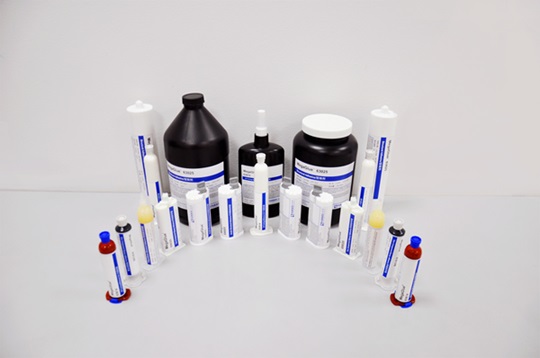


In the field of optical fiber assembly industry, our product series include single/two-component epoxy adhesives, UV curing acrylate adhesives, thermal conductive adhesives. They are mainly used for optical fiber peripheral assembly, BOSA/ROSA assembly, pigtail positioning, etc.
Optical Communication Adhesive is a specialized bonding material developed for optical fiber assembly and optoelectronic device manufacturing. It includes single-component/two-component epoxy adhesives, UV curing acrylate adhesives, and thermal conductive adhesives. These adhesives provide reliable bonding, sealing, positioning, and protection solutions for optical fiber assemblies, BOSA/ROSA modules, pigtail fixing, optical chips, and optical path components. With excellent optical properties, bonding strength, curing performance, and environmental stability, optical communication adhesive helps improve the reliability and long-term performance of optical communication products.
Application areas
Fiber connection and fixation: used for bonding and sealing of fiber optic connectors to ensure the stability and reliability of connectors and reduce signal attenuation. It can also be used for fiber coating, coating a layer of wetting glue on the surface of the fiber to protect the fiber from damage by the external environment.
Optical device manufacturing and packaging: When manufacturing various optical devices, such as wavelength division multiplexers, optical switches, optical attenuators, etc., optical communication glue is required for bonding and fixing. For the packaging of optical modules, such as To-can packaging and BOX packaging, glue can provide good sealing performance and mechanical protection.
Optical chip bonding: In the bonding process of optical chips and carriers, substrates, etc., optical communication glue can ensure good electrical connection and mechanical stability between chips and other components, while meeting the requirements of optical chips for high precision and low stress.
Optical path system construction: When constructing an optical path system, such as the connection between optical fiber arrays and optical waveguides, the coupling of lenses and optical fibers, etc., optical communication glue can be used to fix and adjust the position of optical components to ensure the accuracy and stability of the optical path.
Advantages
Excellent optical performance: With high light transmittance, it can reduce the loss of light during transmission and ensure the efficient transmission of optical signals. Some glues can also achieve refractive index matching to avoid refraction and reflection of light at the interface of different media and improve the efficiency of light transmission.
Good bonding performance: It has excellent bonding effect on materials such as optical fiber, metal, glass, ceramic and most plastics, and can firmly bond optical components and parts of different materials to ensure the reliability and stability of the connection. It is not easy to loosen or fall off in long-term use.
Good curing characteristics: Many optical communication glues have fast curing speed and can reach high strength in a short time, improve production efficiency, and are suitable for large-scale automated production. At the same time, some glues can be cured at room temperature without high temperature heating or complex curing equipment, which reduces production costs and process difficulties.
High chemical stability: It can resist the erosion of various solvents and chemicals, and can maintain stable performance in different chemical environments and harsh working conditions. It will not deteriorate, degrade or affect the bonding effect due to contact with chemicals.
FAQ
(1) What types of optical communication adhesive are available for fiber assembly?
Optical communication adhesives mainly include epoxy adhesives, UV curing acrylate adhesives, and thermal conductive adhesives. Selection depends on bonding materials, curing conditions, optical requirements, and production processes. Different adhesive systems can meet applications such as fiber fixation, module packaging, and thermal management.
(2) How does optical adhesive improve optical module reliability?
The adhesive provides stable bonding and sealing between optical components, reducing movement, vibration, moisture penetration, and environmental influence. In applications such as BOSA and ROSA assembly, reliable bonding helps maintain optical alignment accuracy and long-term signal stability.
(3) Can optical communication adhesive bond different materials together?
Yes. Many optical adhesives are designed for bonding materials including optical fiber, glass, metal, ceramic, and engineering plastics. Before production use, engineers should evaluate surface compatibility, curing conditions, and required bonding strength according to the actual application.
(4) What factors should be considered when selecting an optical adhesive?
Selection should consider optical performance, curing method, bonding material, operating temperature, environmental resistance, and production efficiency. For precision optical applications, low stress, stable curing, and long-term reliability are important evaluation factors.
(5) How can customers choose the suitable optical communication adhesive?
The selection should be based on application requirements, component structure, curing process, and reliability standards. Each batch of adhesive should undergo factory quality inspection to ensure stable performance and reliable bonding results. For specific application requirements, please contact QINSUN engineers for professional guidance.
Leave Message Get Price