Tinned Copper-Clad Steel Wire
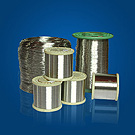


Tinned copper-clad steel wire is a product made by taking low-carbon steel as the core wire, annealing and softening it into soft steel wire, then electroplating a copper layer chemically, and finally hot-dipping it in lead-free tin-based alloy. The production cost is relatively low, making it an ideal substitute for tinned copper wire.
Basic Information:
Number: CST-W-002
Brand: Qinusn
Common name: Tin-plated iron wire
Abbreviation: Tin-plated CP wire
Main uses: electronic component leads, PCB board jumpers, electronic guide pins
Application
(1) Lead wires for electronic components
(2) PCB board jumpers and connecting wires
(3) Electronic guide pins and terminal connections
(4) Solderable wire applications requiring stable electrical performance
(5) Internal connections in electronic devices and electrical assemblies
(6) Applications requiring a balance between mechanical strength and conductivity
Product Performance:
| No | Project | Features |
|---|---|---|
| 1 | Appearance | The surface should be bright with an even color, free from tin shedding, black spots, cracks, burrs, yellowing, tin tumors, etc. |
| 2 | Diameter | The allowable deviation is within ±0.01mm. |
| 3 | Tin Plating Thickness | It is divided into thin plating (1.5-2.5mm), medium plating (2.5-4.0mm), and thick plating (above 4mm). |
| 4 | Elongation | ≥15%, or customized according to customer requirements. |
| 5 | Electrical Conductivity | It is divided into low conductivity (16-18%), medium conductivity (18-22%), and high conductivity (above 24%). |
| 6 | Repeated Bending | Can withstand ≥4 times of repeated bending. |
| 7 | Tensile Strength | ≥245KG/mm². |
| 8 | Solderability | At 250±2℃, lead-free tin dipping for 2±0.5 seconds, with a new tin adhesion rate of ≥95%. |
| 9 | Aging Test | After baking at 200±5℃ for 1 hour, there should be no yellowing or darkening. |
| 10 | Continuity | After three cycles of testing with hydrochloric acid and sodium polysulfide solution, there should be no copper exposure or black spots. |
| 11 | Bonding Strength | After wrapping more than 6 circles and immersing in saturated sodium polysulfide for testing, there should be no cracks or darkening. |
Packaging Methods:
Rubber Drum Packaging: 15 - 25 kg
Paper Tube Packaging: 18 - 25 kg
Rubber Shaft Installation: Divided into small rubber shaft (3-5kg), medium rubber shaft (12-18kg), and large rubber shaft (25-30kg).
FAQ
(1) What are the advantages of tinned copper-clad steel wire compared with pure copper wire?
Tinned copper-clad steel wire uses a steel core with copper and tin coatings, providing higher mechanical strength and better cost efficiency. It is suitable for applications where both electrical performance and structural durability are required.
(2) Why is tin plating applied to copper-clad steel wire?
The tin coating improves solderability and protects the copper layer from oxidation. During electronic assembly, it helps achieve stable solder joints and extends the service life of electrical connections.
(3) What factors should be considered when selecting this wire?
Selection should consider diameter tolerance, tin thickness, conductivity level, soldering requirements, and processing conditions. Different electronic components may require different mechanical and electrical performance specifications.
(4) How is solderability performance verified?
Solderability is commonly evaluated by dipping the wire into lead-free solder under controlled temperature and time conditions. A qualified product should achieve good tin adhesion without coating defects or exposed copper areas.
(5) Can the wire specifications be customized?
Yes. Diameter, tin coating thickness, conductivity level, packaging method, and mechanical properties can be adjusted according to application requirements. For specific material selection and customization support, contact QINSUN engineers.
Leave Message Get Price