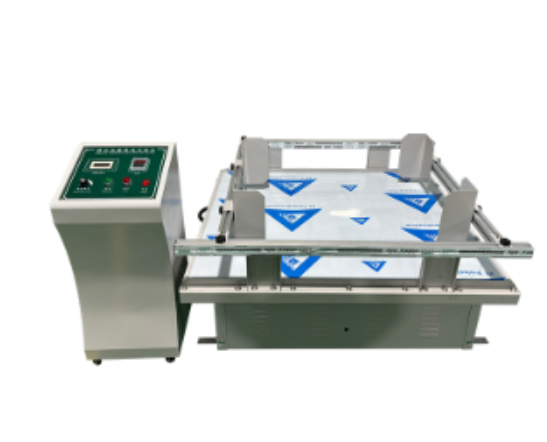
Filter Testing Machine
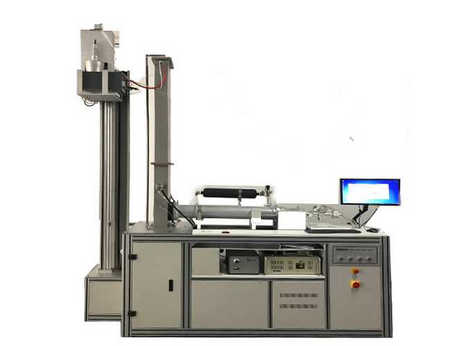


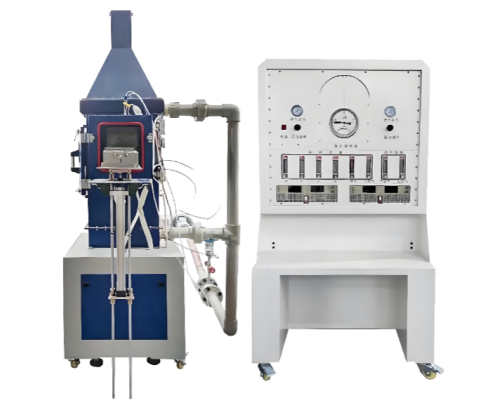
It’s great significant for Dynamic Filter Tester and filter media test system bench to optimize and develop filter materials, ensure quality assurance of the production process. Dust capacity and filtration efficiency are the most interesting properties of filter material properties, depending on the pressure difference between the upstream and downstream of the filter and the test particle size.
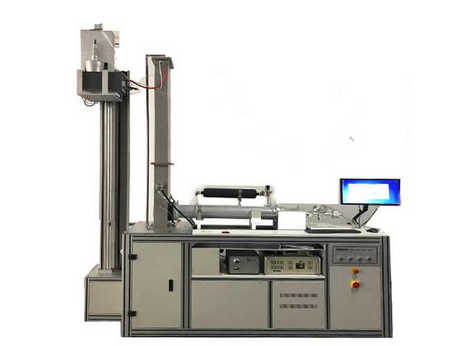
In order to test these properties, the Filter test bench bench tests the filter materials according to international standards. The entire test bench is compact and lightweight, and only requires additional single-phase power and compressed air during the test. It is suitable for the laboratory.
Application
Typical applications include:
(1)Filter Material Research and Development
Used to optimize filter structures, fiber materials, and manufacturing processes by analyzing filtration efficiency and dust loading performance.
(2)Air Filter Quality Control
Helps manufacturers verify production consistency and ensure filter products meet performance requirements.
(3)Respiratory Protection Material Testing
Suitable for evaluating filtration performance of materials used in protective masks and respirators.
(4)Automotive Filter Testing
Used for testing cabin air filter materials and other vehicle filtration components.
(5)Industrial Filtration Material Evaluation
Applicable for dust filtration media used in industrial air purification systems.
(6)Laboratory Research and Testing
Compact design makes it suitable for universities, research institutes, and third-party laboratories.
Standards
1. YY0469-2004 Technical requirements for surgical mask
2. GB2626-2006 Respiratory protective equipment -- non-powered air-purifying particle respirator
3. EN1822-3: 1998 High efficiency particulate air filters (HEPA and ULPA) - Part 3: Testing flat sheet filter media
Features
Test the filter materials according to the standards (air filter EN779, air filters for passenger compartments ISO11155-1 ISO11057, VDI3926).
Develop and optimize filter materials.
Good quality assurance.
Smart design makes its application with greater scalability and extensibility.
The test bench can be operated and controlled by user-friendly PAFWin3.0 software.
Aerosols are available in a wide range (gas, dust and droplets).
The optimal combination of instruments makes it the most cost-effective.
Technical Parameters:
Items | Parameters |
Air flow | 0.5~65m3/h±1% |
Differential pressure | 10~2500Pa±0.1% |
Cross section | 176cm2(diameter 150mm) |
Cylinder pressure | 0.2~0.6MPa |
Agitated time | 50~150 ms |
Optical particle counter | LAP322 particle size spectrometer, 0.2~40μm(0.2~5μm, 0.7~40μm), 128 channel(test concentration<104 /cm3) |
Test aerosol | Dust (AC fine, AC coarse, soot, calcite, limestone).Droplets (DEHS, DOP, paraffin, emery 3004).Salts (sodium chloride solution, ammonium sulfate solution). PSL small ball. |
Power | 3×230 V, 16A |
FAQ
(1)What performance characteristics can this equipment evaluate?
The Filter Testing Machine can evaluate filtration efficiency, dust holding capacity, and pressure drop performance of filter materials. These parameters are important for determining filtration effectiveness, service life, and airflow resistance of different filter media used in industrial and protective applications.
(2)What types of filter materials can be tested?
The system can test various air filtration materials, including HEPA filter media, respirator materials, surgical mask filter layers, automotive filters, and industrial dust filtration materials. It supports research and quality evaluation of different fiber structures and filtration technologies.
(3)Why is aerosol selection important during testing?
Different aerosol types represent different application environments and particle characteristics. Using suitable test particles helps accurately evaluate how filter materials perform against dust, liquid droplets, salt particles, and other airborne contaminants.
(4)How does the system measure filtration efficiency?
During testing, aerosol particles pass through the filter specimen under controlled airflow. The particle measurement system detects particle concentration before and after filtration, allowing calculation of filtration efficiency and analysis of filter performance.
(5)Who uses this testing system?
The equipment is commonly used by filter manufacturers, material research institutes, automotive suppliers, mask manufacturers, and third-party laboratories. It supports product development, quality inspection, and performance verification of filtration materials.
Leave Message Get Price