

What is the BAM fall hammer impact sensitivity test?

The BAM Fall Hammer Apparatus is used to test the impact sensitivity of energetic materials according to relevant standards of the Federal Bureau of Material Testing. It is applicable to a wide range of impact energies (0.5-100J) and can measure the impact sensitivity of various energetic materials, from sensitive initiators to relatively insensitive high explosives, propellants, or pyrotechnics. Impact sensitivity refers to the ease with which an explosive ignites or detonates under mechanical impact. Measurements are performed by dropping an explosive under free fall and observing the explosive's reaction. Impact sensitivity is an important indicator of the safety performance of explosives. The purpose of the drop hammer test is to understand the ease with which an explosive detonates under mechanical impact, and it remains an important testing method used by many countries.
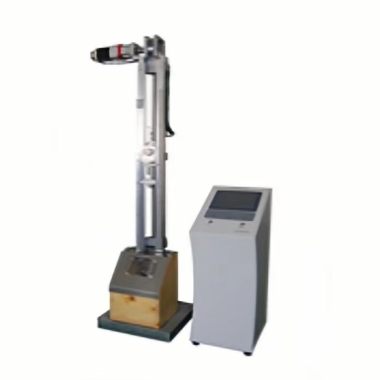
Drop Hammer Impact Mechanics Test
The drop hammer impact mechanics test is a widely used testing method in materials science, engineering, and various industrial fields to evaluate the impact resistance of materials under high-speed impact. Its technical principle is based on the law of conservation of energy and the principles of kinetics. A drop hammer of a certain mass is allowed to fall freely from a specific height, impacting a sample placed on a test platform, thus simulating the impact loads that materials may encounter in actual use. During the test, the impact energy of the falling hammer is determined by the hammer's mass, the height of its fall, and gravitational acceleration. When the hammer impacts the sample, some energy is absorbed by the sample, causing deformation or even destruction. By measuring the impact force, impact energy, and the deformation and damage of the sample during the impact process, the material's impact toughness, strength, and durability can be evaluated.
Test Operation Procedure:
1. First, install the drop hammer of the appropriate weight onto the guide rail according to the test requirements;
2. Start the reduction motor and move the entire drop hammer lifting device above the drop hammer, so that the locking pin connected to the electromagnet slides into the pull head hole on the drop hammer. At this time, the electromagnet is de-energized, and the drop hammer lifting device and the drop hammer are locked together.
3. Control the geared motor to lift the drop hammer to the required test height. This can be controlled according to the indicator reading.
4. Operate the impact test by energizing the electromagnet. The electromagnet will push out the locking pin, allowing the drop hammer to fall freely and impact the specimen, completing the impact sensitivity test.
5. After the impact, the drop hammer will rebound due to inertia, creating a secondary impact. To prevent this secondary impact from affecting the test results and causing safety accidents, the equipment is specially designed with a secondary impact protection device. During the downward fall after the drop hammer rebounds, the hook on the drop hammer will cushion the impact and stop its movement on the serrated rack.
6. After one test is completed, the specimen or drop hammer can be replaced, the conditions prepared, and then the above steps can be repeated to begin a new round of testing.
Technical Features:
1) This instrument can be used to test the impact, friction, and thermal responsiveness of solid, liquid, or paste-like substances; it conforms to relevant international standards such as EEC, EU official directives, and UN Recommendation 13.4.2 Test 3(a)(ii) on the transport of dangerous goods.
This instrument, following the BAM method, can be used to test the impact sensitivity of solid and paste-like substances, and it naturally meets the requirements of the aforementioned directives.
2) It consists of a cast iron block and a cast iron base (400x400x50 mm) (1+2), a circular anvil (100 Ø x 70 mm) (3), and a post fixed to the iron block. The guide rods are very strong and smooth, allowing the hammer to be held or dropped. The very heavy steel block effectively absorbs the shock wave generated when the hammer falls. The two guide rods are firmly fixed to the post by three supports. The column also features a toothed support to suppress rebound when the weight falls;
2) An automatically releasing brake on the support controls the drop hammer and prevents the weight from bouncing back. An adjustable measuring tape is available to adjust the drop hammer height, up to a maximum of 1 meter.
Applications
Sensitivity refers to the ease with which an explosive detonates under the influence of external energy, known as initial impulse energy or detonation energy. It is usually expressed quantitatively as detonation energy. Sensitivity is one of the key performance indicators for the practicality of an explosive, serving as a standard for its safety and reliability. The development trend of pyrotechnics technology is towards desensitization and higher energy levels. Therefore, while meeting the energy and detonation performance requirements of various weapons, the key to resolving the contradiction between high energy and safety/reliability lies in how to regulate the safety performance of explosives by altering their physical properties.
Currently, the most commonly used sensitivities include thermal sensitivity, impact sensitivity, friction sensitivity, electrostatic spark sensitivity, and detonation sensitivity. The safety performance of explosives is typically evaluated by their sensitivity to external ignition energy. For example, during the production, storage, transportation, and use of explosives, they are inevitably subjected to heat, friction, impact, electrostatic sparks, and shock waves. The magnitude of these energy effects and the sensitivity of explosives and their energetic components to external excitation energy are of great significance to the safety of their production, storage, transportation, and use. Developing and formulating qualification procedures for various safety properties of explosives is an important task for the explosives industry, serving as a crucial indicator for evaluating the production processes, storage, transportation, and use procedures of explosives.
The drop hammer impact mechanics test has a wide range of applications, including but not limited to metals, plastics, composite materials, ceramics, and building materials. In the automotive industry, this test is used to evaluate the impact resistance of body structures, doors, glass, and other components; in the aerospace field, it is used to test the impact toughness of aerospace materials and components; and in the electronics industry, it ensures the safety of product casings and internal components during transportation and use.
Maintenance and Repair
Regular Equipment Inspection: Ensure the main structure of the BAM impact sensitivity meter, including the electromagnetic release device, remote control device, guide rails and slides, standard drop hammer, safety housing, anvil, cylinder, guide ring, positioning ring, etc., is intact and functioning properly.
Sample Preparation: For powdered samples, use a 40 cubic millimeter cylindrical measuring instrument to measure the sample. For paste or gel samples, insert a cylindrical tube of the same volume into the sample, remove it, scrape off any excess, and then use a wooden stick to squeeze the sample out of the tube. For liquid samples, use a 40 cubic millimeter pipette to measure the sample.
Sample Placement: Place the impact device on the main anvil, ensuring the device is stable. For powder, paste, or gel samples, gently press the upper steel cylinder until it contacts the sample, but do not flatten it. For liquid samples, allow the liquid to fill the groove between the lower steel cylinder and the guide ring, and use a measuring gauge to lower the upper steel cylinder to 2 mm from the lower cylinder, securing it with a rubber band. Adjusting the Drop Hammer: Ensure the main structure of the BAM impact sensitivity meter, including the electromagnetic release device, remote control device, guide rails and slides, standard drop hammer, safety housing, anvil, cylinder, guide ring, and positioning ring, is intact and functioning properly.
These maintenance points help ensure the accuracy and reliability of the BAM impact sensitivity meter and extend its service life.
The BAM impact sensitivity meter plays an indispensable role in evaluating the safety performance of energetic materials and various other materials due to its scientifically rigorous drop hammer impact mechanics testing principle, standardized and meticulous operating procedures, wide and comprehensive application range, and strict system maintenance requirements. It not only provides reliable evidence for safety performance assessment in industries such as explosives, but also ensures product quality and safety in many industrial fields such as automotive, aerospace, and electronics, serving as an important tool for promoting technological development and safety assurance in related fields.
2025-12-04 16:03
- Related News
How to Choose a Suitable Drying Rate Tester?
What Is a Fabric ICI Pilling and Snagging Box?
How to Choose an ICI Mace Snag Tester?
What a Fiber Oil Extractor Actually Does?
Snap Button Pull Tester: Garment Accessory Tensile Strength Testing Guide
Guide to Block-on-Ring Friction Wear Equipment
How to Choose Universal Multifunction Tribology Test Machine
How to Choose an Air-Cooled Xenon Lamp Aging Chamber
What Does an Ozone Aging Chamber Test? Standards and Operating Methods
Fabric Cool Feeling Tester: Working Principle, Standards and Selection Guide