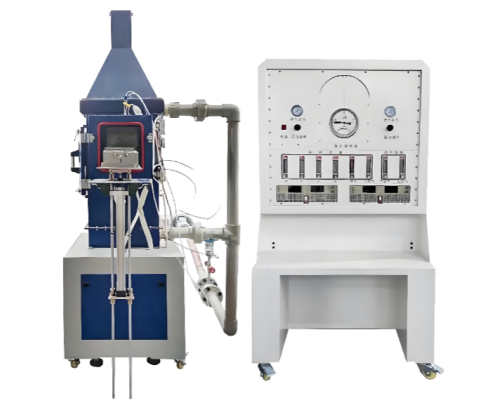
Differential Pressure Method Gas Permeability Tester
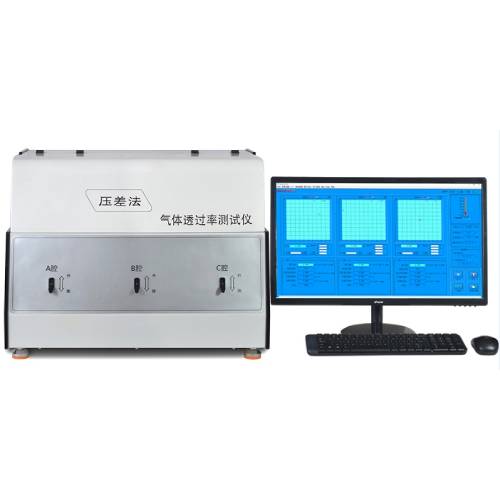


The Differential Pressure Method Gas Permeability Tester is a precision laboratory instrument designed to measure the gas permeability of various materials under controlled differential pressure conditions. You can use it to evaluate O₂, CO₂, N₂, and air transmission rates through films, sheets, high-barrier materials, metal foils, and rubber. This instrument provides reliable data for material selection, quality control, and product development in packaging, engineering plastics, aerospace, and chemical industries.
Applications
The Differential Pressure Method Gas Permeability Tester is suitable for measuring the permeability rates of various gases—including O₂, CO₂, N₂, and air—through materials such as plastic films, composite films, high-barrier materials, sheets, metal foils, and rubber.
Standards
YBB 00082003 Determination of Gas Permeability of Pharmaceutical Packaging Materials
GB/T 1038.1-2022 Plastics - Films and Sheets - Test Methods for Gas Permeability - Part 1: Differential Pressure Method
ASTM D1434 Standard Test Method for Determining Gas Permeability of Plastic Films and Sheets
ISO 2556 Plastics - Determination of gas transmission rate of films and sheets at atmospheric pressure - Pneumatic method
ISO 15105-1 Plastics - Films and sheets - Determination of gas transmission rate - Part 1: Differential pressure method
JIS K7126-A Test method for gas transmission rate of plastic films and sheets by differential pressure method
Parameters
| Item | Specifications |
|---|---|
| Measurement Range (Film) | 0.01 ~ 50000 cc/m²·24h·0.1MPa |
| Number of Test Samples | 3 |
| Number of Main Sensors | 3 |
| Test Mode | Single-chamber independent |
| Vacuum Resolution | 0.1 Pa |
| Vacuum Degree | < 10 Pa |
| Temperature Control Range | 5°C ~ 65°C |
| Temperature Control Accuracy | ±0.1°C |
| Test Pressure | Upper test gas chamber: -0.1 MPa ~ +0.15 MPa (standard)Lower permeation gas detection chamber: 0 ~ 1333.33 Pa |
| Gas Source Pressure | 0.4 MPa ~ 0.6 MPa |
| Test Gas | O₂, N₂, CO₂ or other gases |
| Gas Inlet Interface | Φ6 mm |
| Vacuum Pipe Diameter | 1/4" |
| Calibration Method | Standard film calibration, external calibration of vacuum sensor |
| Sample Thickness | ≤3 mm |
| Sample Size | Φ97 mm |
| Permeation Area | 38.48 cm² |
| Main Unit Dimensions (L×W×H) | 760 mm × 575 mm × 450 mm |
| Main Unit Weight | 88 kg |
| Power Supply | AC100 ~ 240V 50/60Hz |
Features
1.Features standard membrane calibration and external sensor calibration functions
2.Real-time monitoring of test status with full-process data logging ensures complete reproducibility of all test data curves, facilitating post-test evaluation of the testing process
3.Features an open database system for streamlined data analysis
4.Simultaneously measures gas transmission rate, solubility coefficient, and diffusion coefficient of test specimens
5.Three fully independent test chambers enable concurrent testing of three identical or different specimens
6.Wide-range, high-precision temperature and humidity control accommodates diverse testing conditions
7.Offers dual test process evaluation modes: proportional and fuzzy logic
8.Test range can be extended as needed to accommodate high permeability testing requirements
9.Enables data fitting at any temperature, facilitating acquisition of test results under extreme conditions
10.Supports testing of toxic, flammable, and explosive gases (requires modification)
11.Computer-controlled system automates the entire testing process
12.Provides standard membranes for rapid calibration, ensuring accuracy and universality of detection data
13.Equipped with RS232 universal data interface for convenient data transfer
Accessories
Standard main unit
Temperature control system
Computer with professional software
Dedicated sample extractor
Vacuum grease
Quick quantitative filter paper
Vacuum pump
FAQ
1. What gases can be tested with this instrument?
You can test O₂, N₂, CO₂, air, and other non-corrosive gases; for toxic or flammable gases, modifications are required.
2. How many samples can be tested simultaneously?
The tester has three independent chambers, allowing simultaneous testing of three samples under identical or different conditions.
3. What is the maximum sample thickness?
Samples up to 3 mm thick can be accurately tested.
4. How is the tester calibrated?
Calibration is performed using standard films and external sensor calibration procedures to ensure accuracy and reproducibility.
5. Can the tester measure solubility and diffusion coefficients?
Yes, it provides permeability, solubility coefficient, and diffusion coefficient measurements simultaneously.
6. How precise is the vacuum measurement?
The vacuum resolution is 0.1 Pa, and the chamber maintains vacuum levels below 10 Pa for high-precision testing.
Leave Message Get Price