G-HB-3000B Brinell Hardness Tester
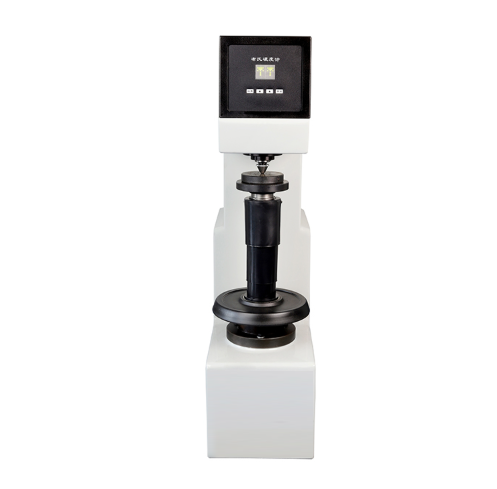


The Brinell Hardness Tester measures the hardness of ferrous and non-ferrous metals, bearing alloys, and softer metals like aluminum and lead. With a low-speed motor driving double ball screws, electronic switch control, and a high-precision 20× reading microscope, it provides accurate, stable, and reliable measurements for quality control in industrial and laboratory settings.
Application
Used to determine the Brinell hardness of ferrous metals, non-ferrous metals, and bearing alloy materials, including cast iron and steel. It has a wide application range and is suitable for precision measurement of parallel planes, with stable and reliable performance for curved surface measurements. It is also suitable for testing non-ferrous metals, especially softer metals such as pure aluminum, lead, and tin.
Standard
Accuracy accord with GB/T231.2, ISO6506-2 and the United States ASTM E10 standard
Parameters
Technical Parameters | Specification |
Loading Method | Low-speed motor driving double ball screws for force application, electronic reversing switch control |
Measurement Method | Indentation diameter measured by 20× reading microscope, hardness value obtained by reference table |
Test Force Range | 187.5, 250, 500, 750, 1000, 1500, 3000 kgf |
Measurement Range | 8–650 HBW |
Maximum Test Piece Height | 230 mm |
Maximum Throat Depth | 120 mm |
Power Supply | 220 V, 50/60 Hz |
Machine Dimensions | 700 × 268 × 842 mm |
Net Weight | 200 kg |
Operating Temperature | 10–35°C |
Features
The instrument adopts an electronic reversing switch for control and applies force through weights. The traditional reducer has been upgraded to a low-speed motor driving a double ball screw mechanism for loading and unloading, ensuring quiet operation of the entire machine.
Cast housing with a robust structure, excellent rigidity, high accuracy, reliability, and durability, offering high testing efficiency.
High-precision reading microscope measurement system.
Widely suitable for quality control in production sites, with strong adaptability to working environments.
Accessories
Name | Quantity |
Main Unit | 1 set |
Large Flat Anvil | 1 pc |
V-Type Anvil | 1 pc |
Reading Microscope (20×) | 1 pc |
Wrench | 1 pc |
φ2.5 mm Carbide Ball Indenter | 1 pc |
φ5 mm Carbide Ball Indenter | 1 pc |
φ10 mm Carbide Ball Indenter | 1 pc |
Small Flat Anvil | 1 pc |
Standard Brinell Hardness Block | 2 pcs |
Power Cord | 1 pc |
Dust Cover | 1 pc |
FAQ
(1) What is this product?
It is a hardness testing instrument used to determine Brinell hardness of metallic materials.
(2) What is this product used for?
It is used to evaluate material hardness for quality control, material research, and production inspection.
(3) Why is this product important?
Brinell hardness reflects the mechanical strength and wear resistance of metals, which is critical for material selection and process control.
(4) What industries is this product suitable for?
It is suitable for metallurgy, machinery manufacturing, automotive, aerospace, foundries, research institutes, and quality inspection laboratories.
(5) What types of this product are available?
Available types include manual Brinell hardness testers, electronic Brinell testers, and fully automatic digital Brinell hardness testing systems.
Leave Message Get Price