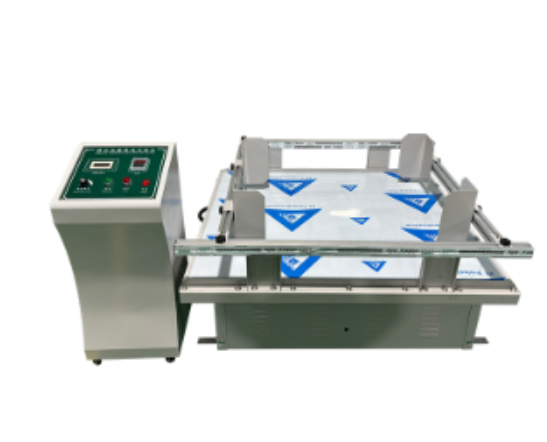
Single particle mechanical properties tester
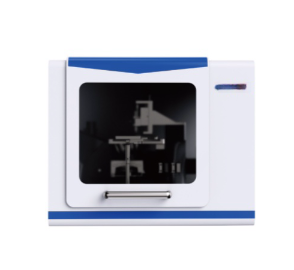


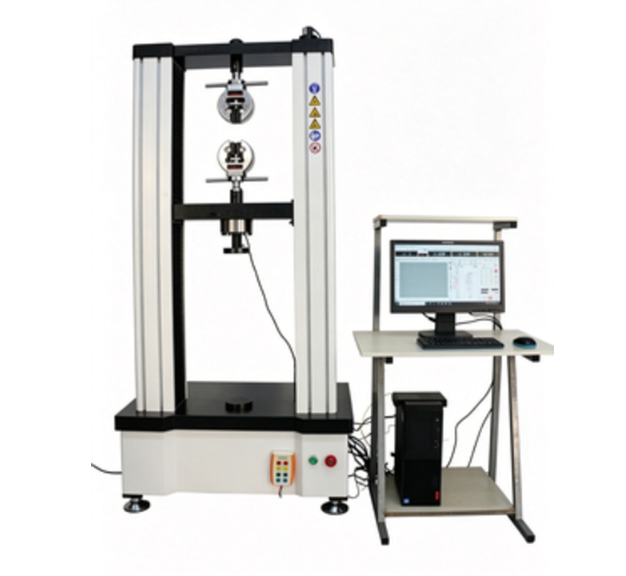
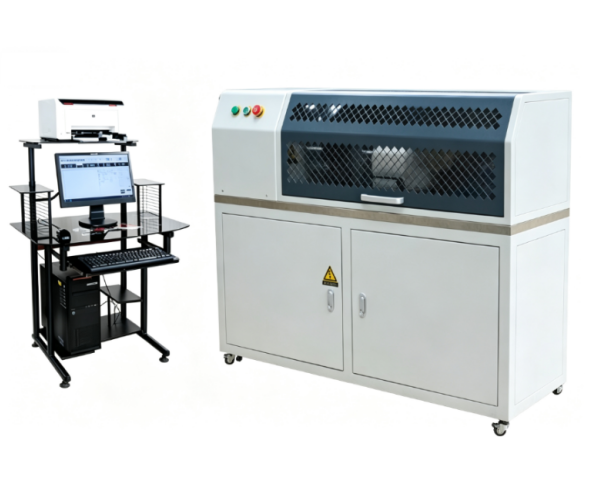
The Single Particle Mechanical Properties Tester is a high-precision instrument designed to evaluate the mechanical behavior of individual particles, particularly in advanced materials such as lithium-ion battery electrodes and metal powders. It enables compression, indentation, and fracture analysis at micro- and nano-scale levels.
The system integrates force measurement, displacement control, and real-time optical observation, allowing accurate characterization of particle deformation, strength, and fracture behavior under controlled conditions.
Application
This instrument is suitable for advanced material research and quality evaluation:
(1) Lithium-ion battery materials — particle strength and fracture analysis
(2) Powder metallurgy — mechanical property evaluation of metal particles
(3) Nanomaterials — micro-scale deformation testing
(4) Pharmaceutical powders — particle integrity testing
(5) Research institutions — material science studies
(6) Quality control laboratories — consistency and reliability testing
Standard
ISO 13314 (Mechanical testing of metals – Instrumented indentation test for hardness and materials parameters)
ASTM E9 (Standard test methods of compression testing of metallic materials at room temperature)
GB/T 21838.4 (China’s national standard for metal materials – Hardness and test methods)
IEC 62660-2 (Secondary lithium-ion cells – Reliability and abuse testing)
Technical Parameters
| Specification | Details |
|---|---|
| Force Range | 0.01–100N (100N load cell, ±0.1% accuracy) |
| Displacement Resolution | 0.01μm (piezoelectric stage) |
| Loading Rate | 0.1–100μm/s (displacement-controlled) |
| Microscope Resolution | 0.5μm (optical), 10nm (digital zoom) |
| Data Acquisition | 1MHz sampling rate, 16-bit ADC |
| Temperature Stability | 20–25°C (±0.1°C via Peltier control) |
| Power Requirements | 100–240V AC, 50/60Hz, 600W |
| Footprint | 600mm (L) x 500mm (W) x 800mm (H) |
| Weight | 80kg (net) / 100kg (with accessories) |
Advantages
Nanoscale Precision
0.01μm displacement resolution and ±0.1% force accuracy for capturing sub-micron deformation in electrode particles.
100N load cell with ultra-low noise floor (0.001N resolution) for fragile material testing.
Real-Time Morphological Analysis
Integrated optical microscope: 1,000x magnification with coaxial LED illumination for live particle compression imaging.
AI-assisted fracture detection: Automatically identifies stress-strain curve inflection points (R² > 0.998 accuracy).
Multi-Modal Testing
Control modes: Displacement-controlled (0.1–100μm/s) or force-controlled (0.01–100N) operation.
Custom protocols: Lithium-ion particle-specific testing (e.g., SEI layer adhesion, delamination resistance).
Smart Data Ecosystem
Cloud-connected software: Stores 1M+ data points with spectral analysis tools (FFT, wavelet transforms).
API integration: Export results to COMSOL/MATLAB for multi-physics simulations.
Industrial Durability
Vibration-damped frame: Isolates 200Hz environmental noise for sub-micron stability.
Self-cleaning indenter: CO₂ laser ablation prevents cross-contamination between tests.
Features
Optical System:
Microscope: 1,000x magnification, 0.5μm depth of field, 16:9 HD video output.
LED illumination: Adjustable intensity (0–10,000 lux) with polarizing filter for specular reflection reduction.
Actuation System:
Piezoelectric stage: 100mm x 100mm x 50mm travel range, 0.01μm closed-loop resolution.
Indenter options: Berkovich, Vickers, and flat punch geometries (diamond/sapphire tips).
Control Panel:
10.1" capacitive touchscreen with live stress-strain curves and 3D force mapping.
Embedded software: Auto-generates reports with Young’s modulus, hardness, and fracture toughness.
Safety Features:
Emergency ejection, over-force shutdown, and anti-tip base (4-point leveling).
Calibration:
NIST-traceable standards: Tungsten carbide hardness block (1,500 HV) and laser interferometer.
Accessories
Indenter Kit – Berkovich, Vickers, and flat punch indenters (diamond/sapphire).
Calibration Set – NIST-traceable hardness block and laser interferometer.
Particle Handling – Vacuum chuck with anti-static coating, 50mm Petri dishes.
Software License – Lifetime access to NanoMechanica Pro (cloud-connected with COMSOL/MATLAB API).
Installation & Training – On-site setup by certified engineers + 16hrs virtual training for operators.
FAQ
1. What is this product?
It is a high-precision instrument for testing the mechanical properties of individual particles.
2. What is this product used for?
It is used to analyze deformation, strength, and fracture behavior at micro- and nano-scale levels.
3. What is the working principle of this product?
It applies controlled force or displacement to a particle while measuring its response and observing deformation.
4. Why is this product important?
It enables detailed understanding of material behavior at the particle level, which is critical for advanced material design.
5. What industries is this product suitable for?
It is suitable for battery manufacturing, materials science, pharmaceuticals, research institutions, and quality control laboratories.
Leave Message Get Price