TTF Tensile Testing Machine
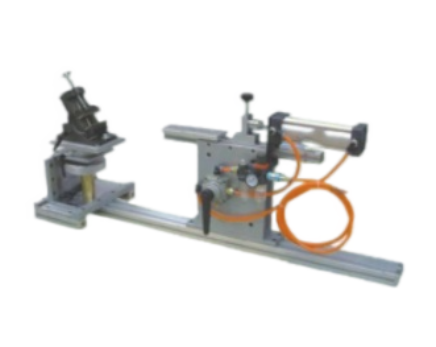


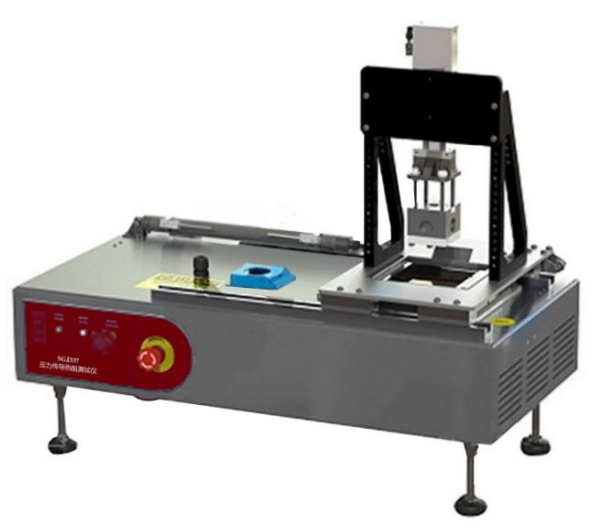
The TTF Tensile Testing Machine is a pneumatic tensile testing machine designed primarily for destructive tension testing of toys and other products requiring controlled pull-force evaluation. The pneumatic cylinder provides the testing force, while the specimen clamp can be positioned according to the test setup. It is used to evaluate product safety, attachment strength, production consistency, and process variation under defined tensile loading conditions.
The supplied TTF test method specifies controlled environmental conditions, pneumatic pressure, and travel speed to provide repeatable testing conditions for applicable McDonald's product requirements.
Application
(1) Toy Safety Testing
Destructive tensile testing of toy components and attached parts to evaluate whether they can withstand specified pulling forces.
(2) Product Safety Evaluation
Assessing the attachment strength and mechanical reliability of components that may become detached during use.
(3) Production Quality Control
Comparing tensile-test results between production batches and identifying excessive variation.
(4) Process Capability Analysis
Collecting tensile-force results to evaluate manufacturing consistency and process deviations.
(5) Supplier and Product Verification
Supporting incoming inspection, supplier evaluation, and product qualification testing.
(6) Applicable McDonald's Products
The supplied TTF test method states that the procedure applies to McDonald's products requiring TTF testing.
Standards
The stated test conditions include:
(1) Room Temperature: 23 ± 2°C
(2) Relative Humidity: 20%–70%
(3) TTF Machine Travel Speed: 0.7 ± 0.1 in/s
(4) TTF Machine Air Pressure: 60 ± 10 psi
For purchasing or compliance purposes, the applicable customer specification or test method should be confirmed according to the product being evaluated.
Parameters
| Parameter | Specification |
|---|---|
| Drive Method | Pneumatic cylinder |
| Theoretical Maximum Push Force | 188 kgf |
| Theoretical Maximum Pull Force | 168 kgf |
| Maximum Travel | 150 mm |
| Speed Range | 50–800 mm/s |
| Specimen Clamp | Adjustable position |
| Dimensions (L × W × H) | 1620 × 320 × 421 mm |
| Weight | Approx. 81 kg |
| Specified TTF Travel Speed | 0.7 ± 0.1 in/s |
| Specified Air Pressure | 60 ± 10 psi (approximately 4.2 ± 0.7 kgf/cm²) |
| Recommended Test Environment | 23 ± 2°C; 20%–70% RH |
FAQ
(1) What is the purpose of TTF testing?
TTF testing uses controlled tensile loading to determine whether a product component can withstand the specified pulling force before failure or detachment. The results can be used to evaluate product safety, manufacturing consistency, and process variation.
(2) What environmental conditions are specified for the TTF test?
The supplied procedure specifies a room temperature of 23 ± 2°C and relative humidity of 20%–70%. It also requires the sample to remain in the specified environment for 4 hours before testing.
(3) What air pressure and travel speed are required?
The stated TTF procedure requires machine air pressure of 60 ± 10 psi and a travel speed of 0.7 ± 0.1 in/s. These values should be maintained during testing when the customer's TTF procedure specifies them.
(4) How should the appropriate fixture be selected?
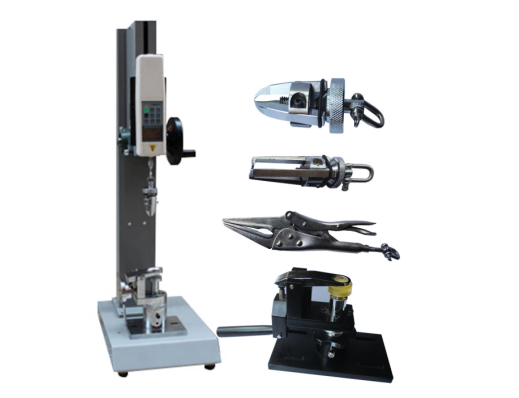
Fixture selection depends on the product structure, attachment point, sample geometry, and required pulling direction. The fixture should hold the sample securely without introducing unintended loading that could influence the tensile result.
(5) Can QINSUN help configure the TTF testing machine for a specific product?
Yes. QINSUN engineers can review your product structure, required pulling force, fixture arrangement, travel speed, pneumatic conditions, and customer test procedure before recommending the configuration.
Leave Message Get Price