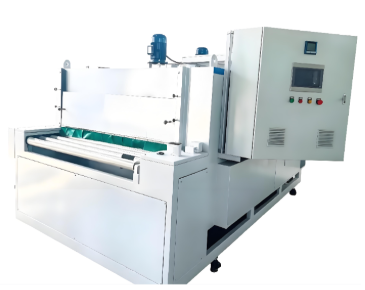
Catheter Sliding Performance Tester
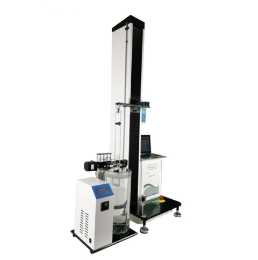


The Catheter Sliding Performance Tester is professionally used for measuring the surface friction and sliding performance of interventional catheters and guidewires such as urinary catheters, endotracheal tubes, balloon catheters, and guidewires. It is also known as a catheter sliding performance tester, catheter sliding test machine, catheter sliding measuring instrument, and catheter surface sliding performance tester.
Applications
The catheter sliding performance tester is a precision instrument specifically designed to evaluate the sliding performance of medical devices - catheters. Its main purpose is to assess the surface sliding performance of disposable non - intravascular catheters, ensuring that when used in the human body, the catheters can reduce friction, alleviate patient pain, and achieve smooth insertion and infection prevention effects. Meanwhile, this tester also provides important evidence for the quality control and safety evaluation of catheters. In addition, it can be used for multiple tests such as the bending performance and tensile performance of catheters, providing clinicians with more comprehensive and in - depth data on catheter performance, further ensuring the safety and effectiveness of surgical procedures.
Standards
YY/T 1536-2017:Catheters other than intravascular catheters—Standard test model for evaluating the surface sliding performance
GB/T:National Recommended Standards of the People's Republic of China
ASTM:Standards of American Society for Testing and Materials
Technical Parameters
| Technical Parameter | Specification |
|---|---|
| Measurement Range | Usually 20N, 50N, 300N, 500N, 1000N, 1500N (one or more can be selected). Some devices are equipped with a 10N option, and 5N, 30N, 50N, etc. can also be selected. |
| Accuracy Class | Generally 0.5 class |
| Measurement Speed | For example, 1 - 600mm/min (stepless speed regulation) or 0.05 - 500mm/min (continuously adjustable, set via software) |
| Test Force Resolution | Such as 1/30000FS |
| Test Force Accuracy | Generally 0.5 class |
| Moving Speed Accuracy of the Middle Crossbeam | Such as ±1% |
| Maximum Tensile and Compressive Stroke | Such as 600mm |
Accessoriess
Operating system, host structure, clamping device, sensor, high-precision ball screw, stepper motor, water bath temperature control system, instruction manual, warranty card, certificate of conformity, power cord, data cable
Features
● Imported microcomputer control technology, open structure, user-friendly interface, simple and convenient to use.
● Multiple operating modes to choose from, including constant force and displacement modes, making operation even simpler and more convenient.
● High-precision ball screw drive, high-quality stainless steel guide rails, and a rational layout ensure stable instrument operation.
● Uses imported high-precision force sensors, with measurement accuracy better than 0.5 grade.
● Employs a precision differential motor drive, resulting in smoother transmission, lower noise, more accurate positioning, and better repeatability of test results.
● LCD Chinese display, fully automatic measurement, and test data statistical processing function.
● High-speed micro printer output, fast printing, low noise, no need to change ribbons, and easy paper roll replacement.
● Built-in dedicated calibration program, facilitating calibration by metrology and calibration departments (third parties).
● High-definition color 7-inch touchscreen displays curves and text for clearer visuals.
● Can be equipped with computer software for two-way operation (optional).
● Cross-shaped centering adjustment device ensures accurate and reliable testing.
FAQ
1. What is the main purpose of the Catheter Sliding Performance Tester?
The Catheter Sliding Performance Tester is designed to evaluate the surface friction and sliding performance of medical catheters and guidewires, including urinary catheters, endotracheal tubes, balloon catheters, and guidewires. Its primary purpose is to ensure smooth insertion of catheters in the human body, reduce friction and patient discomfort, prevent infections, and provide reliable data for quality control and safety evaluation of disposable non-intravascular catheters.
2. What types of tests can this instrument perform besides sliding performance?
In addition to evaluating surface sliding performance, this tester can perform multiple other tests such as bending performance and tensile performance of catheters. By conducting these tests, clinicians and manufacturers can obtain more comprehensive data about the mechanical behavior and flexibility of catheters, which is essential for ensuring safety and effectiveness during surgical procedures and routine clinical applications. This allows for better product design and quality control in medical device manufacturing.
3. How does the tester ensure measurement accuracy and reliability?
The tester employs imported high-precision force sensors with accuracy better than 0.5 grade, a high-precision ball screw drive, stainless steel guide rails, and a precision differential motor drive for smoother transmission and accurate positioning. It also includes a cross-shaped centering adjustment device to guarantee the tubing is properly aligned. With fully automatic measurement, LCD display of test curves, and statistical processing, the instrument ensures high repeatability and reliability of results. Optional computer software allows two-way operation for enhanced analysis.
4. What are the key technical parameters of this tester?
The Catheter Sliding Performance Tester has a selectable measurement range, including 5N, 10N, 20N, 50N, 300N, 500N, 1000N, and 1500N, with an accuracy class of 0.5. The measurement speed is continuously adjustable, ranging from 0.05 to 600mm/min depending on the model. Test force resolution can reach 1/30000FS, while the middle crossbeam moving speed accuracy is typically ±1%. Maximum tensile and compressive stroke is around 600mm, ensuring flexibility to accommodate various catheter types and test scenarios.
Leave Message Get Price