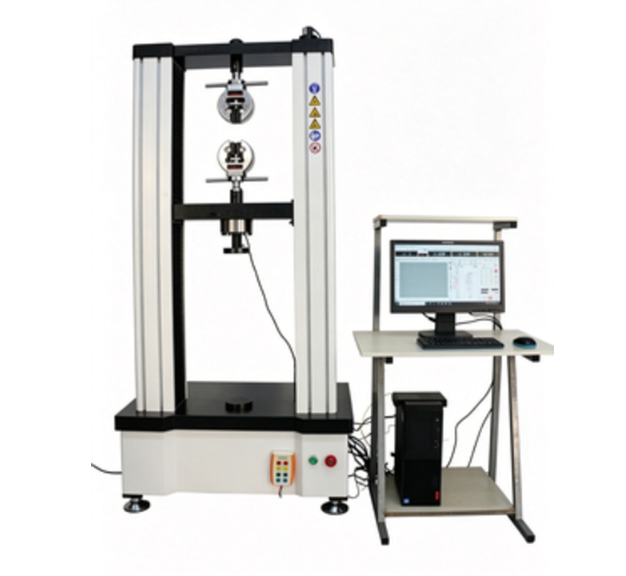
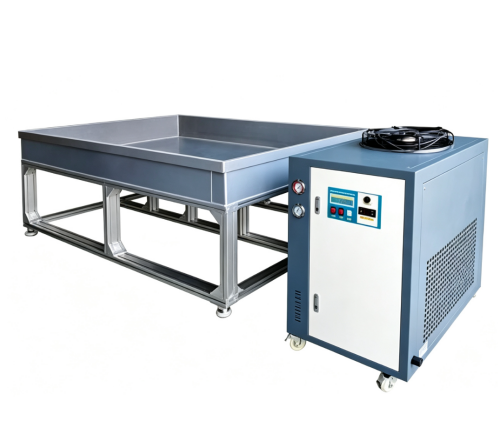
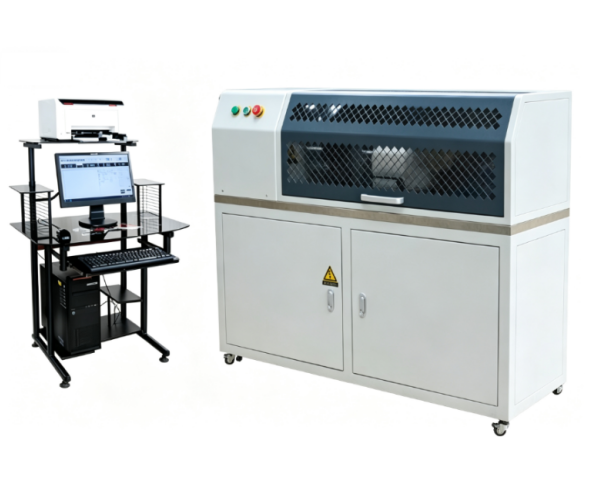
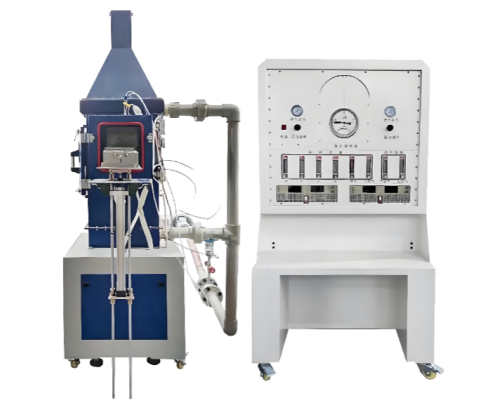
Test System for testing tightness and leackage for a high diversity of components and devices
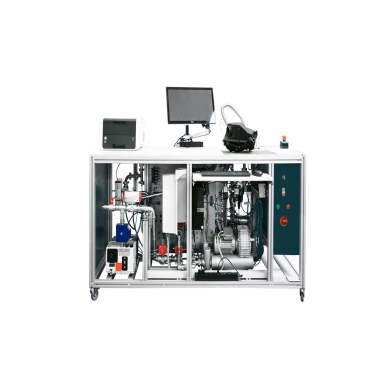


The Test System for testing tightness and leakage is designed to evaluate the sealing performance of a wide range of components and devices under controlled pressure and temperature conditions. The system can measure leak rates under both positive and negative pressures, over a wide temperature range, ensuring reliable quality control and R&D validation. Its compact and mobile design allows flexible operation in laboratory or production environments.
Application
(1) Tightness and leakage testing of valves, housings, enclosures, and other technical components.
(2) Quality control of automotive, aerospace, and industrial devices requiring leak-proof integrity.
(3) R&D evaluation of new components for material selection and sealing design optimization.
(4) Verification of leak rates under positive pressure (over-pressure) and negative pressure (vacuum/suction).
(5) Testing components in environmental chambers for temperature-dependent leak performance.
(6) Calibration and validation of sealing technologies, gaskets, and O-rings.
Standards
(1) ISO 20457 — Leak testing of components and assemblies.
(2) ASTM E515 — Determining helium leakage in sealed assemblies.
(3) DIN EN 1779 — Leak testing using gas methods.
(4) ISO 10110 series — Leak and pressure integrity testing in industrial components.
Features
(1) Direct pressure measurement at the test sample for accurate leak rate determination.
(2) Supports both over-pressure and low-pressure (suction) testing.
(3) Wide operating temperature range: -40 °C to 120 °C.
(4) Cascading of laminar flow elements allows wide volume flow rate range.
(5) Compact and mobile design with lockable wheels for easy relocation.
(6) Computer-controlled test procedure for simplified operation and reliable data acquisition.
(7) Heat exchanger protects measurement instrumentation from extreme temperatures.
Parameters
| Parameter | Unit | Value |
|---|---|---|
| Test flow rate | L/min | 0.005 – 300 (during operation) |
| Test pressure | kPa | –0.1 … 90 (negative); +0.1 … 500 (positive) |
| Operating medium | – | Dry, particle-free compressed air |
| Compressed air supply | bar | max. 8 (max. 600 L/min) |
| Power supply | – | 230 VAC |
| Environmental condition, temperature | °C | -40 … 120 |
| Power consumption | W | approx. 500 |
| System dimensions (W × H × D) | mm | 2000 × 1100 × 900 |
| Weight | kg | approx. 280 |
Test Procedures
(1) Connect the component to the test rig using the provided adapter, pressure port, and temperature sensor.
(2) Place the component in an optional climatic chamber if temperature-dependent testing is required.
(3) Set the desired test pressure (over-pressure or vacuum) and temperature.
(4) Initiate the computer-controlled test sequence to measure leak rate.
(5) Record and analyze pressure, flow, and temperature data.
(6) Evaluate component tightness against defined acceptance criteria.
Maintenance Information
(1) Regularly inspect the compressed air lines and connections for leaks.
(2) Ensure the heat exchanger is clean and free from obstructions.
(3) Verify calibration of pressure and temperature sensors periodically.
(4) Keep the system clean and dry; avoid contamination of the compressed air supply.
(5) Update and check computer-controlled test software for proper functionality.
FAQ
(1) What is this product?
– A test system designed to measure tightness and leakage of components and devices under controlled pressure and temperature conditions.
(2) What is it used for?
– To determine leak rates, evaluate sealing integrity, and validate performance under over-pressure and vacuum conditions.
(3) What types of this product exist?
– Configurations for small, medium, and large components; optional integration with environmental chambers for temperature-dependent testing.
(4) What industry problems does it solve?
– Ensures reliable component sealing, reduces failure in production, validates R&D designs, and ensures compliance with international leak testing standards.
(5) How is it operated?
– Connect the component, configure the pressure and temperature, run the automated test sequence, and analyze the resulting leak rate and tightness data.
Leave Message Get Price