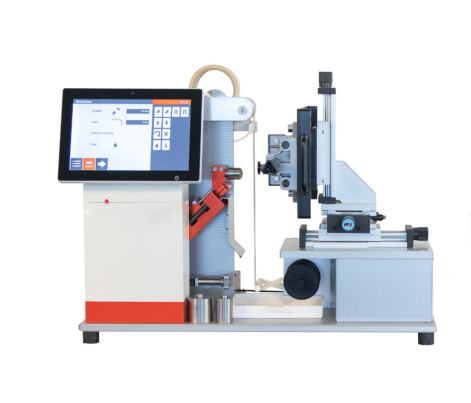
Cabin Air Filter Test System
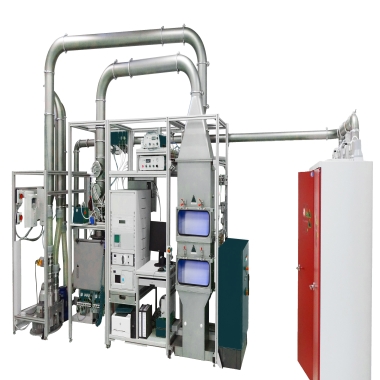


The Cabin Air Filter Test System is designed for comprehensive evaluation of particle separation and gas adsorption/desorption performance of air filters used in passenger compartments. It provides detailed parameter testing for fractional efficiency, gas adsorption, desorption behavior, and overall filter performance, supporting R&D, quality control, and standard compliance verification.
Application
(1) Fractional efficiency testing of automotive cabin air filters according to ISO 11155-1 / DIN 71460-1.
(2) Gas adsorption and desorption tests for cabin air filters in compliance with ISO 11155-2 / DIN 71460-2.
(3) Assessment of filter performance for pollutants such as n-butane, toluene, sulfur dioxide, and hydrogen sulfide.
(4) Research and development of new cabin air filter materials and designs.
(5) Quality control of cabin air filters during production or incoming inspection.
(6) Evaluation of combined particle and gas filtration efficiency for automotive, commercial vehicle, and public transport applications.
Standards
(1) ISO 11155-1 — Air filters for passenger compartments — Particle filtration efficiency testing.
(2) ISO 11155-2 — Air filters for passenger compartments — Gas adsorption and desorption testing.
(3) DIN 71460-1 — Cabin air filter particle separation tests.
(4) DIN 71460-2 — Cabin air filter gas adsorption tests.
(5) ISO 10121-1 — Air filter testing for automotive applications, particle efficiency.
(6) ISO 10121-2 — Air filter testing for automotive applications, gas adsorption.
Features
(1) Standard-compliant testing of both particle and gas filtration.
(2) Flexible system configuration to accommodate different filter sizes and test media.
(3) Accurate measurement of differential pressure, particle removal efficiency, and gas adsorption/desorption.
(4) Fully automated data acquisition and control with FTControl software.
(5) Multi-aerosol and multi-gas capability, including DEHS, DOP, PAO, KCl, NaCl, n-butane, toluene, SO₂, H₂S.
(6) High reproducibility and reliability suitable for R&D and production environments.
Parameters
| Parameter | Unit | Value |
|---|---|---|
| Test flow rate | m³/h | 70 – 700 |
| Test aerosol | – | DEHS, DOP, PAO, KCl, NaCl, etc. |
| Test gases | – | n-Butane 80 ppm, Toluene 80 ppm, Sulfur dioxide 30 ppm, Hydrogen sulfide 10 ppm |
| Measuring range, differential pressure | Pa | 0 – 1000 (±2%) |
| Test specimen dimensions | mm | max. 600 × 300 |
| Operating medium (gas/air) | – | Room air at standard test conditions (23°C ± 2 K; 50 % ± 2 % RH) |
| Power supply | – | 400 VAC / 3P / 75 A / 50–60 Hz; 3 × 230 VAC / 2P / 16 A / 60 Hz |
| Aerosol generation technology | – | Dust disperser SAG 410/L, Atomizer ATM 220, etc. |
| Aerosol conditioning technology | – | Electrostatic Aerosol Neutralizer EAN 581 |
| Aerosol measurement instruments | – | Aerosol spectrometer LAP 322 |
| Gas analysers | – | FID, NDIR |
| Sensors (others) | – | Temperature, relative humidity, absolute pressure |
| System dimensions (W × H × D) | mm | 3700 × 3000 × 3700 |
Test Procedures
(1) Install the cabin air filter into the test adapter in the test duct.
(2) Select test aerosols and gases according to the test standard or customer requirements.
(3) Configure the test parameters, including flow rate and differential pressure limits.
(4) Start the automated test sequence via control software.
(5) Generate test aerosols with the dust disperser or atomizer; neutralize as needed.
(6) Measure upstream and downstream particle concentration using the aerosol spectrometer.
(7) Introduce test gases and record adsorption/desorption curves using the gas analyzers.
(8) Analyze differential pressure, filtration efficiency, and gas adsorption performance; generate automated reports.
Maintenance Information
(1) Regular cleaning of aerosol generators and gas analyzers.
(2) Periodic calibration of sensors, particle counters, and gas analyzers.
(3) Inspection and maintenance of filter adapters and test duct integrity.
(4) Ensure proper operation of compressed air and electrical supply systems.
(5) Update control software and verify automated test sequences.
FAQ
(1) What is this product?
– A test system for cabin air filters, measuring both particle filtration and gas adsorption/desorption performance.
(2) What is it used for?
– To evaluate filtration efficiency, differential pressure, and gas adsorption/desorption of automotive cabin air filters.
(3) What types of this product exist?
– Configurations for panel filters, pleated filters, and integrated cabin filter assemblies.
(4) What industry problems does it solve?
– Ensures consistent cabin air filter quality, verifies standard compliance, and supports R&D and production testing.
(5) How is it operated?
– Place the filter in the adapter, select aerosol and gas test media, start the automated test sequence, and review results in the generated report.
Leave Message Get Price