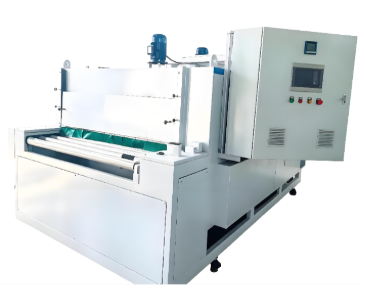
Fiber Fineness Analyzer



The Fiber Fineness Analyzer is designed to measure the diameter of wool, rabbit hair, other animal fibers, chemical fibers, and compatible natural or synthetic fibers. It uses a microscope, CCD camera, computer, and digital image processing software to measure fiber dimensions and analyze cross-sectional morphology.
The system supports manual, automatic, and multipoint measurement, together with statistical analysis and report generation. It can also evaluate fiber cross-sectional area, identify differences in fiber shape, and assist in analyzing the fiber composition of suitable blended products. The analyzer is intended for textile testing laboratories, fiber inspection agencies, research institutions, and quality control departments.
Application
(1) Wool Fiber Testing: Measurement of wool fiber diameter and evaluation of fiber fineness.
(2) Rabbit Hair Analysis: Measurement of rabbit hair diameter using the appropriate projection or optical microscopy method.
(3) Other Animal Fibers: Microscopic examination of cashmere and other specialty animal fibers, subject to the selected analytical method.
(4) Chemical Fiber Testing: Observation and measurement of compatible synthetic and regenerated fibers.
(5) Fiber Cross-Section Analysis: Measurement of cross-sectional dimensions and area, including observation of shaped and hollow fibers.
(6) Blended Fiber Analysis: Examination of cross-sectional morphology to support quantitative analysis of suitable fiber blends.
(7) Fiber Identification: Microscopic observation of fiber shape and structure to assist in qualitative identification.
(8) Research and Quality Inspection: Statistical analysis of fiber diameter and microscopic features for material development, production control, and laboratory evaluation.
Standards
(1) GB/T 10685-2007 — Wool — Determination of Fiber Diameter by the Projection Microscope Method. This standard specifies a projection microscopy method for measuring wool fiber diameter.
(2) ISO 137:2015 — Wool — Determination of Fibre Diameter — Projection Microscope Method. This international standard specifies measurement conditions and procedures for determining wool fiber diameter using a projection microscope.
(3) GB/T 13835.6-2009 — Test Method for Rabbit Hair — Part 6: Diameter — Projection Microscope Method. This standard addresses rabbit hair diameter measurement.
(4) GB/T 3364-2008 — Test Methods for Diameter of Carbon Fiber and Filament Number in Carbon Fiber Strand. This method addresses carbon fiber diameter and filament count.
(5) GB/T 16988-2013 — Quantitative Determination for Mixtures of Special Animal Fiber and Wool. This standard addresses the determination of the composition of special animal fiber and wool mixtures.
(6) ISO 17751-1:2023 — Textiles — Quantitative Analysis of Cashmere, Wool, Other Specialty Animal Fibres and Their Blends — Part 1: Light Microscopy Method. This standard covers microscopic qualitative and quantitative analysis of specialty animal fibers and their blends.
(7) IWTO-08-2025 — Method for Determining Fibre Diameter Distribution Parameters and Percentage of Medullated Fibres in Wool and Other Animal Fibres by the Projection Microscope. Applicability depends on the equipment's measurement method and relevant validation.
(8) AATCC TM20-2021 — Test Method for Fiber Analysis: Qualitative. This method uses physical, chemical, and microscopic techniques to identify textile fibers.
(9) FZ/T 01057.3-2007 — Textile Fiber Identification Test Method — Part 3: Microscopy. This standard covers microscopic fiber identification. Its scheduled replacement by FZ/T 01057.3-2025 should be considered when preparing future documentation.
(10) FZ/T 30003-2024 — Textiles — Quantitative Analysis of Bast Fibers and Cotton Blended Products — Light Microscopy Method. This method applies to specified bast-fiber and cotton blends using light microscopy.
Note: These standards cover different analytical methods and specimen types. Their inclusion does not establish automatic compliance of the instrument with every requirement. Confirm the applicable standard, specimen preparation procedure, software capability, and measurement method before making a conformity claim.
Parameters
| Parameter | Specification |
|---|---|
| Product Name | Fiber Fineness Analyzer |
| Measurement Modes | Manual measurement, automatic measurement, and multipoint measurement |
| Measurement Range | 1–2000 µm |
| Measurement Accuracy | 0.01 µm, as specified in the original information; confirm whether this denotes accuracy or resolution |
| Image Processing | Computer-based digital image processing |
| Imaging System | CCD camera and microscope |
| Data Analysis | Automatic statistical analysis |
| Report Output | Standard report printing and data export to Excel |
| Image Output | Fiber image printing for documentation and review |
| Instrument Components | Computer, CCD camera, microscope, printer, and testing software |
| Power Supply | AC 220 V, 50 Hz |
| Rated Power | 100 W |
| Software Options | English-language software, cross-section analysis software, and cotton/bast-fiber analysis software, as specified |
Features
(1) Digital Image Processing: Uses a computer, CCD camera, microscope, and dedicated software to analyze fiber images and measure fiber dimensions.
(2) Multiple Measurement Modes: Supports manual, automatic, and multipoint measurement to accommodate different testing requirements.
(3) Automatic Statistical Analysis: Processes measurement results and generates statistical summaries and standard reports.
(4) Cross-Section Analysis: Observes and measures fiber cross-sectional dimensions and area, including compatible shaped and hollow fibers.
(5) Fiber Composition Analysis: Supports quantitative analysis of selected blended products when their fiber characteristics can be distinguished using the applicable microscopic method.
(6) Image Documentation: Allows fiber images to be printed for test records, technical review, and examination of disputed specimens.
(7) Improved Observation Efficiency: Digital imaging and automated measurement can reduce repetitive manual measurement and operator fatigue.
(8) Dark Fiber Observation: The supplied system description indicates improved examination of dark fibers without stripping. Actual specimen preparation requirements depend on the fiber type and selected test method.
(9) Software Options: English-language, cross-section analysis, and cotton/bast-fiber analysis software options are specified.
(10) Data Export: Measurement data can be exported to Excel for further analysis and recordkeeping.
Accessories
The supplied configuration identifies the following components and software. Final inclusion should be confirmed in the quotation.
(1) Computer: Runs the fiber measurement and analysis software.
(2) CCD Camera: Captures fiber images for digital processing.
(3) Microscope: Provides magnified observation of fiber structures and cross-sections.
(4) Printer: Prints measurement reports and selected fiber images.
(5) Fiber Analysis Software: Provides measurement, statistical analysis, and report-generation functions.
(6) Optional Software Modules: English-language software, cross-section analysis software, and cotton/bast-fiber analysis software, subject to the final configuration.
Leave Message Get Price