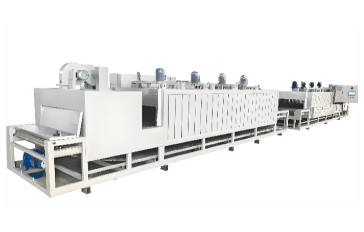
Ozone test chamber



The Ozone test chamber is designed to evaluate the colorfastness of textiles exposed to ozone under controlled atmospheric conditions. It helps assess color changes and fading caused by ozone exposure, supporting textile development, dye performance evaluation, and quality control.
The chamber is equipped with a high-efficiency ozone generator and an HMOS ozone sensor. It provides closed-loop ozone concentration control, with a specified concentration of 5 ppm and control accuracy of ±20%. Under full-load test conditions, the ozone concentration can reach 5 ppm in approximately five minutes.
A rotating sample holder accommodates up to 24 specimens simultaneously. A large UV-resistant glass observation window allows visual monitoring during testing, while the lighting system facilitates inspection of specimen color changes. Safety features include a door interlock, ozone decomposition catalyst, and an exhaust system with negative-pressure monitoring.
The instrument supports textile colorfastness testing under low- and high-humidity ozone conditions according to the applicable test method. Its calibration features, maintenance reminders, and sample capacity make it suitable for textile manufacturers and testing laboratories.
Application
(1) Colorfastness testing of dyed textile fabrics exposed to ozone.
(2) Evaluation of ozone-induced fading and discoloration.
(3) Testing of denim and other dyed textiles susceptible to ozone-related color changes.
(4) Colorfastness evaluation under low-humidity ozone conditions.
(5) Colorfastness evaluation under high-humidity ozone conditions, subject to the chamber's humidity-control configuration.
(6) Textile dye and finishing process development.
(7) Quality control and comparative assessment of textile color stability.
Standards
AATCC TM109-2011(2016)e — Colorfastness to Ozone in the Atmosphere under Low Humidities
AATCC TM129-2025 — Colorfastness to Ozone in the Atmosphere under High Humidities
ISO 105-G03:1993 — Textiles — Tests for Colour Fastness — Part G03: Colour Fastness to Ozone in the Atmosphere
GB/T 11039.3-2005 — Textiles — Tests for Colour Fastness — Colour Fastness to Contaminants — Part 3: Ozone in the Atmosphere
JIS L 0890:2006 — Test Methods for Colour Fastness to Ozone
Parameters
| Parameter | Specification |
|---|---|
| Ozone generator | High-efficiency ozone generator |
| Ozone concentration | 5 ppm |
| Ozone concentration control accuracy | ±20% |
| Time to reach target concentration | Approximately 5 minutes under full-load conditions |
| Ozone sensor | HMOS sensor, as specified |
| Sample holder | Rotating holder |
| Sample capacity | Up to 24 specimens |
| Observation window | Large UV-resistant glass window |
| Lighting system | LED lighting with automatic shutoff, as specified |
| Ozone concentration control | Closed-loop control |
| Safety interlock | Door safety interlock |
| Ozone decomposition | Built-in catalytic decomposition system |
| Exhaust system | Exhaust design with negative-pressure monitoring |
| Calibration | Annual on-site calibration supported; sensor can also be returned to the manufacturer |
| Calibration references | Two standards with NIST-traceable calibration, as specified |
Features
(1) Controlled Ozone Generation: Uses a high-efficiency ozone generator to provide the specified ozone exposure conditions.
(2) Closed-Loop Concentration Control: Automatically regulates ozone concentration based on sensor feedback.
(3) Rapid Concentration Stabilization: Reaches the specified 5 ppm ozone concentration in approximately five minutes under full-load conditions, as stated.
(4) Rotating Sample Holder: Accommodates up to 24 specimens to support efficient batch testing.
(5) Visual Observation: Features a large UV-resistant glass window for observing specimen changes during exposure.
(6) Inspection Lighting: LED lighting assists specimen observation, with an automatic shutoff function as specified.
(7) Safety Interlock: Prevents normal operation when the chamber door is not properly secured, subject to the configured interlock system.
(8) Ozone Decomposition Catalyst: Supports ozone decomposition before exhaust discharge.
(9) Negative-Pressure Monitoring: Helps monitor the exhaust system and reduce the risk of ozone escaping into the laboratory.
(10) Calibration Support: Supports annual on-site calibration or return-to-manufacturer sensor calibration.
(11) Maintenance Reminders: Provides periodic reminders for ozone generator and decomposition catalyst replacement.
Leave Message Get Price